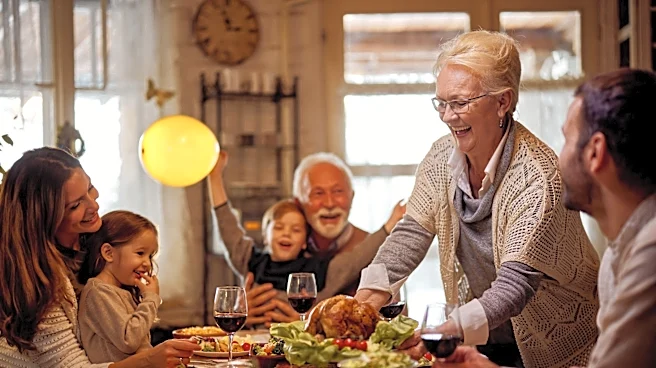






While many of us expect a main course of turkey, ham, or prime rib at Thanksgiving dinner, the supporting cast often steals the show.
After all, it’s the “side dishes that are usually what make this meal personal and memorable,” says Lisa Young, a registered dietitian nutritionist, author of "Finally Full, Finally Slim" and an adjunct professor of nutrition at New York University.
Here’s what the most popular side dishes are, which ones offer the most nutritional value and how even small changes can make familiar favorites healthier.
What are the most popular Thanksgiving side dishes?
According to a 2025 survey of 5,000 American adults who celebrate Thanksgiving, stuffing, mashed potatoes, sweet potatoes, macaroni and cheese and green bean casserole are the country’s five favorite sides. Rolls,
roasted veggies and cranberry sauce are also popular choices, says Elizabeth Klingbeil, a registered dietitian nutritionist at the University of Texas at Austin and a spokesperson for the Academy of Nutrition and Dietetics.
What belongs on that plate also depends on whom you ask. Cornbread dressing is common in parts of the South, Young notes, while sauerkraut has a longstanding place on Thanksgiving tables in Baltimore. But even widely used ingredients like sweet potatoes can vary significantly in presentation and sweetness. “They might arrive roasted, mashed or underneath marshmallows,” says Young.
Generally speaking, Young explains that people enjoy the creaminess of mashed potatoes, the savory crunch of green bean casserole, the tartness of cranberry sauce or the pillowy softness of rolls, but much of the appeal of Thanksgiving sides goes beyond taste. “There is something psychologically important to recreating a long-passed-down family recipe that is served every year,” explains Klingbeil.
Because of those traditions – along with preferences for certain flavors and textures – Young stresses that “no single Thanksgiving menu represents every American household.”
But no matter what’s on the table, the sides are what many gatherers eyeball first, as demonstrated by the same survey finding that 63% of the country prefer eating sides over turkey. Nearly half of participants said they would be happy with a plate containing only sides.
What are the healthiest Thanksgiving side dishes and why?
When considering which popular sides offer the most nutritional benefits, Young says vegetable-based dishes are a good starting point because they deliver important vitamins and minerals.
Roasted carrots supply beta-carotene, “which the body converts into vitamin A for normal vision and immune function,” she says, while broccoli provides vitamin C, “which supports wound healing and helps the body absorb iron from plant food.”
Klingbeil adds that sweet potatoes are another good option because they provide manganese and potassium, the former helping bone health and healing and the latter supporting muscle and nerve function. Young points out that green beans are another great choice, as they contribute folate.
Such vegetable-based sides also contribute fiber, which is essential “for overall gut health, helping to regulate your bowels, and to keep you fuller for longer, decreasing your overall food intake,” Klingbeil says.
Cranberry sauce can also have a place on the plate, as cranberries “contain plant compounds called polyphenols,” Young notes.
Preparation matters as much as the dish’s name. While mashed potatoes provide nutrients such as potassium and vitamin C, they often are also loaded with additions of salt, butter and heavy cream which can substantially increase sodium, saturated fat and calorie content.

Omaha Steaks green beans
Green beans, red peppers and onions tossed in olive oil make a great side to any meal.
Shop now
How can you make popular Thanksgiving side dishes healthier?
When it comes to improving a side dish’s nutritional profile, “I’d encourage focusing on what you can add or change rather than what you need to eliminate,” Young recommends.
In the case of mashed potatoes, she recommends replacing the heavy cream with low-fat milk or stirring in plain, lower-fat Greek yogurt. Roasted garlic can also deepen the flavor without having to add salt.
For stuffing, Klingbeil recommends replacing some white bread with whole-grain bread and adding more celery, onions and mushrooms – changes that add vitamins, minerals and fiber while still preserving familiar flavors and seasonings. For macaroni and cheese, she similarly suggests “simply adding more vegetables,” such as peas, carrots or corn. Substituting whole-grain pasta in place of refined noodles is another healthier choice.
Sweet potato casserole and cranberry sauce can often be just as tasty with less added brown or white sugar, Young says, suggesting in their place cinnamon, nutmeg, vanilla or citrus zest, depending on the recipe.
Klingbeil also recommends comparing labels on broth, canned soups and packaged seasonings, since lower-sodium versions can help reduce salt intake and “lower sodium can help prevent high blood pressure.”
Another tip Young recommends: “serving sauces, dressings and toppings on the side, so people can decide how much they want.”
But in the end, “a healthy diet is about the overall pattern of eating, not one meal or one day,” she explains. After all, “there is room for both nutrition and pleasure at the Thanksgiving table,” she says. “The goal is to enjoy the holiday, not to spend it worrying about every bite.”

Terry Black's Famous Side Dishes
Try Terry Black's famous sides and spruce up your Thanksgiving
Order now
This article originally appeared on USA TODAY: Which are the healthiest Thanksgiving sides? Dietitians weigh in
Our editors independently choose our recommendations. Some content is produced with paid support from a third party, however our editorial decisions remain independent. If you buy through our links, the USA TODAY Network may earn a commission. Prices and availability may change.