
The Federal Communications Commission has authorized Elon Musk's SpaceX to deploy up to 1 million satellites designed to operate as data centers in space, marking a first for the United States as the company
advances its ambitious artificial intelligence plans.
The agency announced the decision Wednesday, Nov. 25, describing it as the first authorization in U.S. history for a constellation of space-based data centers. The network, called Starmind, would process massive amounts of data in orbit for use on Earth, according to the FCC.
FCC Chairman Brendan Carr called the decision a step toward strengthening America's position in artificial intelligence and computing, saying the project could help unite the country's space and technology industries.
Here's what to know about SpaceX's plans and what the FCC's decision means.
What are SpaceX's Starmind satellites?
SpaceX's proposed Starmind network would include up to 1 million satellites that act as data centers in space. Instead of keeping all the computers needed to power artificial intelligence on Earth, the company wants to move some of that work into orbit.
The satellites would process large amounts of information in space and send the results back to Earth. They would communicate with each other using light-based connections, with radio signals available as a backup if needed.
The FCC's approval also allows SpaceX to use radio signals to help monitor and control the satellites, including during emergencies.
SpaceX has argued that moving data centers into space could be more efficient than building them on Earth, where large facilities require substantial amounts of electricity, land and equipment to keep computers from overheating.
What did the FCC say about the authorization?
Carr said the decision would help support the computing infrastructure needed for America's continued development of artificial intelligence.
"By moving compute capacity beyond Earth, SpaceX and the many competitors working on their own orbital data centers are meeting the moment," Carr said in a statement.
The FCC also said the Starmind system would operate consistently with its orbital debris rules, which are intended to address the risks posed by objects left in space.
The agency said it is continuing to review other proposals for orbital data centers and intends to issue decisions on them through its typical regulatory procedures.
USA TODAY reached out to the FCC and SpaceX for additional information about the authorization, including the requirements SpaceX must meet and the company's timeline for deploying the satellites.
When will SpaceX launch its AI satellites?
The FCC's authorization does not mean SpaceX has already launched the satellites or completed construction of its orbital data centers.
Musk previously said the company could begin demonstrating its AI satellite technology by late 2027, with broader deployment potentially beginning as early as 2028.
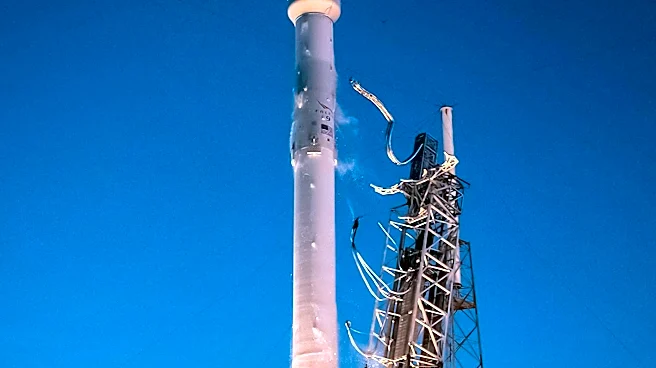
SpaceX's Starship rocket is expected to play an important role in the effort because of the unprecedented number of satellites the company hopes to put into orbit.
The project would represent a major expansion of SpaceX's existing satellite operations, which include its Starlink broadband internet network. Unlike Starlink, the Starmind constellation would primarily provide computing power rather than internet connectivity.
Reporter Anthony Thompson can be reached at ajthompson@usatodayco.com or on X @athompsonUSAT.
This article originally appeared on USA TODAY: FCC approves SpaceX plan for 1 million data center satellites in space