



President Donald Trump is again pressuring the Federal Reserve to lower its benchmark for interest rates, but most traders have begun to expect a hike at its next meeting this month.
The Federal Open Market Committee typically raises rates to help tame inflation, which rose faster than paychecks over the year in July and has remained above the Fed’s 2% target for five years. It lowers them to stimulate the job market, which Fed Chair Kevin Warsh described as “stable” on Aug. 28. As more committee members have publicly signaled interest in a hike, Trump said he is “no fan of inflation” but that the United States should have “the lowest interest rates in the world.”
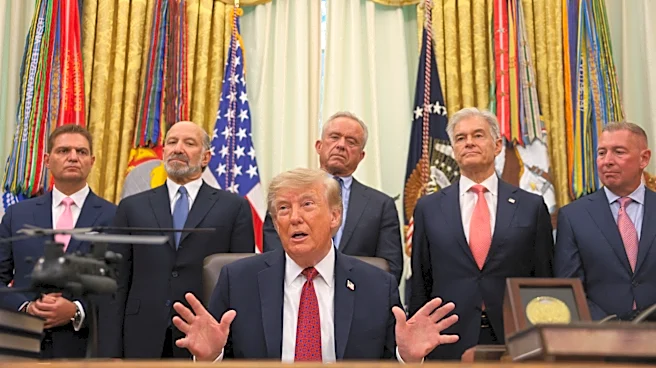
Speaking to reporters in the Oval Office on Aug. 31, Trump said the U.S. economy
could grow at a rate as high as 20%, but added that even such a boom should not prompt a Fed hike. The U.S. economy is growing at a fraction of that rate. Real gross domestic product, or GDP, increased 1.5% year over year in the second quarter of 2026, according to the latest estimate from the Bureau of Economic Analysis.
“We just announced great numbers, and so now they’re talking about raising interest rates,” Trump said. “It’s ridiculous because success in growth does not cause inflation. Inflation’s caused for other reasons.”

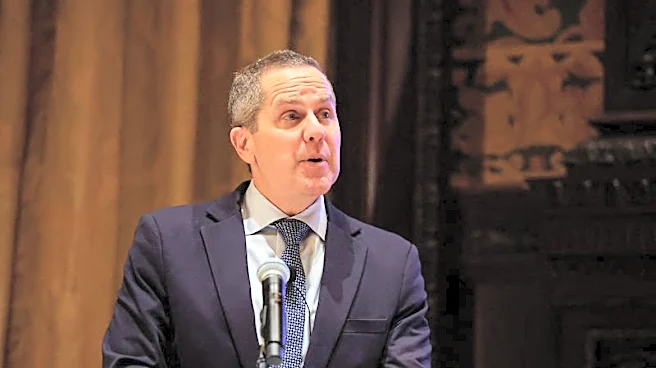
Fed officials have cited concerns about those “other reasons” in recent weeks. Fed Governor Michael Barr became the latest committee member to publicly say he is considering a hike when speaking at a forum in Washington on Sept. 1. Barr said while the Fed made “enormous progress” in bringing inflation down from more than 7% in 2022 to a bit higher than 2% in 2024, that progress stalled last year.
“A series of shocks – from tariffs and then the conflict in the Middle East, as well as from the rapid AI buildout – pushed us off course,” Barr said in prepared remarks. “If trends in the data give me some confidence that inflation is moderating on a path to 2 percent, then I think we can take a bit more time to assess our policy stance. However, if inflation appears not to be moderating sufficiently, then I think we should act decisively to raise rates.”
The committee has not voted to raise its target range for interest rates since July 2023. It voted to lower the range three times late last year and has left it unchanged so far in 2026. It stands at 3.5% to 3.75%.
At its most recent meeting in July, three members dissented from the decision to hold the rate steady. Cleveland Fed President Beth Hammack, Minneapolis Fed President Neel Kashkari, and Dallas Fed President Lorie Logan preferred to raise the target range by a quarter-point. Although they did not dissent from the committee’s last decision, Fed Governors Christopher Waller and Lisa Cook both said in July it may soon need to raise the range if annual inflation does not appear to be on a path back to 2%.
While the Fed’s preferred measure of inflation showed prices increased 3.7% over the year in July, officials are still waiting to review inflation and employment numbers for August, which they will receive in the coming weeks and will help inform their next rate decision.
However, with at least six of 12 voting members signaling potential support for a hike and after Warsh said Aug. 28 that policymakers' focus should be bringing down prices, most traders are betting the committee will raise its target for interest rates to a range of 3.75% to 4% on Sept. 16, according to CME FedWatch.
Reach Rachel Barber at rbarber@usatoday.com, follow her on X @rachelbarber_, and subscribe to her newsletter "Making More of Your Money" here.
This article originally appeared on USA TODAY: Trump presses Fed to lower interest rates. Why it may do the opposite