
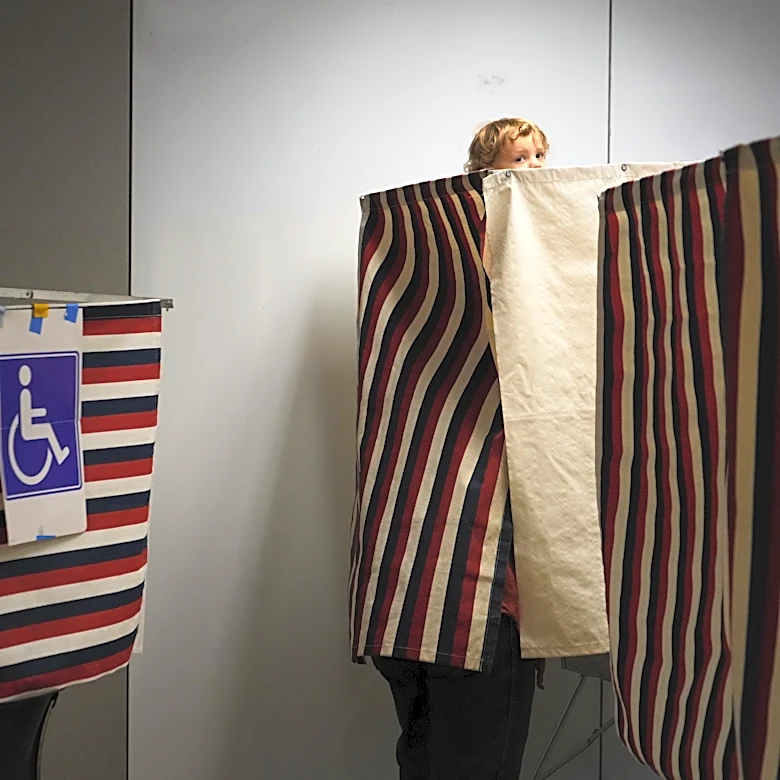



Texans will begin getting their first look at the 2026 midterm election results Tuesday night after polls close, but it could take hours or longer before some races are decided.
Polls across Texas close at 7 p.m. local time Tuesday, Nov. 3. Preliminary results are expected to begin appearing shortly afterward, with the first reported totals generally reflecting ballots cast during early voting and mail-in voting.
The Texas Secretary of State's Office said statewide and district-level results may begin appearing in its Election Night Returns system around 7:30 p.m. Counties also report results through their own election websites.
When do Texas polls close on Election Day?
Texas polling locations close at 7 p.m.
local time Tuesday, Nov. 3.
Most of the state observes Central Time, but El Paso and Hudspeth counties are in the Mountain Time Zone. Polls in those counties close at 7 p.m. Mountain Time.
Voters who are in line when polls close are still allowed to cast a ballot. That means some polling locations may not begin reporting Election Day results until later in the evening.
When will Texas election results start coming in?
The first unofficial results are expected shortly after 7 p.m. Central Time, with the state's reporting system potentially beginning to populate around 7:30 p.m.
Counties typically report early voting and mail-in ballot totals first. Election Day results follow as ballots are transported from polling locations to county election offices and counting stations.
Results will continue to be updated throughout the night and into Wednesday, Nov. 4, as counties finish counting and reporting ballots.
The Texas Secretary of State's Office does not call races or declare winners. It provides election results reported by counties.
Why could some Texas election results take longer?
Several factors can affect how quickly election results become available.
- Election Day ballots: Unlike early voting totals, Election Day ballots cannot be counted until polls close. Ballots and voting equipment must also be transported to central counting locations.
- Large counties: Counties with numerous polling locations may need more time to collect ballots and report totals.
- Voters still in line: Anyone in line at 7 p.m. can still vote, potentially delaying the reporting process at some locations.
- Mail and provisional ballots: Some eligible mail-in ballots, military and overseas ballots, and provisional ballots may be counted after Election Day.
Texas law generally requires Election Day vote totals to be submitted to the state within 24 hours after polls close.
When will Texas election results become official?
Election Night results are unofficial. County election officials must complete additional procedures, including canvassing and certification, before results become official.
Eligible mail ballots postmarked by Election Day may arrive after polls close. Provisional ballots also require additional review, and eligible military and overseas ballots may arrive after Election Day.
The certification process takes place after election officials have completed the required counting and verification procedures.
That means a candidate or news organization declaring a winner on Election Night is not the same as the state officially certifying the results.
Where can I find Texas election results?
The Texas Secretary of State's Office will publish statewide and district-level election results through its Election Night Returns portal.
For local races and ballot measures, voters should check their county election office's website. County results may appear before the same totals are reflected in the statewide reporting system.
Who declares the winner of a Texas election?
The Texas Secretary of State's Office does not independently call races or declare winners on Election Night. Instead, it collects and publishes unofficial results reported by counties.
News organizations, including the USA TODAY Network, may project a winner once enough votes have been counted to determine the likely outcome. Campaigns also may concede or declare victory. Neither action makes the results official.
The official process involves election officials reviewing and canvassing the results before the appropriate authority certifies the outcome and issues a certificate of election.
In Texas, the process varies depending on the office:
- County and precinct races: The local canvassing authority conducts the final canvass.
- Statewide, federal and district races: The state canvass is the final canvass. The Secretary of State tabulates county returns, and the governor generally issues certificates of election.
- Governor and lieutenant governor: Their election certificates are handled by the Texas House speaker after the next Legislature convenes.
Can mail-in ballots arrive after Election Day?
Yes. Texas allows certain mail-in ballots to arrive after Election Day and still be counted, provided they meet specific deadlines and requirements.
For the Nov. 3, 2026, general election:
- Domestic mail ballots: Certain ballots from voters using a regular application for a ballot by mail may arrive by 5 p.m. Wednesday, Nov. 4, if they are postmarked or otherwise marked by an approved carrier by 7 p.m. on Election Day.
- Military and overseas ballots: Eligible military and overseas voters have additional time to return their ballots. The deadline for these ballots is Monday, Nov. 9.
- Defective mail ballot envelopes: Voters whose carrier envelopes have certain correctable defects may have until Nov. 9 to correct them.
These ballots are reviewed by the Early Voting Ballot Board, which determines whether they meet the requirements to be counted. Not every ballot arriving after Election Day qualifies.
The board must finish counting eligible late-arriving ballots and resolving provisional ballots before the final canvass can take place.
What happens to provisional ballots?
A provisional ballot allows someone to cast a ballot when election officials cannot immediately verify their eligibility to vote.
This can happen if a voter's name does not appear on the registration list, their identification cannot be verified or they are attempting to vote in the wrong precinct, among other circumstances.
Provisional ballots are kept separate from regular ballots while election officials review the voter's eligibility.
County voter registrars investigate the voter's registration status and provide information to the Early Voting Ballot Board. The board, which includes members of both political parties, ultimately determines whether each provisional ballot should be counted.
Some voters who cast provisional ballots because of identification issues must take an additional step. They have until the sixth day after Election Day, Nov. 9, to present an acceptable form of identification or submit an applicable affidavit to their county voter registrar.
Not every provisional ballot is automatically counted. The board must determine that the voter was eligible and had not already voted in the election.
Voters will receive written notice explaining whether their provisional ballot was counted. If it was rejected, the notice must include the reason.
What is canvassing, and when will Texas certify election results?
Canvassing is the formal process election officials use to review and reconcile election returns before results are certified.
During the process, officials verify vote totals and reconcile the number of ballots cast with the number of voters. They also account for eligible mail-in and provisional ballots that were not included in Election Night totals.
The canvass is not the same as a recount. It is a required review of the election returns to establish the official results.
Texas has different canvassing deadlines depending on the office being contested.
- Local, county and precinct races: The final local canvass must take place between Nov. 6 and Nov. 17, 2026.
- Statewide, federal and district races: The final state canvass must take place between Nov. 21 and Dec. 7, 2026.
The state canvass is conducted after the counties have completed their required reporting. The Secretary of State tabulates the returns, and the appropriate state authority issues the certificate of election.
That means the final, certified results for some of Texas' most closely watched races may not be available until weeks after Election Day.
For voters following the results Tuesday night, the important distinction is that Election Night totals are preliminary. A projected winner is not the same as a certified winner.
Brandi D. Addison covers weather nationwide as the Weather Connect reporter for the USA TODAY Network and contributes to Texas Connect coverage statewide. She can be reached at baddison@usatodayco.com. Follow her on Facebook here.
This article originally appeared on USA TODAY: When will Texas election results be available? What to know Election Day