





It is the longest men's international break in history, and there are many stories around the world that will draw attention over the next few weeks.
Here's one fascinating topic worth watching from each of the five largest regions in international soccer:
How will Klopp and Zidane fare as they finally take charge of their nations?
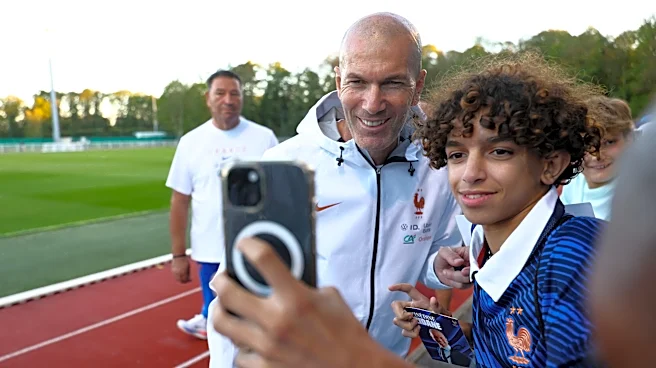
There had been rumors and rumblings for years about these top managers "going home" and taking over the national team. Zinedine Zidane was biding his time until the France job came open. Jurgen Klopp found the timing to take over Germany to be just right.
Perhaps that's why Zidane has come out so strongly, limiting his squad to just 23 players and expressing an air of seriousness around the national team that perhaps was looser before.
“I think that he has very clear ideas about what he wants
to do, in the way that he wants to manage this France team," France Football Federation president Philippe Diallo told reporters in France. "You have seen it. He is marking a break. A real page is turning.”
Klopp has taken the opposite approach, naming 44 players in two different groups ahead of games against the Netherlands, Serbia, and two matches with Greece. It's a way to make dozens of players feel like they're included and to start the era off on the right foot, plus it gives the former Liverpool coach a chance to see his squad up close.
Other interesting projects also begin this month, notably Xavi Hernandez taking over the Netherlands. That one is somewhat romantic because of the connections between Dutch soccer and FC Barcelona, where Xavi played for nearly two decades.
But there isn't the personal link of a Zidane or a Klopp, that feeling that if it doesn't go well it will be down to one man's failure to lift his country rather than tactical errors or personality mis-matches. One situation where personality is a question is Roberto Mancini taking over Italy - and trying to end its World Cup drought.
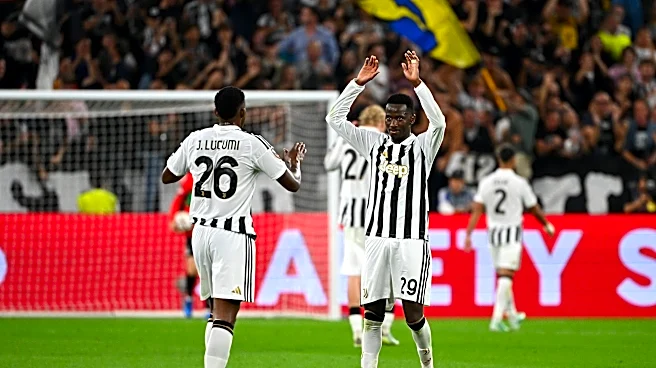
Can the Democratic Republic of Congo reload?
Recruitment is nothing new in international soccer, especially not in Africa where teams often take advantage of eligible players who developed in France, Spain, Belgium, the Netherlands or other European nations with defined youth systems.
But the Democratic Republic of Congo made a statement of intent with its call-ups. A baker's dozen of players are set to suit up for Les Leopards for the first time in this window as qualification for the 2027 African Cup of Nations begins. Some are already getting significant minutes at top teams. Others are bets on the future who were off the radar of even many scouts.
🤯 The DR Congo 🇨🇩 squads have dropped for AFCON Qualifying and their friendlies afterwards.
— The International Window (@windowintlpod) September 11, 2026
Oh my word.
🆕 Nathan Ndibu Mukadi (Aigles du Congo 🇨🇩)
🆕 Kévin Pedro (Saint-Étienne 🇫🇷)
🆕 Jordy Makengo (Freiburg 🇩🇪)
🆕 Willy Kambwala (Como 🇮🇹)
🆕 Ezechiel Banzuzi (RB Leipzig 🇩🇪)… pic.twitter.com/f0Ze0eWOIU
That is reflected in the way coach Sébastien Desabre is managing the window, with some players coming in just for AFCON qualification matches, some only for the friendlies and some attending both.
It's a low-risk entry point for players who may want to stay eligible for the country of their birth or where they're currently playing, but ideally for DR Congo the experience will lead most to commit to trying to assemble the next African powerhouse.
The hope for fans in Central Africa is that the team can build on its strong World Cup, falling one goal short to England in the round of 32, and contend for a first AFCON title since 1974.
Which Asian team will hit its stride ahead of Asian Cup - and what is Marcelo Gallardo doing there?
The next major competition on the men's international soccer calendar is the Asian Cup, with that region's continental championship taking place Jan. 7-Feb. 5, 2027 in Saudi Arabia.
It leaves a short runway for teams, with just this window and the November games to turn the page from the World Cup and try to win a major trophy.
Japan enters as the favorite, with manager Hajime Moriyasu staying on through the tournament. Moriyasu's side is preparing at home, with invited teams mostly from South America taking part in a mini-tournament.
Korea, another 2027 hopeful, finds itself in big transition, with Spain native Robert Moreno taking over after the frustration of the 2026 World Cup group-stage exit.
Both those teams will play Ecuador, which starts a new chapter of its own. Despite being a legend in South America thanks to the trophies he won leading River Plate, Marcelo Gallardo begins life as Ecuador manager with an Asian tour, playing Korea, Japan and either Panama or New Zealand in this window.
There's a lot on the line for him after his work away from River Plate disappointed, but he won't face as stiff of a test as the Asian teams will in just a few months' time.
Other contenders like Iraq, Saudi Arabia and reigning champion Qatar are participating in the Gulf Cup - also in Saudi Arabia, giving a preview of what to expect early next year.
Can Argentina prove its future is bright as it sends Messi off?
With no Nations League and no major competition on the horizon, most South American nations are using this window to build toward the future.
That's especially true in Argentina, where superstar Lionel Messi will say goodbye with a send-off match Oct. 6 against Benin. But what comes after?
Apart from his frustrated flirtation with international retirement a decade ago, Argentina hasn't had to consider life without Messi in more than two decades. Now, that frightening scenario is a reality.
The cupboard is not at all bare. Bright stars shining in Europe have been called in for this series of friendly matches against Bolivia, Burkina Faso and Benin. Whether it's Nico Paz with Como, Gianluca Prestianni with Benfica, Franco Mastantuono with Fiorentina or Santiago Castro with Roma, there is talent already getting an opportunity. Domestic-based players like goalkeeper of the future Santiago Beltran, many of whom will head to Europe in the next few transfer windows, also form part of the 14 players 23 or younger called in.
But even combined, how will they fill a space as big as the one Messi, the player the team has been built around for the last several cycles, leaves?
Not only will they be navigating life without their biggest star, they may soon lose their manager. Lionel Scaloni has been in the role since 2018 and seems to be seriously mulling a move to club management - or simply a break.
"I don’t know. I still don’t know anything. We’re still enjoying Leo. That’s what is important right now," Mastantuono said in one of the airport arrival interviews that are fixtures of every international break in Latin America. "I’m feeling really good, adapting well to Italian soccer. I’m happy to be playing. I feel good."
That could end up benefitting Argentina in the long run. Scaloni has shown he's more than capable, but a new era may require new leadership and new ideas on the field. They won't need them against these opponents, but it's time to start thinking about a future when they will be necessary.
Will Central America reclaim its place in the Concacaf region?
Before the 2026 World Cup, the last time a Caribbean nation secured one of Concacaf's qualification places was 2005, when Trinidad and Tobago beat Bahrain in the intercontinental playoff to secure a place in the 2006 tournament in Germany.
While North America remains the strongest subregion in Concacaf, the balance had swung firmly toward Central America when it comes to the second-strongest zone in the region. That is, it did until this past year when Haiti topped a group with Honduras, Costa Rica and Nicaragua to go to the World Cup while Jamaica and Suriname landed playoff places (with regional power Panama beating Suriname to the top of their qualification group).
Now, the Central American nations are trying to reload.
In El Salvador, federation president Yamil Bukele has pushed to improve scouting, bolster the local league and support the national team financially. Honduras beat several rivals to sign Spanish sporting director Francis Hernández, who has put a Spanish head coach and several assistants with experience in the setup that led to a 2026 World Cup championship in place.
Costa Rica is relying on Fernando "Bocha" Batista to dig the team out after Miguel Herrera's tenure ended in frustration.
Read more: Concacaf September Power Rankings
Even Nicaragua, often bringing up the rear in Central America (though ahead of tiny Belize), has bet on a new coach it hopes will lead it through the 2030 World Cup cycle in experienced Argentine manager Juan Cruz Real. More than half of the team he called up is based abroad.
The Concacaf Nations League will provide plenty of showdowns between those aspirants for the quarterfinals. It begins this window, as the Central American teams hope to lay down a statement of intent about what their next four years will look like.
This article originally appeared on USA TODAY: Top coaches in Europe, Messi's farewell & more: What to watch in each region during international window
Our editors independently choose our recommendations. Some content is produced with paid support from a third party, however our editorial decisions remain independent. If you buy through our links, the USA TODAY Network may earn a commission. Prices and availability may change.