






A rare, untreatable tick-borne illness was identified in New York for the first time after a Long Island man survived a deadly infection.
Michael Larkin, 67, of Long Island, suffered from "debilitating fevers, headaches and night sweats" for five years after being bitten by a tick in his backyard in 2021, according to a July 1 news conference hosted by Sen. Chuck Schumer and the Stony Brook doctor who eventually diagnosed the man with Bourbon virus.
When Larkin landed in the hospital during his plight, the rare nature of the virus led to him initially being misdiagnosed with Lyme disease. However, Stony Brook Medicine doctors began looking beyond the more common diagnoses when typical treatment didn't work.
"I would hit rock bottom and can't get
off the couch," Larkin told CBS New York when describing the chronic headaches he battled for years. "I demanded my wife take me to the hospital, because that's how bad it was. I couldn't stand it anymore."
It was only after extensive testing and analysis that Larkin was finally diagnosed in April 2026, according to a paper recently published by his medical team in the American Journal of Tropical Medicine and Hygiene. Larkin spent days in the hospital receiving supportive care before finally getting on the road to recovery.
What is Bourbon virus?
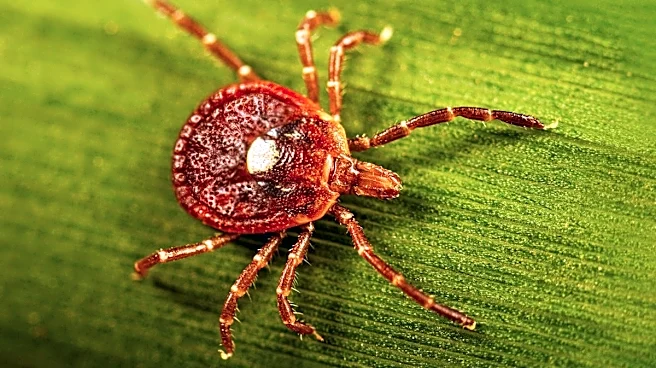
Bourbon is a rare condition caused by a virus transmitted through bites from infected ticks, especially the Lone Star tick. It is named for Bourbon County, Kansas, where the first case was identified in 2014, according to the Centers for Disease Control and Prevention (CDC).
Since it is a relatively recent discovery, the Bourbon virus is not yet well understood and may be underdiagnosed, Luis Marcos, professor at the Renaissance School of Medicine at Stony Brook University and the doctor who helped diagnose Larkin, said in a news release.
"When someone is infected with Bourbon virus, symptoms they (experience) are similar to other tick-borne infections,” he said, adding that there is a dense population of Lone Star ticks in the northeast. "For these reasons, the Bourbon virus is likely more prevalent than we think in our region and other cases are likely not being diagnosed.”
Two known cases of Bourbon, one in 2014 and one in 2026, resulted in deaths. Only a handful of cases have ever been identified in the Midwest, East Coast, and Southern United States, per the CDC. A 2024 study named Kansas, Oklahoma and Missouri, specifically.
There is no vaccine or medication to treat Bourbon virus. Milder symptoms can be addressed with over-the-counter drugs, such as pain relievers. More serious infections may result in hospitalization for supportive care, such as IV fluids and pain relief.
There is also no widely available commercial test for Bourbon, meaning cases of suspected infections often have to be sent to dedicated labs or state health departments for analysis.
"Now we know the virus can be lethal," Marcos told CBS New York. "And honestly, this may be the very, very tip of the iceberg."

Symptoms of Bourbon virus
The symptoms of a Bourbon virus infection are similar to those of Lyme disease, according to Stony Brook Medicine and the CDC. Because there is no vaccine or other preventive medication, the best way to avoid contracting Bourbon virus is to avoid tick bites, says the CDC.
Symptoms include:
- Fever
- Fatigue
- Rash
- Headache
- Body aches
- Nausea and vomiting
How to prevent tick exposure
Prevention is key in combating the ever-expanding tick population and season, USA TODAY previously reported.
Since areas in and around yards and residential locations are prime sites for bites, Dr. Jim Fredericks, chief entomologist with the National Pest Management Association, advises taking preventive steps on your own property. While Fredericks suggests consulting a specialist to tick-proof your yard, you can start by:
- Keeping grass trimmed and removing brush and leaf piles.
- Creating barriers between your property and more wild areas of brush, trees, etc.
- Using the "towel" drag method: a test in which you drag a white towel along mowed grass and inspect it for ticks every few feet.
- Asking an expert about safe lawn treatments.
If you spend time outside, you should:
- Wear repellent.
- Cover exposed skin with clothing and proper footwear.
- Remove clothing and do a tick check as soon as you return home.
- Wear clothing treated with EPA-approved repellents, such as permethrin.
This article originally appeared on USA TODAY: Doctor says cases of this deadly tick-borne virus may go undetected