


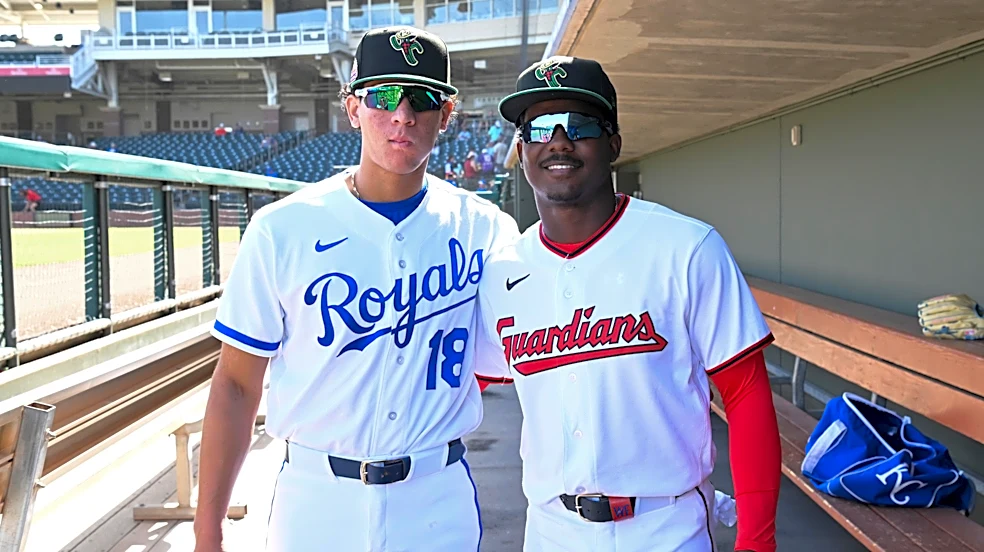


IBIÚNA, Brazil – Scouts for the Tampa Bay Rays and Boston Red Sox strolled the sidelines and snapped pictures with their smartphones as moms unwrapped sushi lunches for some of the 23-and-under players. Some players threw 85-mph-plus heaters; others smashed home runs well over the fence.
On a recent Saturday morning, more than 200 players gathered at the Yakult Training Center in this rural, hilly region about 40 miles outside of São Paulo for a two-day tournament that drew some of Brazil’s best baseball talent. Players surnamed Suzuki and Okuma played alongside Rodrigo and Silva – a nod to baseball’s deep Japanese immigrant roots in Brazil and the country’s mix of culture and playing styles.
Not a single soccer ball could be seen.
Long overshadowed
by the Amazonian-sized specter of soccer, baseball has struggled to gain a foothold among Brazil’s favorite sports. But a recent sizeable investment by Major League Baseball in the Yakult facility – and an influx of talented Venezuelan and Cuban players fleeing hardships in their own countries – could be signaling a new era of baseball in Brazil.
On Jan. 15, the Red Sox awarded a $500,000 signing bonus to a 17-year-old hard-throwing righthander named Claudio Pereira, who trained at the facility.Only five Brazilian-born players have ever played in the Majors, according to baseball-reference.com. Organizers said that could soon change.
“We are the next big thing when it comes to baseball,” said Joe Hirakuri, a former member of the Brazilian national team who played in Japan before returning to Brazil and becoming a de facto ambassador to Brazilian baseball. “We have big boys. We have lefties. We have talent. The only thing that was missing was the right support.”
Rebecca Seesel, MLB’s vice president of international operations, said the investment in the Yakult facility has a dual purpose: develop elite talent and help boost baseball interest across Latin America's largest country.
The fact that Major League Baseball teams sign a few Brazilian players each year puts them in an elevated category of countries, she said.
“We’ve been keeping an eye on [Brazil], working with them,” Seesel said. “We thought this made sense as a next step.”
Baseball immigrates to Brazil, Japanese spread it
American missionaries brought the first baseballs to Brazil in the late 19th century, around the same time soccer arrived, said Andre Kobayashi Deckrow, a historian at the University of Minnesota who has researched baseball origins in Brazil.
Japanese farmworkers who flocked to the country in the 1910s and ‘20s quickly spread it around the country, he said. In places like São Paulo, Bastos and Curitiba, Japanese communities emerged and baseball teams sprouted.
Baseball floundered in the wake of World War II, when Brazil sided with the Allies and the sport was seen as a “Japanese game,” Deckrow said. But re-emerged again in the later half of the 20th century.
There is still no professional baseball league in Brazil. But today there are around 50 private baseball clubs spread across the country, with names like Nikkei Curitiba (Nikkei means “descended from Japan”) and Recife Samurai, which play one another in tournaments according to age brackets. They’re overseen by the Brazilian Baseball and Softball Confederation, known by its Portuguese acronym, CBBS.
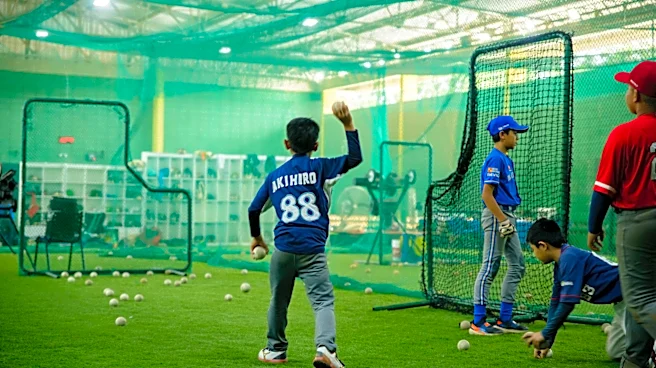
At the center of the Brazilian baseball world is the Yakult Training Center in the outskirts of São Paulo, a sprawling property surrounded by lettuce farms and vineyards with several baseball diamonds, dorms for players and an indoor training facility.
In the late 1990s, the president of the Brazilian division of Yakult, the Japanese probiotic beverage company, offered to build a complex of baseball fields and batting cages for CBBS, Deckrow, the historian, said.

Around 20 of Brazil’s best young players were selected each year to train and live at the facility and most families had to pay a stipend to cover room and board.
Last year, MLB donated money to modernize the facility, expand the scholarships to 50 and eliminate the family contributions. Today, some 50 players, aged between 13 and 17, reside at the facility.
Tracking exit velocities, bat speeds
Today, radars placed throughout the indoor training facility and fields track exit velocities, attack angles and bat speeds. Players also slip quarter-sized wearable sensors into arm sleeves to gather biomechanical data, such as arm speed and elbow torque.
On a recent afternoon, a group of youngsters lined up to hit balls pitched from a coach in one of the cages. Behind them, flat screen TVs displayed the speed of each pitch, the exit velocity off the bat and where the ball would land in a simulated field situation.
Eduardo Hashimoto, 47, played as a teenager in São Paulo and today brings his 10-year-old son, Henrique, to train at the center.
He said the influx of technology and know-how, which before was only available to a select few who managed to play in the United States, should even the playing field and rapidly develop Brazilian talent.
“This is totally different,” Hashimoto said. “The pitchers have sensors. The batters have sensors. They know exactly what to correct.”
Most mornings, Teruki Yagueshita-Felipe’s life closely resembles that of any other 14-year-old Brazilian teen: breakfast, English, math, geography, horsing around with friends.
But at 1:45 p.m. each day, baseball takes over.
As one of the 50 resident players at the Yakult center, Yagueshita-Felipe, who plays catcher and first base, goes through infield drills, rundowns, catcher positioning, conditioning runs and throwing out runners at second. Then, it’s two hours in the batting cages and, twice a week, he and others hit the gym.
In his few spare hours, Yagueshita-Felipe will gather with friends to watch the World Series. He counts Chicago White Sox slugger Munetaka Murakami as his favorite player.
His life goal is simple: “I intend to reach the major leagues in the USA,” he said.
Another factor that may be impacting Brazilian baseball is the massive recent influx of Venezuelans and Cubans into the country.
Over the past decade, about 1.5 million Venezuelans have sought refuge in Brazil, according to the United Nations, while the number of Cubans applying for asylum here jumped from 22,288 in 2024 to nearly 42,000 last year. Many have signed up with Brazil’s baseball clubs.
Of the 50 scholarship winners at the Yakult facility, seven were from Venezuela or Cuba, according to the CBBS.
At the Nikkei Curitiba club, about 250 miles south of São Paulo, on a recent, rainy night, members of the 15 and under team took turns hitting balls spat at them from a two-wheel pitching machine.

Among them was Keyver Villamizar, a 15-year-old Venezuelan who’s big for his age and smashed the ball each time it got near his bat, and two recently-arrived Cubans.
Villamizar had been in Brazil for three years and joined the baseball club soon after arriving. He played in Venezuela, he said, and hopes to continue. “I love it,” he said.
In the batting cage, Villamizar spoke fluent Portuguese to the coach, Sidney Sato Oku, 57 – whom everyone addressed by the honorific “sensei” – and other Brazilian teammates and switched to Spanish to talk to the Cuban players.
‘Play like Japanese, play a Caribbean game’
Sato fed balls into the pitching machine, starting at around 65 mph and later raising the speed to 70 mph.
He said Venezuelans arrive in Brazil with more experience in baseball, having played since they were little. He and other coaches, he said, try to instill a Japanese playing style: contact over power at the plate, speed, focus on defense.
In the 1990s, as well, a flood of Cuban coaches arrived in Brazil and spread their baseball mentality of attacking the ball – both at the plate and in the field – a style which has lingered in Brazilian clubs.

That mix of Japanese, Venezuelan and Cuban playing styles has created a unique brand of player in Brazil, said Rafael Motooka, 44, a Brazil-based consultant for the Boston Red Sox, who pointed the club to Pereira in January.
“We can play like Japanese, we can play a Caribbean game, or we can play like Americans,” said Motooka, who’s from São Paulo and played six years in the Cincinnati Reds’ minor league system. “This mix of all the races, it’s good for us.”
At the recent tournament at the Yakult facility, Nikkei Curitiba faced off against Maringá. Players stretched and threw balls around, as Brazilian house music blared from a Bluetooth speaker.
Nicolas Yoshio Yamanishi Oku, 20, stretched and chatted with other players. He grew up playing baseball like his dad before him. Recently, he played at an academy in Orlando.
The MLB investments have helped tremendously in player development, Yamanishi said, which he’s noticed in the caliber of play at tournaments like this one.
But at the moment he had a more pressing concern: “I just hope we win today,” he said.
He and the other Curitiba players lined up along the third base line facing the field, removed their caps, bowed and bellowed, “Onegaishimasu!” – a Japanese phrase signaling respect and honor to another – then turned and repeated the gesture toward their coaches.
The players then circled around a coach, who read out the starting lineup, a mix of Japanese, Spanish and Portuguese names.
Jervis is a national correspondent based in Austin, Texas. He reported this story from Curitiba and São Paulo, Brazil. Follow him on X: @MrRJervis, or Instagram: @rjervis5905.
This article originally appeared on USA TODAY: Brazil is a soccer giant. MLB and Tampa Bay Rays see baseball gold