

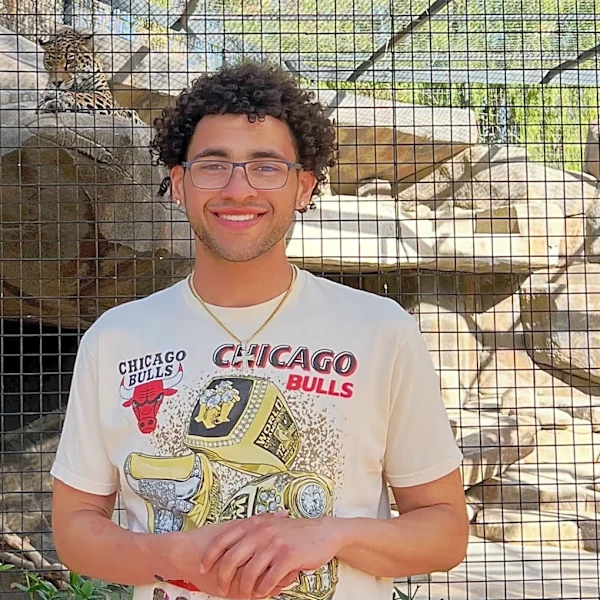

Human remains discovered earlier this month have been identified as those of Jason Landry, a 21-year-old Texas State University student who disappeared in 2020 after his vehicle was found crashed and abandoned along a rural road, officials announced on Sept. 23.
The identification was confirmed through DNA testing conducted by the University of North Texas Center for Human Identification, Attorney General Ken Paxton's office said in a news release. The skeletal remains were found on Sept. 8 by a resident in Caldwell County, located just southeast of Austin, Texas.
The remains did not reveal additional information about Landry's cause or manner of death, and investigators said they found no evidence of foul play, according to the attorney general's
office.
Paxton's office said investigators with its Cold Case Unit spent years conducting repeated ground and aerial searches, pursuing new leads and reviewing evidence in the disappearance of Landry. Investigators worked with the Caldwell County Sheriff’s Office, the Texas Department of Public Safety, and Texas Search and Rescue (TEXSAR), along with citizen volunteers.
"This development marks a critical moment in a case that has weighed heavily on our hearts for nearly six years," Paxton said in a statement. "The Landry family has suffered an unimaginable tragedy, and they will remain in our prayers, especially during this incredibly difficult time."
Jason Landry's disappearance in 2020
Authorities previously said Landry left his apartment in San Marcos, Texas, a city between Austin and San Antonio, at 10:55 p.m. local time on Dec. 13, 2020, intending to drive to his parents’ home in Missouri City, a Houston-area suburb, before he disappeared.
Investigators later reconstructed much of his route using cellphone and computer data, the Caldwell County Sheriff’s Office said in a news release on Jan. 29, 2021. Landry drove south on Highway 80 through Caldwell County, passed through the communities of Martindale, Fentress, Prairie Lea and Stairtown, and entered Luling shortly before 11:25 p.m.
Landry stopped using his navigation application when he reached the intersection of Austin Street and U.S. Highway 183 in Luling and began using Snapchat on his cellphone, according to the sheriff's office. Authorities said his digital footprint effectively ended then.
His vehicle was discovered abandoned in the 2300 block of Salt Flat Road shortly after midnight on Dec. 14, 2020, the sheriff's office said at the time.
Landry’s remains were found nearly six years later in an area east of Salt Flat Road, between Soda Springs and Biggs Road, according to the attorney general's office. The sheriff's office noted that the area where the remains were discovered was located "just outside the search grids."
Several personal belongings found near crash scene
The crash appeared to be a single-vehicle collision on a gravel road, according to the sheriff's office. Investigators previously said evidence indicated the vehicle likely left the roadway from overcorrecting and struck trees and a barbed-wire fence.
The vehicle was found with its lights on, keys in the ignition, and the front passenger-side door locked, the sheriff's office said. Investigators also found no evidence of blood inside the vehicle.
"There is no evidence that any other vehicle or outside force was involved in the collision," according to the 2021 news release. "All of the evidence collected leads investigators to be confident that the contact with the trees and fence line was the only contact the vehicle sustained."
Authorities later discovered clothing, a backpack, a wallet, a laptop computer, gaming equipment, toiletries, and a tumbler containing Landry's dead betta fish near the roadway. A small blood smear was found on the clothing, though investigators said it was not indicative of serious injury and may have resulted from contact with a fence or vegetation.
The clothing found along the roadway was believed to have been what Landry was wearing before the crash, and investigators found no indication it had been "removed under duress or threat," according to the sheriff’s office. Temperatures in the area that night were cold, ranging from a low of about 36 degrees to a high of 43 degrees.
Thousands of acres covered in search for Jason Landry
In January 2021, the sheriff's office said TEXSAR had searched more than 3,900 acres on foot, horseback and with canines, as well as more than 16,900 acres by air using drones, helicopters and fixed-wing aircraft.
"The family and friends of Jason have not seen or heard from him since before the accident on Dec. 13th and his whereabouts are currently unknown," the sheriff's office said in a statement on Jan. 8, 2021.
Investigators also reviewed hundreds of hours of surveillance video from Luling and surrounding areas, and examined Landry's electronic and social media data, according to the sheriff's office.
At the time, investigators said there was no evidence Landry intended to meet anyone in the Luling area and no indication that another person was involved in his disappearance. Authorities previously described the case as an isolated event and said there was no known threat to the public.
This article originally appeared on USA TODAY: Human remains identified as Texas State student Jason Landry