

The midterms are not happening two weeks from now.
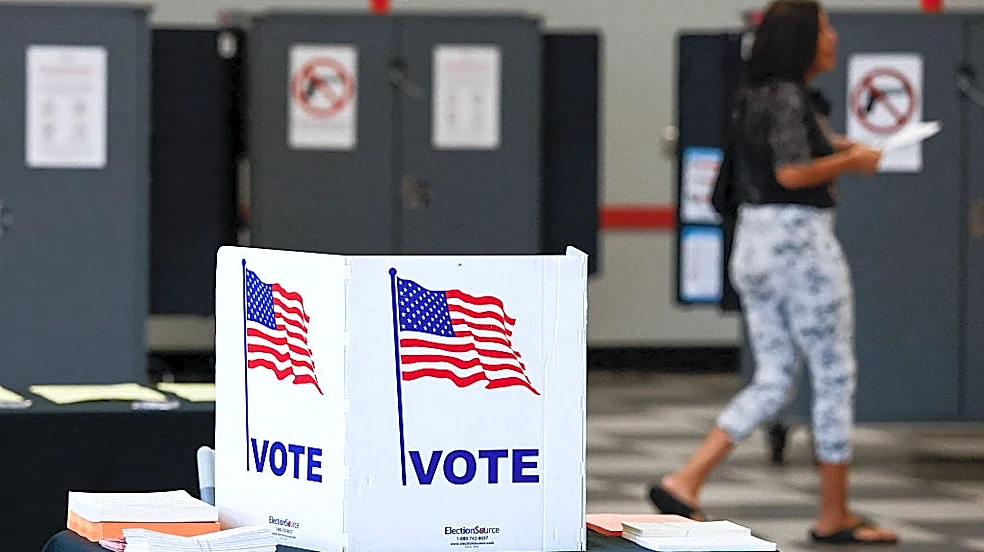
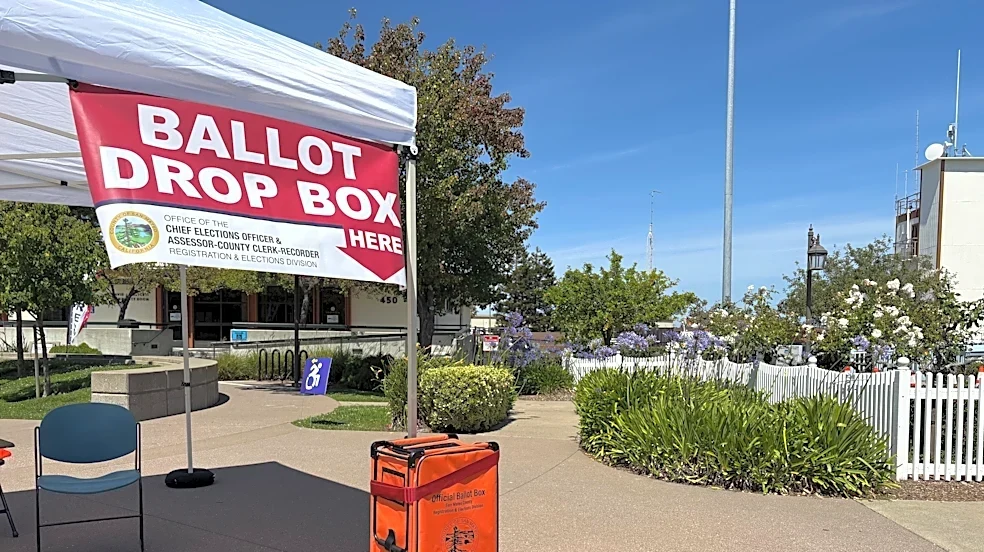
Those elections are already underway, with about 8 million votes having been cast through early voting and mail ballots.
Also in progress: President Donald Trump’s continuing attempts to disrupt the process of how Americans vote.
Past is prologue for Trump's habitual attempts to control elections. He's done it before. He'll do it again, especially with Democrats poised to take control of Congress and bring oversight and accountability to his second term as president.
Election officials across the US are prepping for voting disruptions

Across America, election administrators and law enforcement agencies are planning for a smooth election, but also preparing for potential disruptions.
That includes training for the possibility of armed federal agents showing up at polling
places and mail ballot drop boxes, which would violate federal law and has prompted three lawsuits seeking to prohibit that from happening.
State and local officials empowered to run elections by Article I of the U.S. Constitution – which grants zero authority to any president to interfere – are also talking to their law enforcement agencies about how to respond if federal agents attempt to break the election's chain of custody by seizing ballots or voting machines.
That's not a theoretical exercise. Trump in January said he regretted not having the National Guard seize voting machines after the 2020 presidential election.
Trump's second term has been all about attacking voting

And Trump, whose second term has been dedicated to expanding and abusing presidential authority, could be using all his lies about voter fraud as a pretext to declare a national emergency to invoke martial law or the Insurrection Act so he can control the results of the midterms.
A recent New York Times analysis found that Trump has used his second-term platform to question the integrity of American elections on more than 70% of the days that he has been in office.
He's obsessed with obtaining the power to pick the voters, rather than having voters pick their representatives in Congress. And he is frustrated, because he keeps banging into constitutional barriers.
Federal judges have repeatedly rejected Trump's attempt to create a national roll of eligible voters. And in September, the U.S. Supreme Court stymied his attempt to control which voters can use mail ballots.
David Becker, a former Department of Justice lawyer who founded The Center for Election Innovation & Research, predicted plenty of "bluster and temper tantrums" in the days ahead from Trump.
Becker, in an Oct. 15 media briefing, said: "We're dealing with an unprecedented attack by the federal government on state sovereignty in elections." And that will include, he said, "spreading lies and disinformation about our elections, threatening election officials, and slandering their work."
But he doubts that federal agents or the military will show up at polling places or try to seize ballots or voting machines, while acknowledging that election administrators are preparing for that just in case.
"Any court in the country will block that immediately, and there could be tremendous political backlash," Becker said.
Instead, he expects Trump's attacks will serve as the shaky foundation in an attempt to change the results, just like the aftermath of the 2020 election.
"I think it's absolutely being done to lay the groundwork for some very vague attempt to challenge the results of the election in the post-election environment," Becker said. "But I'm also very confident that the courts, our institutions, will hold there."
This all adds unnecessary work at the busiest time of the year for elections administrators and law enforcement officers.
County officials are running drills for what's to come
Michele Carew, the elections administrator in Bexar County, Texas, told journalists in a Oct. 14 briefing arranged by the Partnership for Large Elections Jurisdictions (PLEJ), that she had conducted "mandatory training" for election clerks and judges in the event that federal agents show up at polling places.
That included a playbook created "should someone show up to the polls that's not supposed to be there, how to handle it, how to de-escalate the situation, and who to contact in those instances," Carew said.
Lisa Brown, the county clerk in Oakland County, Michigan, said her team did a "tabletop exercise" on dealing with federal agents at polling places, a simulation to game out how to respond.
Brown knows to be prepared. She told the PLEJ briefing that Michigan election officials once had to deal with a candidate who had suggested unplugging vote tabulators if his supporters didn't like how the results were piling up.
Imagine if that candidate were the president of the United States of America. Just kidding. That's exactly Trump's attitude toward election results he doesn't want to see.
Look at Trump's history with elections to see what might come
Nobody should find that surprising. Trump spent a solid decade spreading lies about widespread voter fraud, claims he could never support with evidence.
And Trump is a sitting president who desperately tried to overturn the 2020 election after he lost to Joe Biden. That provoked a criminal indictment that was only dropped because he won a second term in 2024, and longstanding Department of Justice protocol says a president can't be prosecuted while in office.
The good news here: Our government guardrails held after the 2020 election, as Trump's attorney general told him he had lost and the conservative majority on the U.S. Supreme Court repeatedly rejected his attempts to change the result. And Trump's first-term vice president, Mike Pence, rejected his illegal scheme to steal the election.
The bad news here: Trump's second-term staff feels no compunction about adhering to his many grievance-driven conspiracy theories. Do you really think Vice President JD Vance would ever tell Trump it is wrong to interfere in the results of the 2026 midterms?
And here's what could be the really bad news: The lesson Trump has learned in his second term is that he can take action much faster than federal courts can constrain him.
Trump is always testing the limits of what he can get away with. The courts have consistently played catch-up, trying to constrain actions after they happen.
Knocking down the East Wing of the White House. Ruining the John F. Kennedy Center for the Performing Arts. Piling up tariff after tariff after tariff in a senseless international trade war. These are all things Trump did before federal judges could rule on them.
Still, Becker thinks Trump won't get ahead of the courts in meddling in the midterms because he lacks the authority.
"There's no question there have been times the administration has tried to bulldoze over and get things done so that courts can't act in time," Becker told me. "Elections are different. The federal government doesn't run elections."
Follow USA TODAY columnist Chris Brennan on Bluesky, @bychrisbrennan.bsky.social, and on X, @ByChrisBrennan. Sign up for his weekly newsletter, Translating Politics, here.
This article originally appeared on USA TODAY: Trump tried to control elections before. He's doing it again | Opinion