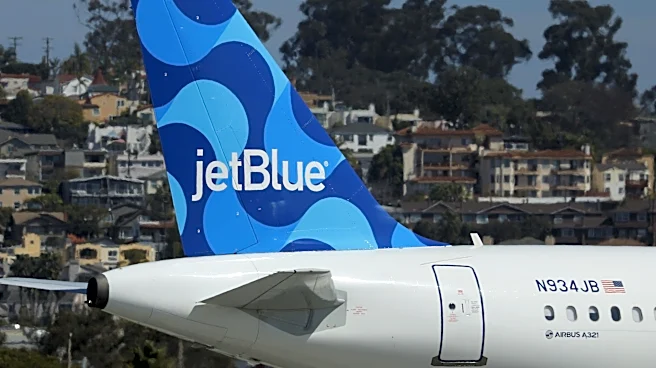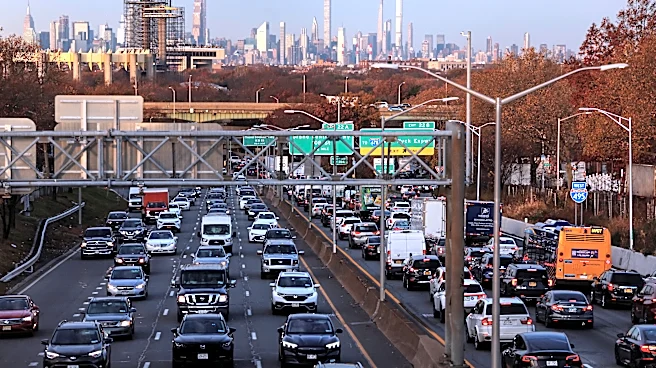



Nearly 73 million Americas are expected to hit the road for Thanksgiving, according to the American Automobile Association, which projects that nearly 6 million others will take domestic flights.
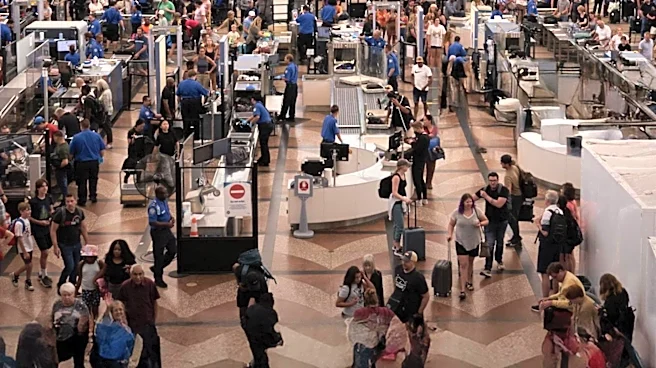
The Transportation Security Administration’s final projections are still being finalized, but TSA says early indicators suggest that Sunday, Nov. 29, will be the busiest travel day of the holiday period running from Tuesday, Nov. 24, through Monday, Nov. 30. More than 3.13 million passengers were screened the Sunday after last Thanksgiving, a record high.
“After three years of record highs, the number of travelers is slightly lower, partly because of higher travel costs this year,” Stacey Barber, vice president of AAA Travel, said in a news release. “But
travelers won't notice much of a difference on the roads and at the airports, since projected volumes remain near record levels.”
Regardless of how you get to your Thanksgiving destination, when you leave and how you prepare can dramatically impact your trip.
Here’s what to know before heading out.
What is the best time to travel for Thanksgiving?
In general, mornings are your best bet, according to transportation data provider INRIX.
If you don’t mind driving on the holiday, Thanksgiving day is expected to have the least traffic overall. Just don’t speed up to make it to your destination.
Allstate’s Thanksgiving Driver Report found high-speed driving (80 mph or faster) nearly doubled last Thanksgiving morning, compared to an average Thursday.
Here are the best times to drive throughout the week, according to INRIX and AAA:
- Tuesday, Nov. 24 – before 1 p.m.
- Wednesday, Nov. 25 – before noon
- Thursday, Nov. 26 – minimal traffic expected
- Friday, Nov. 27 – before noon
- Saturday, Nov. 28 – before 11 a.m.
- Sunday, Nov. 29 – before 11 a.m.
- Monday, Nov. 30 – before 1 p.m.
What day is Thanksgiving traffic the worst?
INRIX expects Tuesday and Wednesday before Thanksgiving and Sunday and Monday after Thanksgiving to be the busiest on the road, especially afternoons and evenings.
“Major metro areas like New York, Washington, DC, Los Angeles, and Boston could see more than double their normal traffic congestion,” AAA said in its news release.
Here are the worst times to drive throughout the week, according to INRIX and AAA:
- Tuesday, Nov. 24 – 2 p.m. to 8 p.m.
- Wednesday, Nov. 25 – noon to 7 p.m.
- Thursday, Nov. 26 – minimal traffic expected
- Friday, Nov. 27 – 1 p.m. to 7 p.m.
- Saturday, Nov. 28 – noon to 9 p.m.
- Sunday, Nov. 29 – noon to 8 p.m.
- Monday, Nov. 30 – 2 p.m. to 7 p.m.
What is the best way to prepare for a road trip?
Donnie Carr, president and CEO of auto repair franchise Christian Brothers Automotive, recommends booking a free courtesy inspection at a local repair shop one to two weeks before any road trip.
“That way, if there are any issues found, they can be repaired with plenty of time before that trip happens,” he told USA TODAY. “The most common issues to address (are) your tires, batteries, brakes and fluids.” He said anything that impacts steering or the way you see out of your car should be addressed, too.
If you’re renting a car, he advised familiarizing yourself with the vehicle and getting everything set up before leaving the rental site. That includes adjusting mirrors, plugging in your phone, pulling up directions, and anything else you need, so you aren’t trying to juggle that while you’re driving.
Once you hit the road, he said, “Listen to your car.” If anything feels off or a warning light comes on, he said, “You want to find a safe place to pull over as quickly as possible so you can kind of get out, walk around the vehicle, assess, see if there’s anything wrong that you can see, whether it’s fluid dripping out or potentially a flat tire, but you want to get off the road as quickly and as safely as possible.”
AAA says it responded to more than half a million emergency roadside assistance calls last Thanksgiving for flat tires, dead batteries, fuel delivery, lockouts and towing.
Carr suggests packing jumper cables or a battery-operated jumper, a flashlight and snacks just in case.

Do you really need to arrive 2 hours before a flight?
Major airlines, including American, Delta and United, all recommend arriving at the airport at least two hours early for domestic flights and at least three hours early for international flights, but check your flight status first in case of cancellations or delays.
You can also check estimated airport security wait times on the free MyTSA app, but TSA says you should also keep in mind the whole airport experience and listen to guidance from airports about local traffic delays.
Reminder, REAL ID is now required to fly, if you’re 18 or older. Adults who show up at TSA checkpoints without REAL ID-compliant identification are subject to a $45 fee to have their identity verified through TSA’s ConfirmID program.
Can you take food through TSA like Thanksgiving dinner?
Yes. Solid food is OK to bring through TSA security checkpoints.
“However, if you can spill it, spread it, spray it, pump it or pour it, and it’s larger than 3.4 ounces, then it should go in a checked bag,” TSA said in a news release around 2024’s Thanksgiving holiday, citing examples like cranberry sauce and gravy.
As always, most liquids are limited to individual containers no greater than 3.4 ounces or 100 ml, and all containers must fit in a single quart-size bag to be carried on board.
Exceptions include breast milk, infant formula, toddler drinks, baby food and medicine.
Is it expensive to travel during Thanksgiving?
Yes. Historically, the Thanksgiving travel period is one of the busiest and most expensive times to travel in the U.S., but it’s even costlier this year.
Based on what travelers paid when they booked their flights, AAA data shows roundtrip domestic flights are 17% more expensive this year, averaging $800 per ticket.
The cost of fuel has come down a bit, but it’s still high. On Nov. 12, the national average for a gallon of regular gas fell below $4 for the first time since July, according to AAA, but at $3.87 as of Nov. 13, it was still substantially higher than the previously recorded Thanksgiving day high of $3.58 in 2022.
This article originally appeared on USA TODAY: 73M will drive for Thanksgiving. Here's when you should hit the road