





Whether you call the body of water that stretches from Texas to Florida the Gulf of America or the Gulf of Mexico, a teeming world within its depths showed dramatic declines in the years after the Deepwater Horizon disaster, a new study has revealed.
Within 3½ years after the April 2010 disaster sent oil billowing into the ocean, many of the Gulf’s deep-water species virtually disappeared, reports the study in the Proceedings of the National Academy of Sciences in October.
A diverse array of fish, squid and other sea life that once thrived in the Gulf saw population declines ranging from 60% to 80% for some species, concludes the study, led by Tracey Sutton, a professor in the Guy Harvey Research Institute at Nova Southeastern University in Fort
Lauderdale.
Its results suggest that the transition could be “the fastest and most severe faunal decline” ever reported in the open ocean, and the timeline for recovery remains unclear.
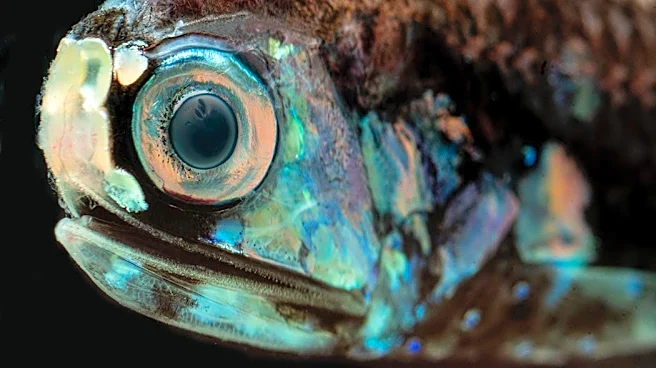
Since shortly after the disaster, Sutton and others have studied the species that live in the Gulf at depths from 600 to 5,000 feet, a fascinating world where sea creatures swim upward toward the surface at night to feed, then descend into the depths during the day.

These often-mysterious creatures are a crucial link in the ecosystem, providing prey for more familiar and well-loved animals such as whales, dolphins, tuna, sharks and seabirds, said Sutton, founder and director of the DEEPEND research consortium that produced the study.
The study does not directly link the Deepwater Horizon disaster to the die-offs that began soon after it occurred, but indicates that the spill and its aftermath are the most plausible explanation. Researchers said the evidence ruled out natural phenomena, “suggesting a large-scale pollution event.”
The explosion, fire and sinking about 50 miles south of Louisiana claimed 11 lives and injured 17. The disaster continued to unfold over months as crews worked to contain the massive leak at a wellhead a mile deep in the ocean.
How much oil was released in the spill?
Ultimately, more than 134 million gallons of oil and 770,000 gallons of chemical dispersant were released into the Gulf, according to the National Oceanic and Atmospheric Administration. Globs of oil washed onto beaches, drifted on the water and coated birds, turtles and other wildlife, as well as deep-sea corals.
Subsequent chemical measurements detected dissolved oil that couldn’t be seen in the water in nearly all of the eastern half of the Gulf, as far south as the Florida Straits, Sutton said.

'A significant change'
For the recently published study, the researchers used nets, acoustic surveys and genetic analysis over a 12-year period. Among the declines they documented: a 72.8% drop in krill, a 64% decrease in fishes and a 62% decline in large crustaceans.
“The animals that dive the deepest have declined the greatest,” Sutton said.
Similar declines have been documented in the Gulf’s marine mammal populations, including among sperm whales, beaked whales and Rice’s whales, according to NOAA, which funds the research through its Gulf restoration programs.
A loss of genetic diversity documented in the research is important because it’s “nature’s insurance policy,” said co-author Heather Bracken-Grissom, an assistant professor at Florida International University in Miami. Genetically diverse populations are better equipped to respond to environmental changes.

The Gulf’s “midwater ecosystem has undergone a significant change,” said Kevin Boswell, a study co-author and marine ecologist at Florida International University.
The findings may represent a system-wide ecological shift, and the Gulf could be in a “persistently depleted ecological state with no clear timeline for recovery,” the researchers said.
People who have worked in the Gulf all their lives say it’s different now, Sutton said. “It’s not a happy story.”
Have they seen any signs of recovery?
"There's a couple of types of shrimp that looks like their abundances are increasing," he said. "But we haven't seen that long enough to call that a trend."
Dinah Voyles Pulver, a national correspondent for USA TODAY, covers climate change, weather, the environment and other news. Reach her at dpulver@usatoday.com.
This article originally appeared on USA TODAY: Dramatic decline in Gulf sea life followed Deepwater Horizon disaster