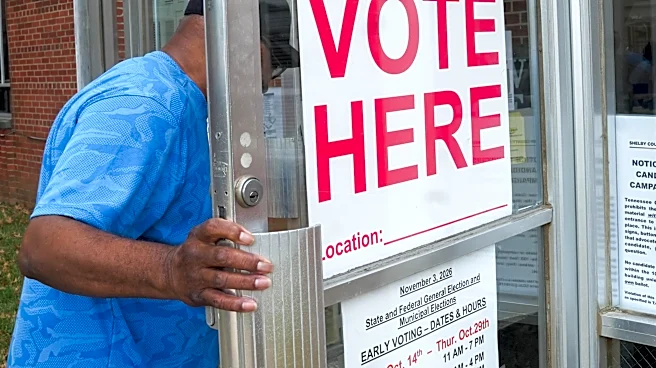




Tim Tsujii, the elections director for North Carolina's Forsyth County, routinely trains poll workers for Election Day emergencies such as fires, floods and equipment failures. This year, he's added another scenario: federal officials showing up at a polling place.
Tsujii has instructed his trainees to ask federal visitors for their credentials and "immediately notify the County Board of Elections Office" so it can contact state election authorities.
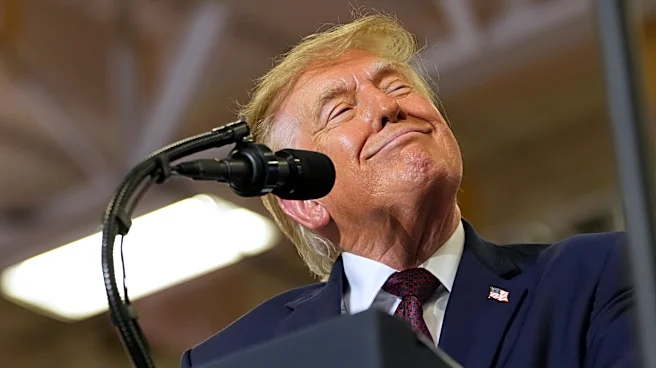
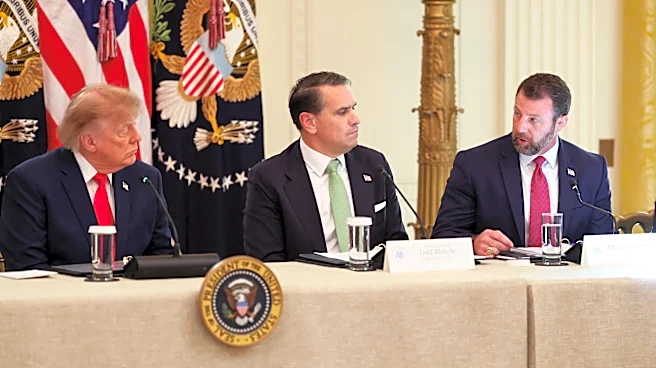
Alarmed by President Donald Trump's threats of federal involvement, Tsujii is among local and state election officials across the country who have told USA TODAY they have spent months preparing in case federal officials show up for immigration enforcement or to seize ballots and voting machines.
They added that they have local judges and state attorneys general on speed dial and have briefed governors on how best to respond.
In the past year, federal authorities have seized ballots and other voting records from previous elections and pressured states to adopt procedures favored by the Trump administration. After failing in more than two dozen lawsuits to force states to hand over voter rolls, the Department of Justice last week sued California, demanding that it set aside ballots the federal agency suspects were cast by noncitizens. It also sued Alaska, demanding that it not certify an election if the incumbent candidate loses.
Federal officials haven't explicitly said there are plans to send federal agents, including immigration officials, to any polls. But they have repeatedly refused to close the door on the possibility. Election officials say that means they have an obligation to prepare, just in case.
The White House responded to a request for comment by pointing to what border czar Tom Homan said in September on Fox News' “The Sunday Briefing”: There are no plans, he said, for ICE officers to “sweep polling locations” in the midterm elections.
Election administrators meticulously prepare for anything that could interrupt voting. They spend months plotting detailed responses to a variety of emergency scenarios. This can include changing routes to get ballots to counting locations if there is traffic on election night, and having backup poll locations in place in case of water leaks. It can also include sending replacement machines to a polling location, if something stops them from working. Local police, fire departments and emergency management teams are involved.
"Fires and floods and feds, oh my!" Eric Olsen – the elections director for Prince William County, Virginia – said with a laugh. "If we have federal officers show up, we've worked with our county law enforcement to figure out what process would be to handle that. We have things in place. We're educating our officers on that, and that's kind of what we do each election."
Few election officials were willing to provide details of what they would do if federal agents appear.
"We're moving forward as usual, in terms of if there's any type of interruption, any types of intimidation at the polling places," Cook County, Illinois, Clerk Monica Gordon said, adding that even her contingency plans have contingencies. “There’s definitely a plan in place.”
St. Louis Director of Elections Eric Fey said he's talked with the county prosecutor about such a possibility, "but some of it we just got to take as it comes."
In September, California Gov. Gavin Newsom signed a law prohibiting law enforcement officers from making arrests within 200 feet of polling places on Election Day, unless the arrests are related to disrupting polling or crimes against people or property. It also allows election officials to extend polling hours, if voting is disrupted by prohibited arrests or electioneering.

Los Angeles County Registrar-Recorder and Clerk Dean Logan told USA TODAY that his staff is working with lawyers to decide what to do if federal agents arrive. DOJ sued his county on Oct. 15, demanding that it set aside ballots from a federal list of suspected noncitizens.
"We're obviously not going to put ourselves – our staff – between a federal law enforcement officer and state law, but I think we are prepared to make sure that we document anything that happens," Logan said.
He said he's mostly concerned some people will see a possibility of federal agents at the polls as a reason not to vote.
Kellie Harris Hopkins – elections director for the Beaufort County, North Carolina, Board of Elections – said civic groups have asked her a lot about her county's plans.
"That is a topic that is on people's minds. I don't know. I guess we'll have to wait 'til Election Day to see how that goes," she said. "We do have plans in place, so if that happens, we can respond to it."
Polling staff are trained on who is allowed within the voting sites and where they can be, she said.
"If an ICE officer comes up, then we're going to treat them the same way we would anybody else who's not allowed within the voting enclosure, because they're not an official, or a voter," she said.
If federal officials come to the county's election office during tabulation, she added, she would immediately contact the state about what the county can legally do.
City and county government attorneys are now part of contingency planning, local officials said. At the same time, state attorneys general are doing legal research, preparing lawsuits and putting "early detection systems" in place so states can quickly go to court to stop federal action, Oregon Attorney General Dan Rayfield said.
"What we've done collectively as attorneys general is listen to what the president has said, listen to the types of things he's saying, and then get ready and be prepared for all of them, no matter how absurd they may seem," Rayfield said.
This article originally appeared on USA TODAY: Officials say they are ready in case federal agents show up at the polls