


The Trump administration plans to revoke visas from people who entered the United States legally as tourists or business travelers and later applied for asylum – opening a new front in its campaign to restrict access to humanitarian protection.
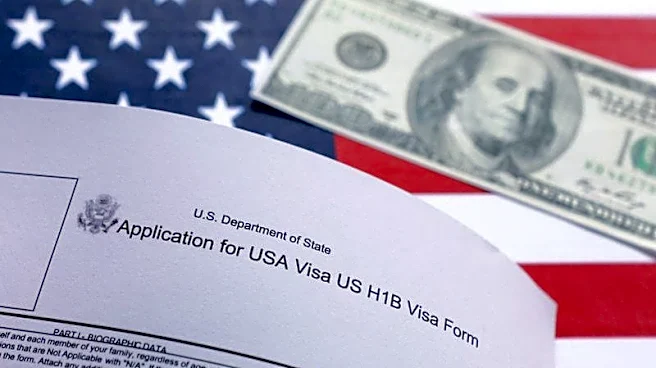
The Department of State is coordinating with the Department of Homeland Security to identify people who arrived on B-1 or B-2 visas and subsequently sought asylum in a move aimed at “making clear that a visa is a privilege – not a right,” State Department spokesperson Tommy Pigott said in a statement to USA TODAY.
“These types of visas are issued with the clear understanding that they are for those who intend to return home,” Pigott added. “Obtaining a visa in order to seek asylum is fraud – which is grounds
for visa revocation. This is an ongoing process as we uphold the integrity of our visa and asylum laws.”
The State Department has not explained how it will determine whether people obtained a visa intending to apply for asylum. It also hasn't detailed how it will figure out whether visa-holders decided to seek protection later because conditions in their home countries or their personal circumstances changed. Pigott also did not specify how many people would be affected, saying the number of revocations “remains dynamic” and that they would occur on a rolling basis.
The Associated Press, which first reported the administration’s plans, said as many as 200,000 visas issued between 2016 and 2026 could be revoked, citing State Department documents and two U.S. officials. If carried out on that scale, according to the AP, it would be the largest single mass visa revocation in U.S. history.
When Luis and his mother fled Venezuela in 2017, they boarded a flight to Florida with visitor visas in hand. Luis, whom USA TODAY is identifying only by his first name because he fears that speaking publicly could jeopardize his asylum case, said they were determined to follow the law even as they sought safety.
Luis, 26, said he had been wounded and threatened by security officials amid the Venezuelan government’s violent crackdown on protests, in which scores of people were killed. Soon after arriving, Luis and his mother applied for asylum, believing they had done “everything by the book,” he said. Then they waited. Nearly nine years later, his case remains unresolved.
"And there's nothing I can do until USCIS moves my case," he said. "This is out of my hands, and, trust me, if I could, I would choose anything over this anxiety-inducing waiting game. But going home is simply not an option."
Now, Luis fears the path he chose because he believed it was legal could be used as evidence that he broke the law – and that his request for protection could make him a target.
It remains unclear what the revocation plans would mean for Luis or others with pending asylum claims. However, experts said revoking a visa alone may have little impact on someone already in the country. A visa allows a foreign national to travel to a U.S. port of entry and request admission; revoking it would generally prevent the person from using it to return to the U.S., but would not, on its own, cancel a pending asylum application.
“The action has very little effect,” said David Bier, director of immigration studies at the Cato Institute, a libertarian think tank.
The move could carry greater consequences, if DHS separately cancels any immigration status the person holds, he said, potentially exposing some applicants to arrest by Immigration and Customs Enforcement.
Neither agency has said whether the revocations will be accompanied by changes to applicants’ immigration status, formal fraud findings, removal proceedings or other enforcement actions. When reached for comment, DHS referred USA TODAY to the State Department.
Dara Lind, a senior fellow at the American Immigration Council – an immigrant rights groups – said the practical reach may be smaller than the figure reported by the AP suggests. Some visas issued as far back as 2016 may have expired, she said, and it is unclear how many people would lose an immigration status on which they still rely. The announcement, she said, may function partly as a "scare tactic," sowing fear among asylum seekers, even if its immediate legal consequences remain limited.
“It’s not super clear where on the scale of saber-rattling – just declaring that they don’t like things – versus actually materially changing a lot of people’s circumstances this particular thing is,” she said.
But Lind said the initiative sends a broader message about the administration’s efforts to make seeking asylum increasingly untenable.
“What is the right way to apply for asylum in the U.S. right now, according to the Trump administration?” Lind said.
Applying affirmatively through USCIS has traditionally been regarded as a lawful way to seek protection, she said, yet the administration is now seeking to penalize some immigrants for doing precisely that.
“It’s another kind of demonstration that they are doing everything they can to keep applying for asylum from being something that allows you to stay in the United States,” Lind said.
Rooted in international protections developed after World War II, the modern U.S. asylum system was established through the Refugee Act of 1980. It allows people facing persecution because of their race, religion, nationality, political opinion or membership in a particular social group to seek protection. Under federal law, a person must be physically present in the United States or arriving at its border to apply for asylum. The law allows people to seek that protection regardless of their immigration status.
But the visa initiative follows years of mounting political tension over asylum, particularly after the U.S. experienced historically high levels of migration at the southern border during the Biden administration. Many of those arriving sought asylum, putting pressure on a system that has been backlogged for a decade and fueling criticism that applicants could remain in the country for years while their cases were decided.
Administration officials have pointed to those concerns to justify the new visa crackdown.
“People in the US and all over the world are fed up with bogus asylum claims,” Deputy Secretary of State Christopher Landau wrote Monday on X. “Asylum isn’t supposed to be a loophole to circumvent immigration law.”
President Joe Biden imposed his own restrictions on asylum access in 2024 as border crossings became a defining political vulnerability. Donald Trump campaigned on going much further, promising to halt illegal immigration and carry out mass deportations.
Since last year, Trump has pursued a series of actions intended to restrict access to asylum and accelerate removals. On his first day back in office, he issued a proclamation declaring crossings at the southern border an “invasion” and sought to prevent many immigrants arriving there from applying for asylum.

In April, a federal appeals court ruled that the administration could not categorically bar people already in the country from applying for asylum or circumvent the removal procedures established by Congress. Federal law, the court wrote, gives people physically present in the United States a right to apply, regardless of their status or whether they arrived at an official port of entry.
By the end of fiscal 2025, more than 1.4 million affirmative asylum applications were pending before U.S. Citizenship and Immigration Services, according to DHS. Separately, about 2.3 million people with formal asylum applications were awaiting hearings or decisions in immigration court as of June, according to data from the Transactional Records Access Clearinghouse, a nonprofit data gathering organization at Syracuse University.
A pending asylum application does not itself confer lawful immigration status or prevent someone from being placed in removal proceedings. Still, asylum seekers were generally allowed to remain in the country while their claims were adjudicated and, after meeting eligibility requirements, could obtain authorization to work. Under previous administrations, applicants without criminal records were typically not prioritized for arrest or detention.
That has changed under Trump. Federal immigration agents have detained people with pending claims at immigration courthouses and during routine ICE check-ins – appointments they were required to attend as part of their cases.
The administration has also reshaped the courts deciding many asylum cases. The Justice Department has fired immigration judges, appointed some military lawyers to serve as temporary immigration judges and increasingly turned to mass hearings as it seeks to push cases through more quickly.
Though asylum denial rates had been slowly rising since late 2023, they have surged under Trump, TRAC data shows. In September 2023, fewer than half of applicants were denied. By June 2026, the latest month available, the denial rate had reached 94.1 percent.
Lind said the government is increasingly targeting immigrants who have spent years complying with its requirements – filing applications, renewing work permits, paying fees and reporting changes of address – only to remain trapped in a backlog they cannot control.
“You don’t need to know the ins and outs of immigration law to know that so many of the people who have been most harmed by this administration are people who have spent years of their lives making sure that they check all the boxes, dot all the i’s and cross all the t’s,” she said.
“None of these people would have pending applications if USCIS were processing applications in a timely fashion,” Lind added. “Instead of actually putting any effort toward adjudicating those cases, they’re doing all of these things that are punishing the people who have been waiting in line.”
The crackdown on asylum seekers comes as the U.S. government has also made it more difficult and expensive to enter or remain in the country through legal channels.
The State Department said this month that it had revoked more than 175,000 visas since Trump returned to office, mostly following law enforcement encounters. Other revocations involved alleged visa violations, fraud, calls for violence or national security threats. The administration has expanded social media screening, targeted foreign students accused of antisemitic activity and revoked more than 600 visas through a task force focused on alleged “birth tourism.”
It has also required a $100,000 payment for certain new work visa petitions and moved to limit how long foreign students, exchange visitors and journalists may remain in the country.
For nearly nine years, Luis said, he has renewed his work permit, complied with the government’s requirements and waited for it to decide whether he can remain in the country where he sought refuge.
He thought entering with a visa and applying through the asylum system meant he was following the rules. Now, he said, doing everything the government asked of him has not made him feel safe.
“It feels like you're being hunted,” Luis said. "And my only 'crime' is seeking the American dream."
This article originally appeared on USA TODAY: Trump administration plans mass visa revocations for people seeking asylum