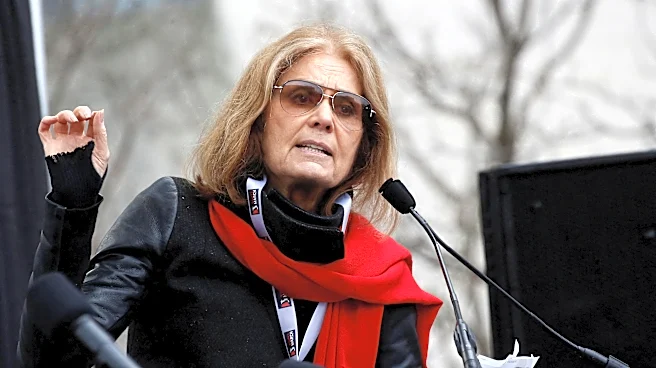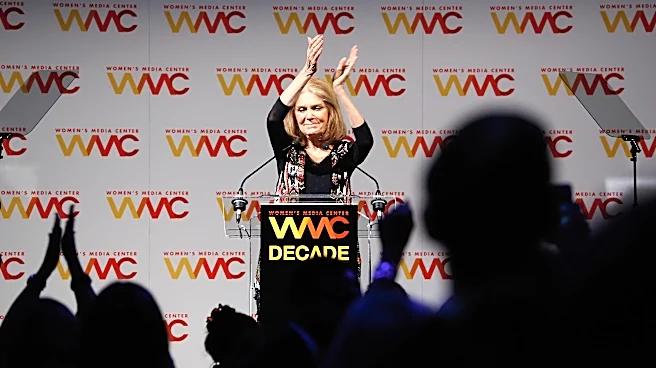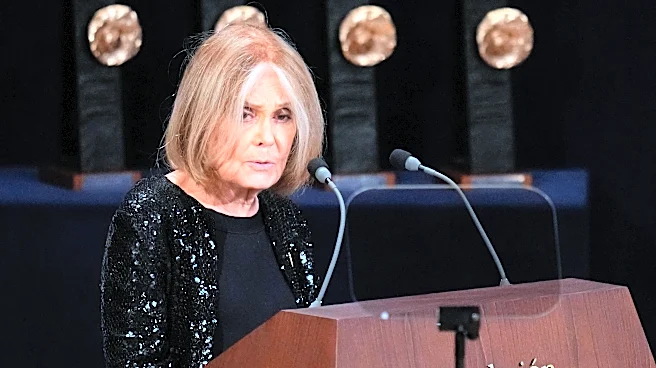



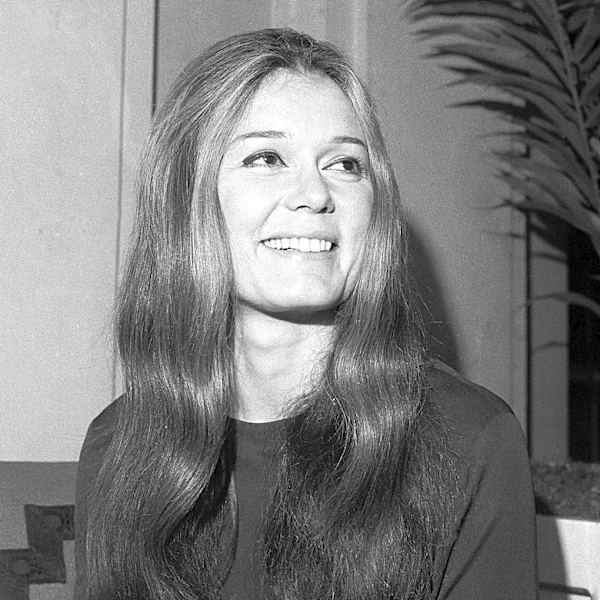



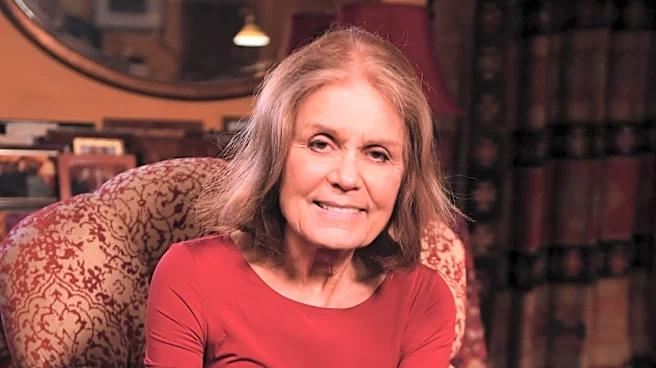

Big glasses and big issues.
The legacy of Gloria Steinem, a feminist, journalist and activist who died at 92 on Sept. 2, was one that put personal issues into the political arena, contributing to a defining era for women in America.
But amid the fall of landmark Supreme Court abortion case Roe v. Wade and the Trump administration's changes to on diversity, equity and inclusion initiatives, the legacy of Steinem, and that of other feminist icons like Dolly Parton or Cecile Richards, could appear to be danger.
"Gloria's generation oversaw the most momentous shift when it comes to [equality]," says Jessica Valenti, author and founder of "Abortion, Every Day."
But Steinem's political legacy is her ability to keep listening to others — an approach that
can inspire anyone feeling depleted by our divided times today, Valenti says.
"She was constantly having conversations, constantly updating her politics," Valenti says. "One of the things Gloria did so well is stay connected."
Steinem and the personal as political
Steinem grew up in an America where women's lives weren't front page news, Valenti says. So she worked to make their personal lives central to the political arena.
"Women felt so alone with the issues they didn't necessarily ... think about in terms of broader politics," Valenti says. "Giving women the language to connect their daily experiences... with the broader political movement ... it made them realize they were not alone."
Steinem created Ms. Magazine in the 1970s, a publication that focused on topics such as domestic violence and workplace sexual harassment using real women's stories; her 1992 book "Revolution from Within," encouraged self confidence as a means of political power. She herself opened up about her own illegal abortion at 22 years old, using her story connect with women from across walks of life. While she didn't coin the term "personal as political," Steinem demonstrated that ethic in her fight for the passage of Roe v. Wade, equal pay, fair housing and other progressive causes, according to Einav Rabinovitch-Fox, adjunct assistant professor of history at Case Western Reserve University.
Steinem also worked to translate that new community into political representation, co-founding the National Women's Political Caucus, which has supported women running for office for more than 50 years.
"Steinem understood the importance of building broad coalitions and collaborating across racial and class lines," Rabinovitch-Fox says. "Steinem made sure to share the spotlight."
Take her famous photo raising a fist in solidarity with Dorothy Pitman-Hughes, a Black feminist. Or her support of Shirley Chisholm for president, Rabinovitch-Fox says.
"She put Ms. Magazine's influence behind her campaign," Rabinovitch-Fox says, "as well as collaborating with other prominent Black feminists ... This idea of 'sisterhood' was very important to her and her activism and has tremendous impact of the movement, then and today."
Steinem faced detractors from both sides of the aisles, according to Mona Lena Krook, professor of political science at Rutgers University. She received criticism of her defense of Bill Clinton during the Monica Lewinsky scandal, her early views on transgender people, and her criticism of young women voters who did not support Hillary Clinton in the 2016 election. Others opposed her challenges to women's traditional roles and her support of abortion.
"But reflecting her feminist commitments, she did learn and grow from these critiques to update her views in more inclusive directions over time − building intersectional coalitions, supporting the #MeToo movement, becoming a public defender of transgender rights, and recognizing the independent political voices of young women," Krook says.
The face of a movement
From Melania Trump to Michelle Obama, women in politics' fashion choices are highly visible subjects of public opinion, but Steinem using her high profile to share her message, according to Lauren Downing-Peters, associate professor of fashion at Colombia College Chicago.
Steinem had a political "uniform" that defined her as the "new woman," Downing-Peters says: Sweater, flare jeans, low-slung belt, pendant necklace, tinted aviators. This iconic aesthetic at rallies and campaigns epitomized an era of political feminism that makes her not only recognizable but real to many people, she says. The look blended personal style with her political life, she says.
"It was laid back, intellectual, slightly rebellious, and thus the perfect encapsulation of her politics," Downing-Peters says.
However, Downing-Peters says Steinem was thrust into the role as "the face and image" of late 21st century feminism, potentially setting a standard that put the faces of other activists at the political margins.
"The long shadow her image cast obscured more intersectional approaches to feminism, and specifically the contributions of women of color, working-class women, queer women, and women whose bodies fell outside of the era’s thin beauty ideal," she says.
Steinem's legacy depends on future generations
It could feel like the American women's political cause lacks a face without Steinem, but Valenti says she thinks Steinem herself would resist contributing a whole movement to one person.
"There doesn't have to be only singular voice," Valenti says. "We need to be our own heros and icons in this moment ... She would want us to use any sadness or despair we're feeling and translate it into power and action, have her legacy remind us that we have the ability to change things."
This article originally appeared on USA TODAY: Gloria Steinem, the personal as political and why it matters today