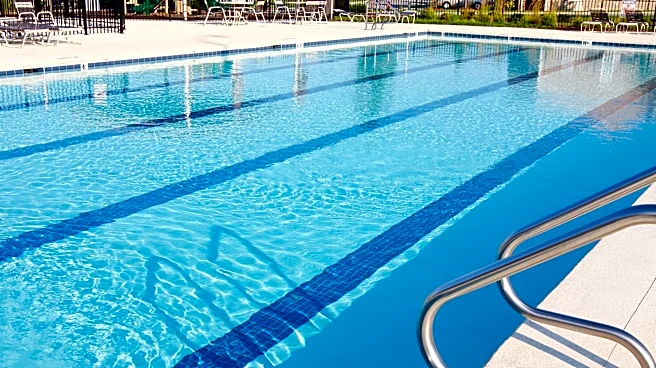

When summer heat scorches the country, many families seek refuge at pools, lakes and beaches, especially over the holiday weekend.
But the water can pose a substantial threat to the youngest and most vulnerable
members of the family. After decades of decline, the rate of drowning deaths among children has risen significantly in recent years, doctors recently warned.
A lack of proper adult supervision is among the biggest risk factors. But when a child slips away and drowns, authorities are left with a heart-wrenching question: was it an accident or a crime?
And what could have been done to prevent a tragedy?
Child drownings are on the rise
Drowning is the leading cause of unintentional death for American children between the ages of 1 and 4 years old and the second most common killer of kids ages 5 through 14, according to a report from the American Academy of Pediatrics published in June. The rate of these deaths was on the decline for decades, but drownings started to increase after 2019.
A lack of supervision near bodies of water can be dangerous and deadly for toddlers in particular, said Dr. Rohit Shenoi, the lead author of the American Academy of Pediatrics report. Toddlers and young children most commonly drown in swimming pools, often at home, according to the report.
"Drowning can occur within seconds," said Shenoi. "It’s very, very fast."
There are hundreds of such cases each year, but it’s relatively rare for these tragedies to result in criminal charges for grieving family members and caregivers, said Frank Vandervort, a professor at the University of Michigan law school and co-founder of the Juvenile Justice Clinic. When they do, charges can range from child endangerment, neglect or abuse to manslaughter depending on the circumstances, he said.
"Abuse is a little harder to prove," Vandervort said. "Usually most states, their criminal child abuse laws have sort of an active component, right? You have to intentionally do something."
Already in 2026, adults in states including California, Pennsylvania, Virginia, Ohio, Oregon and Florida have been charged or convicted in drowning cases. Most recently, a Georgia grandmother was charged with involuntary manslaughter and cruelty to children in the second degree on July 15 after her two-year-old grandson drowned at an apartment complex pool, according to Fulton County jail records.
Emelisa Paz-Santos, 44, "failed to provide adequate supervision," for the child at the pool, according to her arrest warrant. The Fulton County District Attorney's office did not respond to a request for comment about the case from USA TODAY.
Deciding whether and how to charge a parent when a child dies like this is "always inherently difficult," according to Ramin Fatehi, the Commonwealth's Attorney in Norfolk, Virginia.
"When we’re dealing with parents, children and accidents, the evidence has to be really, really strong for me to say I am going to take this grieving parent – presuming that the parent is grieving – and turn the parent into a criminal," he said.
After a 2-year-old drowned in a backyard swimming pool in July 2025, Fatehi considered filing felony murder charges against his mother, who had passed out from drinking at the time of the accident. Ultimately, Fatehi decided to charge Tiffany Smith with felony child neglect in the drowning, the first of such cases he faced since taking office in 2022.
After Smith pleaded guilty, Fatehi asked a judge to send her to prison for over four years. Ultimately Smith was sentenced to two years at an emotionally charged hearing in a courtroom packed with supporters on both sides.
"There is a difference between a parent who has a momentary lapse of supervision and something tragic happens," Fatehi said. "And a parent engaging in such reckless behavior, that is that it leads to the harm or the death of their child."
Why prosecutors and police don't always agree on drowning charges
When a drowning occurs, authorities have a tough choice to make.
"Usually, the prosecutors are looking for, really, acts of gross negligence," said Vandervort.
Two cases out of Arizona have shed more light on how complicated bringing charges in these cases can be.
Gilbert police arrested and recommended criminally charging the parents of an 18-month-old boy who was found floating in the family’s backyard pool, alleging they were criminally negligent because they failed to supervise him. That failure allowed the boy to enter the garage, go into the backyard and fall into the pool, according to a police report.
At the hospital, a doctor declared the toddler dead, but in a shocking twist the boy was discovered alive hours later.
"Vincent is going to need lifelong care," John Brewer, the parents' civil attorney, said in a brief July 9 call with The Arizona Republic, part of the USA TODAY Network.
The parents admitted they smoked marijuana the day their son nearly drowned, and experts told USA TODAY drug or alcohol use was likely a factor prosecutors would consider when making a charging decision. Maricopa County prosecutors announced July 29 no charges would be filed, saying the family had multiple security measures in place, multiple adults present believed the child was being supervised by someone else and "the investigation found no evidence that the parents exhibited any obvious signs of impairment."
"To file charges, the state would need to prove beyond a reasonable doubt to a unanimous jury that the parents failed to recognize a substantial and unjustifiable risk, and that this failure was such a serious lapse in judgment that it was a gross deviation from what a reasonable person would have done under the same circumstances," prosecutors said in a statement. "That's a much higher legal standard than probable cause, which is what police need to submit a case for possible charges."
Maricopa County Attorney Rachel Mitchell declined to comment on the Gilbert case or how her office approaches drowning cases more generally.
The near-drowning came to light almost a year after Mitchell announced another parent would not face criminal charges in another high-profile case. Mitchell said in a July 2025 news release that there would be "no reasonable likelihood of conviction" if Brady Kiser were to be charged in connection with the fatal drowning of his 3-year-old son, Trigg.
Brady Kiser told police he was home alone when he saw Trigg playing near the pool and got "distracted" by his newborn son on May 12, 2025. He said he lost sight of Trigg for three to five minutes and later found him floating in the pool. Trigg was taken to the hospital, where he died days later.
Chandler police recommended to county prosecutors that Kiser should be charged with class 4 felony child abuse. But Mitchell said in a statement that after a "careful review" of the evidence, prosecutors determined they would have been unable to prove to a jury "beyond a reasonable doubt" that there was criminal negligence, meaning the person failed to identify a substantial risk that a reasonable person would have recognized and prevented.
Since Trigg's death, Kiser's wife, social media influencer Emilie Kiser, has used her platform to advocate for stronger drowning prevention measures.
"Our son's death was very preventable. It was an accident, but it was a preventable accident. I will always take full accountability for that because as a parent, it is your job to protect your child," she said in a recent TikTok video.
Water safety tips for parents
Shenoi said there are five key pillars of drowning prevention, and the more layers of protection communities enact, the better. "Everyone should participate in drowning prevention, not only the families and the physicians, etcetera. It’s the whole community which actually has to advocate for water safety," he said.
- Hazard identification: Be aware of bodies of water, including pools, streams and even buckets of water and whether they have barriers.
- Supervision: Caregivers should provide close supervision without being "distracted or impaired" and be prepared to act in the event of an emergency. Learning CPR is key to be prepared for potential drownings.
- Barriers: Shenoi said the most effective way of protecting kids against drowning is enclosing pools with four-sided fencing.
- Life jackets: Everyone on board a boat or other vessel should be wearing U.S. Coast Guard approved lifejackets. Other floating devices like floaties can easily come off and aren’t very effective.
- Swimming lessons: The American Academy of Pediatrics recommends children begin learning to swim after their first birthday.
Contributing: Jose R. Gonzalez, Stephanie Innes, and Elena Santa Cruz, Arizona Republic
This article originally appeared on USA TODAY: Carelessness or crime? A hot summer day can blur the lines