







For one of the few times on record, global carbon dioxide (CO2) emissions from fossil fuels are projected to decrease by 0.4% in 2026 – driven by expansion of solar and wind power and the Iran conflict – according to new research from the Global Carbon Project released Nov. 10.
Higher energy prices pushed people around the globe to emit less as it became more expensive to drive, fly, buy transported goods or create energy with fossil fuels. Meanwhile, renewable energy saw gains in 2026. The bad news: This reduction is probably only a temporary dip in emissions.
Gas prices are just one of the many ways energy prices have been impacted by the conflict. On Nov. 5, AAA reported gas was about $1 a gallon more than it was at the same time in 2025.
"A
decline in fossil CO2 emissions is encouraging, but a reduction driven partly by geopolitical shocks is not a sustainable climate solution," said Pierre Friedlingstein, the director of the Global Carbon Budget Office at the University of Exeter, who led the study, in a statement.
Glen Peters, research professor at the CICERO Center for International Climate Research, agreed, saying “a drop in emissions in one year is not a peak unless it is driven by structural change."
Past emission drops have occurred during the dissolution of the Soviet Union in 1991, the global financial crisis of 2008, and the COVID pandemic of 2020, according to the report.
What are fossil fuel emissions?
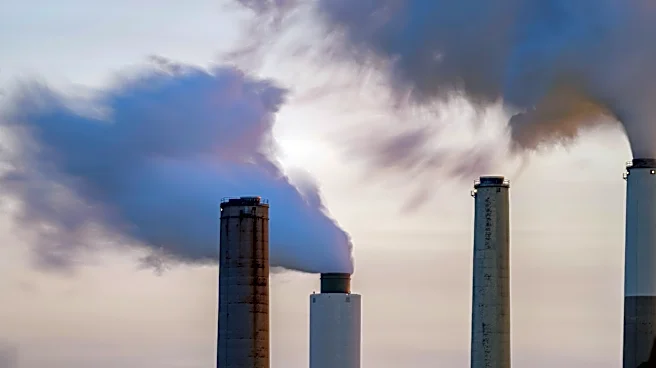
Human activities from the burning of fossil fuels such as coal, oil and gas release greenhouse gases such as carbon dioxide (CO2) into the Earth's atmosphere. This has caused the temperature of Earth's atmosphere to rise to levels that cannot be explained by natural causes, scientists say.
Indeed, the biggest influence on the planet's changing climate is the release of emissions into the atmosphere from burning oil, gas and coal to move people and goods from place to place and to create energy, according to the U.S. Environmental Protection Agency.
CO2 is called a "greenhouse gas" because of its ability to trap solar radiation and keep it confined to the atmosphere.

What happened in the US?
According to the report, the USA’s emissions are projected to decrease by 1.3% in 2026.
The report said that, in the United States, "coal emissions continue their long-term decline, with a small increase in gas, but a drop in oil, indicating that the U.S. was not immune to the Iranian conflict."
“U.S. emissions are still trending down," said Robbie Andrew, a senior researcher at CICERO. "Despite federal policy, there is still strong growth in renewables and batteries,” he added.
Worldwide emissions
The report found that worldwide, emissions from oil are projected to decrease by 1.9% – which is likely a short-term response to the energy shock triggered by the Iran conflict.
And while global energy demand continues to rise, two-thirds of the increase is being met by increased solar and wind power and electric vehicles, according to the report.
However, the report finds that clean energy growth is not yet fast enough for a durable decline in global fossil CO2 emissions.
What will reduce emissions?
The long-term answer remains the rapid deployment of clean energy technologies, Friedlingstein said, in a statement. "While renewables and electric vehicles are increasingly offsetting growth in energy demand, further acceleration is needed if global emissions are to peak and enter a sustained decline."
"Clean technologies are making a real difference in reducing global emissions," said Corinne Le Quéré, a research professor at the University of East Anglia's School of Environmental Sciences.
"Solar and wind power and electric vehicles are expanding rapidly, led by China," she said.
"Countries on every continent are decreasing their emissions while growing their economies. A further acceleration could turn the tide on global emissions within a few years.”
What causes climate change?
The Earth's climate changes through a variety of natural processes, but scientists say the rapid warming experienced recently is primarily caused by human activities that emit heat-trapping greenhouse gases.
That's why global efforts to fight climate change are so focused on eliminating the burning of fossil fuels, the most notable source of harmful greenhouse gases.
Doyle Rice is a national correspondent for USA TODAY, with a focus on weather and climate.
This article originally appeared on USA TODAY: Iran conflict helped fight climate change (kind of)