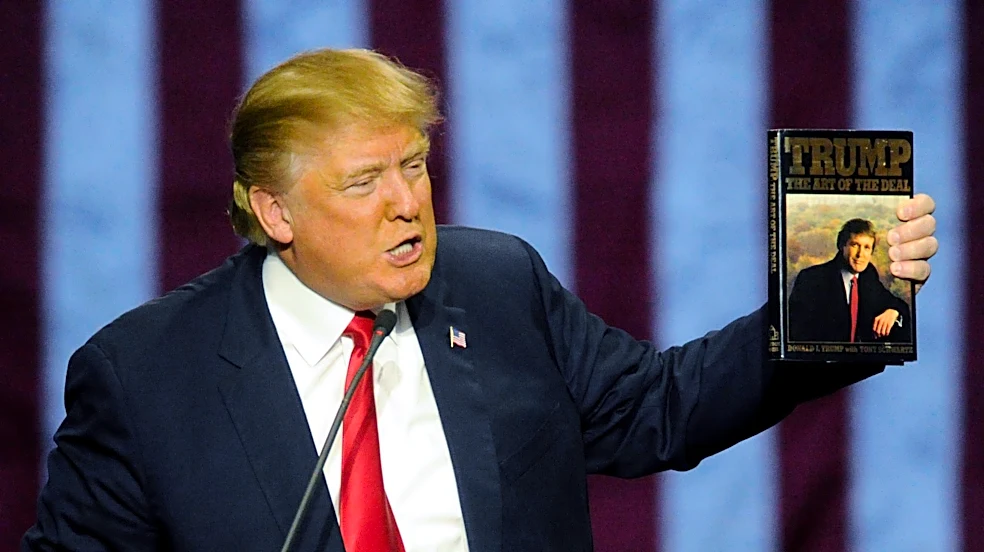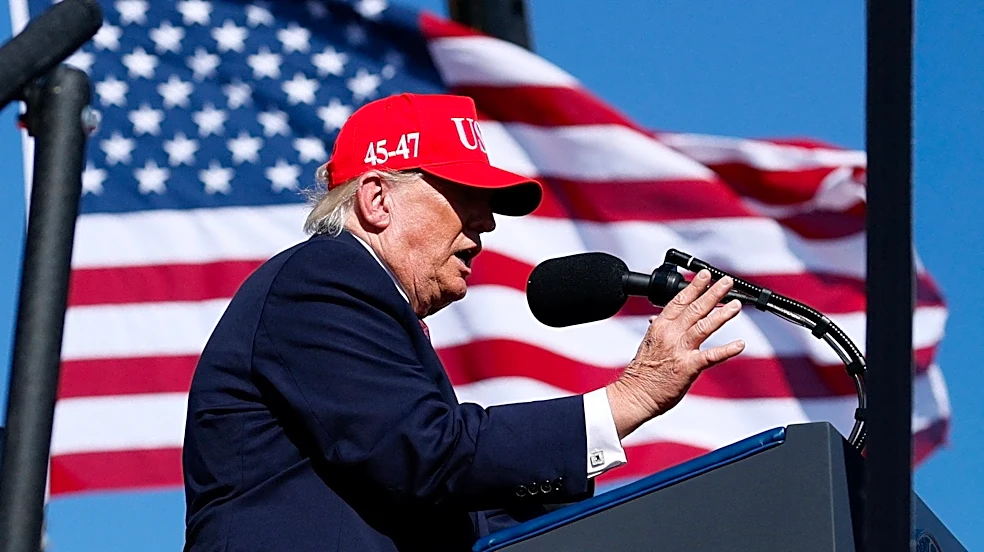




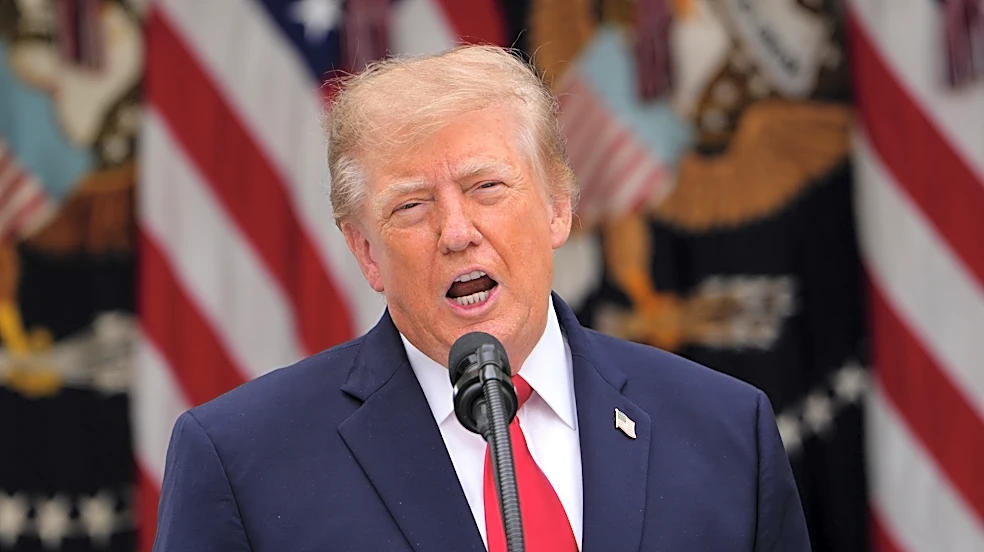
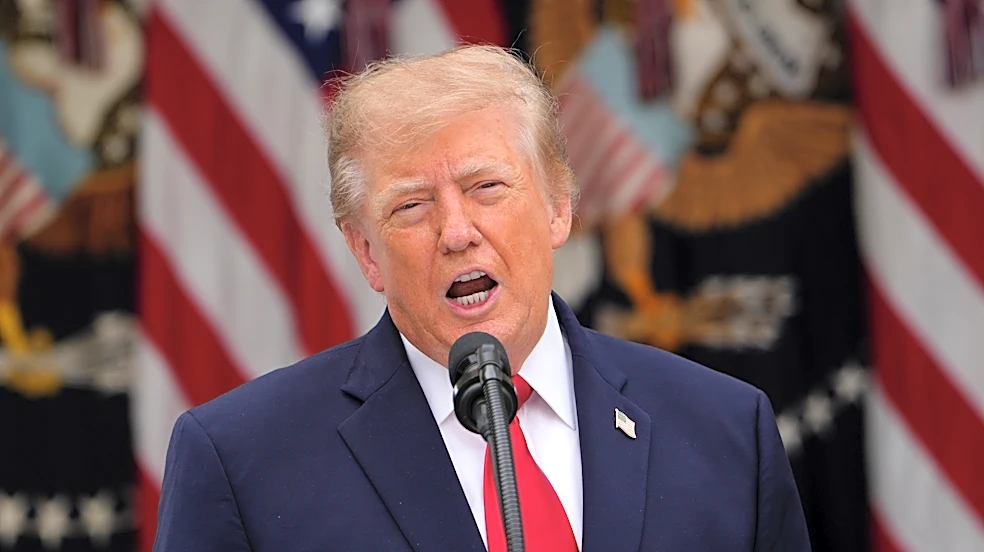

WASHINGTON — Appearing before a crowd in Tennessee this month, President Donald Trump rattled off a list of what he described as “perfect” economic statistics.
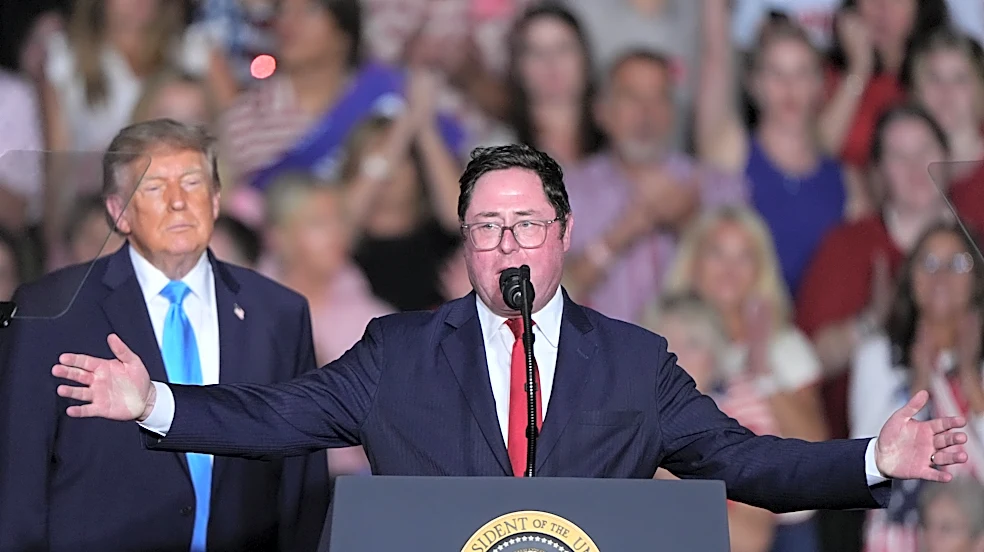
“Our first term, we had the greatest economy in the history of our country, and we're blowing it away. In the real economy we are blowing it away,” Trump said at the Oct. 10 rally in Clarksville.
As he travels across the country to stump for GOP candidates in the final stretch of the midterm election, Trump has painted a rosy picture of the economy during his second term, touting tax cuts and stock market growth, pointing to higher inflation under former President Joe Biden and describing a "golden age" for America.
Most voters take a dimmer view. Polling shows they're deeply worried about
prices and most blame Trump. They say he's making the economy worse — setting the stage for a referendum on his leadership like the one that cost Democrats the House, and eventually the presidency, under Biden.
Positive perceptions about Trump’s economic stewardship have long been one of his biggest advantages. A Gallup survey heading into the 2024 election found the economy was the most important issue for voters, and 54% felt Trump would do a better job on it than his Democratic opponent.
But in a dramatic reversal, the sour economic mood has emerged as the GOP’s biggest weakness this election cycle, with the term-limited Trump struggling to sell his economic agenda and most voters sayingthey trust Democrats more than Republicans to tackle high prices.
“There’s no doubt that it was one of his strengths and I think it’s what the American people elected him back for,” said Marc Short, who served as Trump’s liaison to Congress in his first term. “I think they wanted him to solve the lackluster economy and the high inflation under Biden, but he hasn’t.”

A report released last week showing consumer prices rose3.7% in September from a year earlier, up from a 3.4% inflation rate in August, highlights a key difficulty facing the GOP ahead of the Nov. 3 midterm election.
While some data indicates that aspects of the economy are relatively strong, including stock market growth, the president faces a tough task trying to change how people feel about the cost of living, GOP strategists say. The approach has drawn comparisons to Biden, whose arguments about strong macroeconomic data fell flat with voters more worried about rising food and gas prices.
“It’s hard to tell people what they feel is wrong,” said Mike DuHaime, a former political director for the Republican National Committee. "Whether or not the stock market goes up or not doesn’t matter if I can’t afford groceries.”
Nervous Republicans
The backlash to Trump’s agenda has helped put deep red states and districts in play, with Democrats leading in the Real Clear Politics average of recent polls in Senate races in Texas, Iowa, Alaska, Ohio – all states Trump carried by double digits. Other red states such as Kansas, Nebraska and South Carolina look increasingly competitive.
Democrats running in these states have hammered on high prices, blaming Trump’s tariffs and his war with Iran, which economists say have spiked costs.
“We knew this would always be a difficult election cycle… but I don’t think people had on their bingo card that we’d be talking about Kansas, Nebraska, Iowa,” said Short, who also served as former Vice President Mike Pence’s chief of staff. “I mean it’s a direct reflection of the president’s economic policies that that's where we're fighting right now.”
Pervasive cost-of-living concerns have put Republican candidates on the defensive, and some have begun to distance themselves from Trump’s policies.
“Iowans are being squeezed and shouldn’t have to foot the bill at the pump or the checkout line for the war in Iran,” GOP Rep. Ashley Hinson, who is running for the Senate in Iowa, said in a recent social media post calling for an immediate end to the war.
Former GOP Rep. Mike Rogers, who is running for the Senate in Michigan, recently called for an end both to the Iran conflict and the president’s trade war with Canada.
“Prices are too high and Canada is not our enemy. We need to end the tariff war — now,” Rogers said in a social media post.

The president’s relentless boosterism is even contrasted by his own vice president, who has been making a more nuanced pitch to voters that acknowledges they may not be happy about everything the administration is doing.
Vice President JD Vance has takena different tone,acknowledging the pain voters are feeling but asking Americans to give the administration a "another chance, or, give us another couple of years" to fulfill its agenda.
Acknowledging the administration still has work to do despite the progress is not a vulnerability, former Trump principal deputy press secretary Harrison Fields said, pointing to Vance's approach.
"I think we can do a better job of acknowledging that we are not where we want to be, but where we were and what we inherited and what we are continuing to do in terms of lowering taxes, deregulation, investment being poured back into this country," Fields said.
Trump was 'dealt a really good hand'
As high costs weigh on consumers, Trump has continued to blame his predecessor nearly two years into his term, while also suggesting inflation isn't that bad.
Inflation hit 9.1% in June 2022, a 40-year peak, during the coronavirus pandemic. The jump paved the way for Trump to carry every swing state two years later, even as inflation dipped under 3% in the months leading into the 2024 presidential election. Trump falsely boastshe "inherited the worst inflation in history" and is "bringing prices way down." Inflation was at 3% the month he took office and has climbed since.
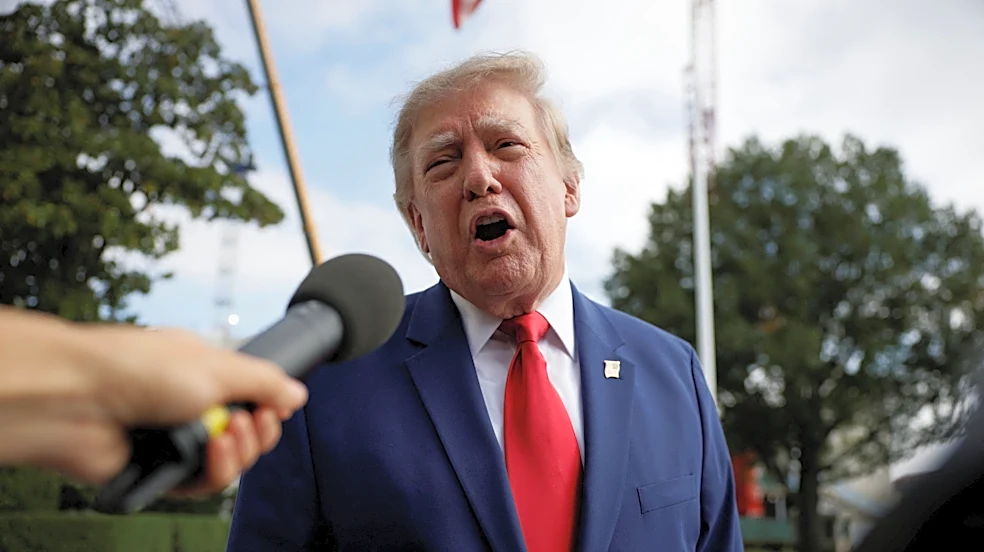
The president shrugged off the latest inflation report in comments to reporters Oct. 14 while traveling to a rally in Montana, saying inflation has been “very low” in recent months.
“We’re doing great,” he said.
Trump has sought to shift the focus elsewhere, touting historically low poverty and high income levels and the tax cut and spending law the GOP passed in 2025. The law included tax breaks on tips and overtime and investment incentives for American businesses.

While discounting some of the economic statistics Trump points to such as the income level, which he noted “almost always rises," University of Michigan economist Justin Wolfers said the unemployment rate “is pretty low” and the stock market is “doing pretty well.” Overall, he rated the economy in the “B” range.
Trump’s policies haven’t helped, though, and are actually hindering stronger economic growth, he said.
“The president was dealt a really good hand. The economy recovered from COVID. We're in great shape. We’re at the beginning of an AI boom. This could have been great and maybe it’s just OK,” Wolfers said, adding: “We face a certain number of headwinds but every one of them is caused by the administration.”
Tariffs, war driving costs up
Researchers at the Federal Reserve Bank of New York found that Trump’s tariffs “had economically and statistically significant effects on consumer prices,” estimating that the cost of 67 goods increased 2.9% through February because of the levies.
Meanwhile, the Iran war has disrupted Middle East energy exports, spiking fuel prices and contributing to an overall increase in inflation. Gas prices rose 9.1% in September – accounting for more than half of the increase in overall prices – and are up 34.2% for the year.
Prior to the U.S. invasion of Iran at the end of February, inflation had dropped to 2.4%. It has been elevated ever since and has not dropped below the Federal Reserve's 2% target at any point in Trump's second term.
A Pew Research Center survey released this month found that just 21% of Americans rate the economy as good, while 37% say it’s fair and 42% describe it as poor. Meanwhile, 65% of Americans believe Trump’s policies have made things worse.

Just 17% of Americans approve of Trump's handling of cost-of-living issues, with 65% blaming him for high prices and 61% saying the economy is worse than when the president took office, according to a recent AP-NORC poll.
Trump’s overall economic approval rating also has plummeted, with only 29% of voters in a Fox News survey released Oct. 14 saying the president is doing a good job on the economy. That's down from 43% shortly after he took office and a high of 56% during his first term, according to Fox polling.
The White House and some Trump allies have brushed off the negative polling. House Speaker Mike Johnson argued in a recent Fox News interview that surveys under sample MAGA Republicans, who don't trust traditional pollsters.
But the president has himself acknowledged at times that there's at least some pessimism.
"I've done a very bad job of explaining how good the country is doing. We're doing better than any country in the world economically," Trump said at a Sept. 30 event.
A senior administration official also said it's the White House's job to remind people of those successes and contrast that with what Democrats would do. That is why Trump is hitting the campaign trail nearly every single day, holding rallies and doing local interviews everywhere he goes, the person said.
Trump's sales pitch
While Trump has staunchly defended his tariffs and decision to attack Iran at rallies across the country, he has taken a series of steps indicating he is concerned about their fallout on prices.
It began at the GOP midterm convention in Dallas last month, when Trump promised $5,000 to every adult American if Republicans maintain control of Congress. He later announced $500 rebate checks for Americans he said were overcharged for Affordable Care Act health policies, and$90 payments to 21 million seniors. The president also announced a plan to ease tariffs on beef imports amid high meat prices, and a deal to buy Russian diesel as the fuel critical to trucking and agriculture operations hits a record high price.

Many of these policies have generated their own backlash, though, with accusations – including from some on the right - that Trump is bribing voters and rewarding Russia, which has been under heavy sanctions by the United States and it's allies over the war in Ukraine.
Meanwhile, Trump has said little publicly to acknowledge the financial pain many Americans are feeling, instead arguing his policies are ushering in widespread prosperity.
“I’d say there should be a bit of a tweak,” to the president’s economic pitch said Sean Spicer, who served as White House press secretary during Trump’s first term. “Address the concerns but let them know that it’s getting better.”
Trump is a relentless salesman and never gives an inch, DuHaime assessed. The problem for the president and his party? “Polling is suggesting it’s wearing thin."
This article originally appeared on USA TODAY: GOP troubles brew as Trump economic pitch clashes with voter sentiment