


The notion college sports are for college students who will move on when they complete their degree or turn pro enjoys near-universal support. But right now, that fundamental boundary is being dismantled amid a relentless wave of litigation.
In two cases, the NCAA has been ordered to allow professional basketball players to return to college basketball, despite the fact they intentionally left college to go to the NBA Draft and each played in several NBA games. In another case, a judge required the NCAA to allow an athlete to compete for a fifth school in five years. And in the past two weeks, without so much as a hearing, let alone a trial, two courts permitted NFL players to return immediately to college football. These few examples are merely
the tip of the iceberg.
Eligibility rules have long held a simple purpose: Ensuring a fair playing field while preserving access to the life-changing benefits college sports provide to actual college students. For decades, that standard meant allowing student-athletes four seasons of competition over five years. Recognizing the need for evolution, NCAA member schools recently updated this rule to allow up to five years of competition before age 24. However, since the start of 2025, more than 165 lawsuits have been filed seeking to tear down these basic limits.
As rosters are increasingly packed with older adults and former professionals, the most obvious consequence is an unfair matchup on the field. But the longer-term impact falls on the next generation of young athletes who will be squeezed out of the system as a result. Sidelining incoming freshmen doesn’t just rob them of their roster spots or athletic scholarship opportunities — it also strips away their chance to experience the lifelong benefits of college sports. In addition, adding former professionals to rosters costs already-enrolled student-athletes valuable playing time and development opportunities during their precious years in college.
Amid this chaos, the need to pass the Protect College Sports Act is more apparent than ever. This bipartisan bill addresses the current legal instability head-on by creating one clear, fair and enforceable eligibility standard to prevent further erosion of the competitive balance that makes college sports meaningful. Crucially, the PCSA does not stop there. It also codifies important student-athlete benefits into law, including scholarship, healthcare and revenue-sharing protections. And it takes steps to protect broad opportunities, particularly in women’s and Olympic sports, by establishing sport minimums and roster protections.
This balanced approach has earned the PCSA a broad consensus of support, uniting professional, Olympic and collegiate sport groups — including student-athlete leaders and conferences across all three divisions — all of whom recognize what’s at stake right now for the future of college athletics.
As the Senate prepares to return from recess and the new school year begins, the urgency is higher than ever. College sports matter. They serve our nation’s youth, and I believe they are the greatest human development tool in the entire world. By passing the PCSA, lawmakers can ensure they continue to benefit young generations of athletes for decades to come.
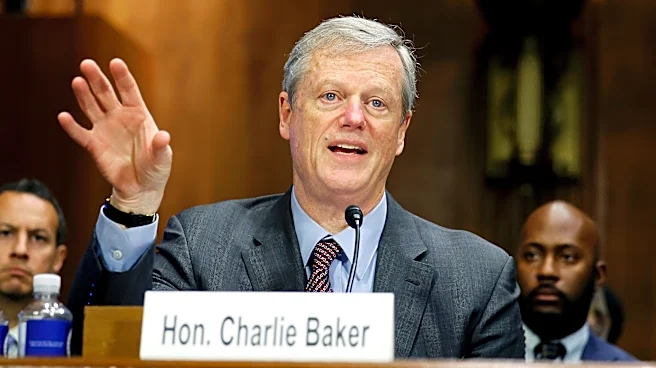
Charlie Baker is president of the NCAA.
This article originally appeared on USA TODAY: Charlie Baker: When NFL, NBA players return to campus, everyone else pays the price