


On the Tuesday, August 4, 2026, episode of The Excerpt podcast: While most Republicans continue to back President Donald Trump, some lawmakers have broken with him on major votes, foreign policy decisions and economic priorities. Are these disagreements simply part of normal governing, or do they signal a deeper shift within the party? USA TODAY Congressional Correspondent Zach Schermele joins The Excerpt to examine the GOP’s internal dynamics and what they could reveal about the party’s future beyond Trump.
Hit play on the player below to hear the podcast and follow along with the transcript beneath it. This transcript was automatically generated, and then edited for clarity in its current form. There may be some differences between the audio
and the text.
Podcasts: True crime, in-depth interviews and more USA TODAY podcasts right here
Dana Taylor:
We've seen some Republican lawmakers break with President Donald Trump on specific issues, but how significant is that if they still overwhelmingly support him politically? What's the difference between policy disagreements and a true political split? Hello, and welcome to USA TODAY's The Excerpt. I'm Dana Taylor. Today is Tuesday, August 4th, 2026. Joining me for a closer look into the powers that be within the GOP is USA TODAY Congressional Correspondent Zach Schermele. It's good to have you here, Zach.
Zach Schermele:
Thanks so much for having me, Dana.
Dana Taylor:
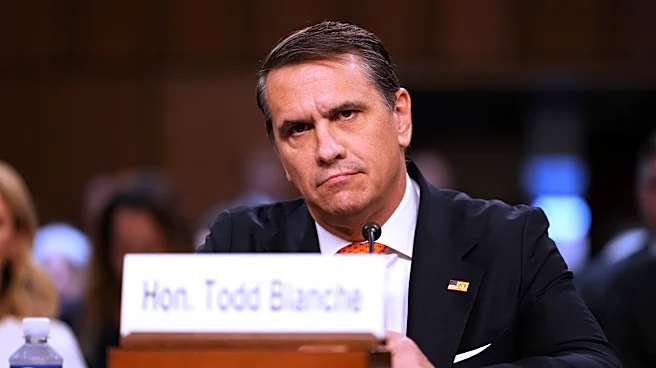
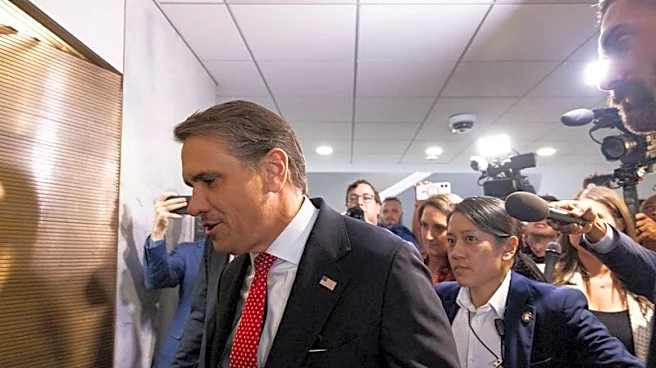
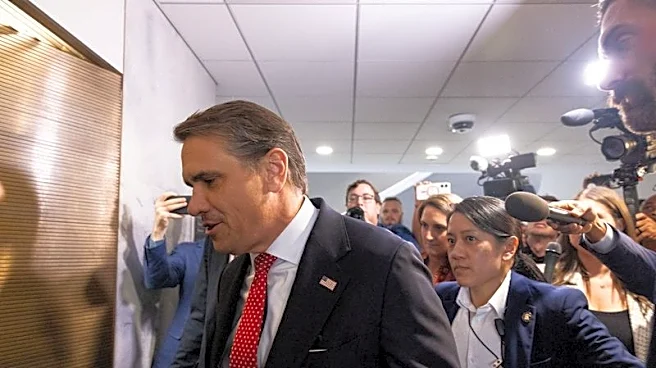
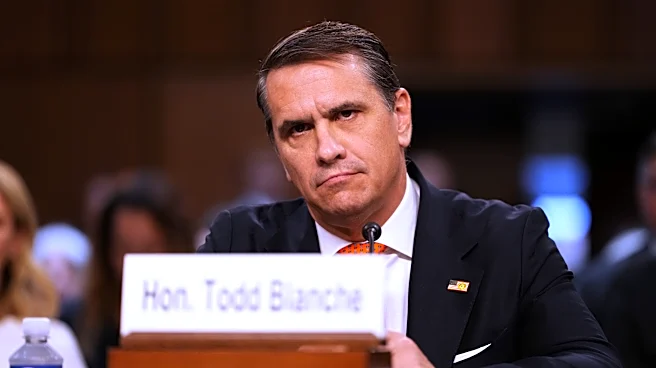
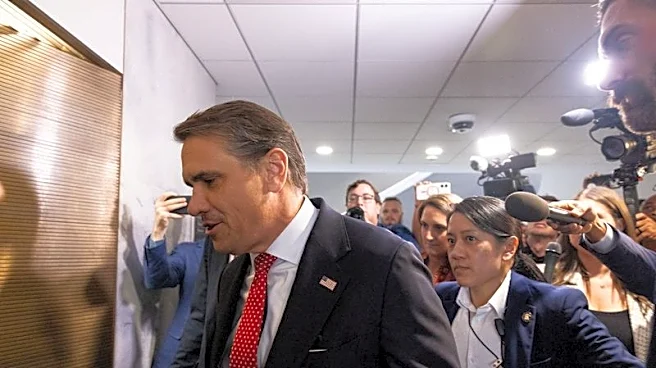
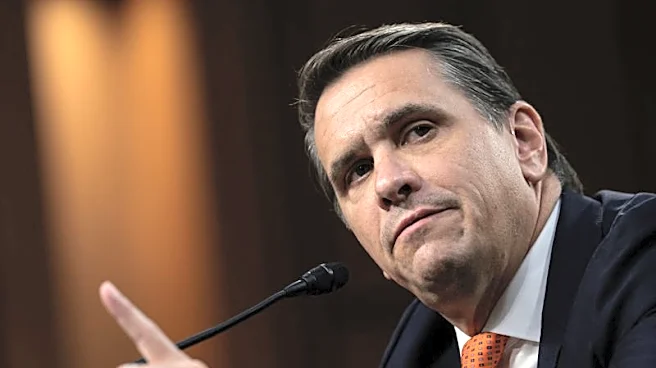
Zach, Republicans stalled Todd Blanche's nomination despite strong pressure from the White House. The nomination is still in flux, but was that a meaningful sign of GOP independence?
Zach Schermele:
It was one of the most notable signs of Republican pushback to a big priority of President Donald Trump's in the 119th Congress and in the second term of President Donald Trump's stints in the White House. John Cornyn, a Republican senator from Texas, and Tom Tillis, a Republican senator from North Carolina, both really dug their heels in on two things, the so-called anti-weaponization fund that was set up by the Justice Department as part of an IRS settlement with the Trumps and a tax audit immunity deal that was the source of a lot of consternation within the Senate Republican Conference. And it was really a bridge too far for a lot of Senate Republicans that I spoke to both on the day that it was announced, the weaponization fund and continuing onward.
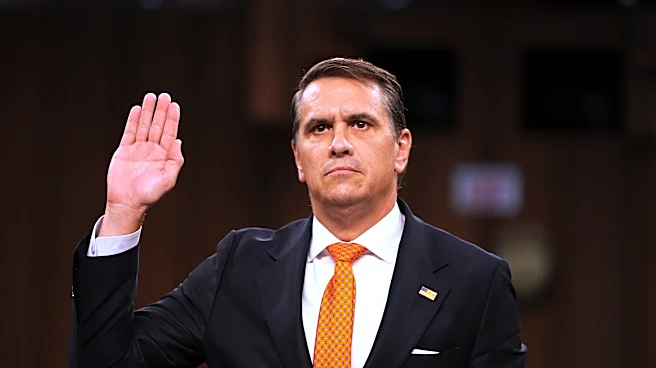
And Todd Blanche, the acting Attorney General at the Justice Department gave assurances during his Senate confirmation hearing that the weaponization fund, which Republican senators and a lot of Democrats were worried was going to ultimately give payouts to folks who were involved in the January 6th riots, Blanche said that the weaponization fund was functionally dead, that it never gave any payouts, and that it wasn't going to be moving forward. But Cornyn and Tillis wanted that in writing. They were folks who were familiar with how the Trump administration operates and with how much of a priority this seemed to be for President Trump. And so they said, "We are not going to vote to confirm you, Todd Blanche, unless you put this in writing." There was a lot of haggling back and forth about the particulars of that deal, but finally they did get something in writing ahead of the Senate's last week in session before an over month long recess. And it was a testament to just how much a little bit of pushback, especially from a Senate Republican can go.
Dana Taylor:
Trump has pushed hard for the Save America Act, while some Senate Republicans have been more hesitant. Does that reflect a growing disconnect between the President and Congressional Republicans?
Zach Schermele:
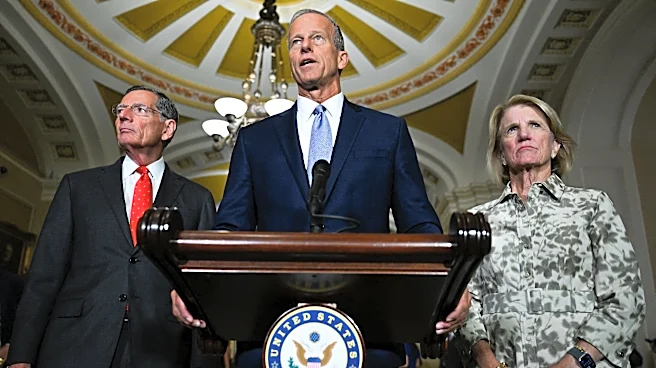
It absolutely does. And Senate Majority Leader John Thune, who is sort of on the outs with the President right now, although they both maintain that they have a good working relationship and Thune enjoys a lot of support within the Senate Republican Conference, he has said repeatedly that the votes just are not there in the Senate in order to pass the Save America Act. Remember, this is that large voting restrictions bill that the President has been pushing for that would require photo ID to vote and documentary proof of citizenship to vote, as well as it would place limits on mail in voting. And there are a lot of Republicans in the House of Representatives in particular who share the same view as the White House, that this is an urgent priority, that this needs to go to the top of the list of the legislative agenda ahead of the midterm elections.
And House Speaker Mike Johnson in my colleague Fran Chambers' conversation with him that I was in the room for just a couple of weeks ago, Johnson said he agreed with the President that this was his number one priority, but actually getting it through Congress is just going to be a significant challenge despite the President's insistence that it needs to happen soon. And that's the case for a number of reasons. But I keep going back to a comment that Senate Majority Leader John Thune made outside of his office I believe it was last week that I was standing there for while he was talking to reporters. And what Thune said was at some point in the recent weeks and months, he sat down with about 20 Republican senators, members of the White House legislative team sat down with those senators and tried to gauge support for a number of the President's priorities, eliminating the filibuster, that's the 60 vote threshold in the Senate, passing the Save America Act, eliminating blue slips, which are a special privilege that senators have when it comes to judicial confirmations. And Thune said that 15 Republican senators said behind closed doors to White House officials, "We are not supportive of these things." And if you don't have 15 on board, that is just a recipe for disaster in the Senate.
Dana Taylor:
Zach, has the debate over Iran exposed a deeper divide within the GOP between traditional hawks and the so-called America first wing of the party?
Zach Schermele:
It certainly has. And it's one of the reasons why we have seen certain Republicans, people like Marjorie Taylor Greene, in the House who really ran on this so-called America first anti-interventionist agenda at odds with the President, why we've seen them pushed out of Congress. I mean, this really, according to critics of the administration's actions in the Middle East, kind of flies in the face of that isolationist policy that Trump ran on long ago and was something that was a priority certainly of a lot of Republicans who said that previous administrations, Republican and Democrat, were spending too much time focusing on issues abroad rather than here at home.
But we have seen a lot of Senate Republicans in particular take a beat and repeat a lot of the administration's talking points about the necessity of trying to solve the problem of nuclear proliferation or potential nuclear proliferation in the Middle East since the Iran war started. And there have been a number of Republican lawmakers, House Speaker Mike Johnson among them, who have not even referred to this conflict as a war, talking about it more as a military operation in order for them to continue supporting the conflict. And it is certainly an area of a lot of division, I think even just internally within the GOP, especially as the President has kind of struggled to bring it to a close.
Dana Taylor:
Still, if we look at the economic effects of the war on Iran, for most Americans, most notably with the price of gas, that's another issue here though beyond nuclear proliferation. Have Congressional Republicans expressed concerns about Trump's handling of the Iran conflict or its economic fallout here at home?
Zach Schermele:
I was looking at some internal Republican messaging last week that showed that Senate Republicans were being advised by leaders within the party and their staff were being advised by leaders within the party to say that they were "very concerned" about the rising prices of gas and that they wanted to see fuel prices going down. And I think that is a demonstration of how leading into the midterm elections, this focus on affordability really does remain persistent. And across both the House and Senate Republican conferences, leaders are saying that they want their lawmakers and their Republican candidates to express sympathy with folks who are concerned about these skyrocketing fuel prices. And even as the President doesn't sound necessarily as sympathetic, but you have to remember, Trump isn't on the ballot in the midterms. It's these Republican candidates who are nervous about their ability to hold onto control in both the House and the Senate.
Dana Taylor:
Zach, is Trump's economic agenda in line with the Republican Party or is there still a fiscally conservative wing prepared to push back on spending?
Zach Schermele:
I think the reconciliation bill, what folks on Capitol Hill are calling reconciliation 3.0, because this is the third party line budget bill that the White House and Congressional Republicans have moved forward with, I think this reconciliation push is really a good demonstration of some of those issues with respect to fiscal conservatives and their priorities and some of the things that the Trump administration is trying to move forward with. So the administration says that the Pentagon needs more money, particularly amid losses amid the Iran war. And so they are trying to get tens of billions of dollars. The most recent version of this reconciliation bill that the House of Representatives passed has a little bit over $70 billion in defense and intelligence spending that would be put towards the Pentagon and those particular priorities, as well as some elements of what could ultimately become parts of the Save America Act or incentivizing states to implement part of the Save America Act through grants.
But none of that reconciliation bill is actually offset spending wise anywhere else in the government. And so there are fiscal conservatives in the House and in the Senate who have told me, "We are not okay with this. If you are going to try and move forward with more than $90 billion in new spending, we need to find other places in the government's budget to offset that spending." And so I think this is a good demonstration of how the Trump administration at this particular point in time is kind of trying to barrel toward these two biggest legislative priorities of the President's, supporting the war and trying to pass the Save America Act, without a lot of regard to some of these more traditional ideas that a lot of Republicans have typically wanted to prioritize.
Dana Taylor:
If we look at South Carolina's upcoming Senate race to fill Lindsey Graham's seat, will that test the strength of Trump's influence within the Republican Party?
Zach Schermele:
Certainly. And I would be surprised to see a candidate that the President has endorsed not succeed. I mean, we have consistently seen the power of his endorsement over and over again throughout primaries this year. And he has given his support to Darline Graham, the sister of the late Senator Lindsey Graham. And there are a number of folks within the Senate Republican Conference who are supportive of the newly installed Senator Darline Graham and her pretty last minute candidacy here. But this is all going to happen very quickly. I mean, in a matter of weeks, we are going to know whether or not she will be the candidate there. And there are a lot of question marks about the degree to which Senator Graham's policy positions are different or similar to her late brother's. And that could impact the degree to which there's any sort of division within Senate Republicans up here on Capitol Hill and how they support her or don't.
Dana Taylor:
Immigration remains an area of broad Republican agreement. Is that enough to hold the Republican Party together despite the disagreements we've talked about here?
Zach Schermele:
I think that's a great question, Dana, and certainly one that I was asking myself just a couple of weeks ago when the legislative agenda in the House of Representatives was effectively stalled over a number of things. I would say the primary issue that some conservative hardliners in the House had was the inability to get the Save America Act passed. But one of the other sticking points was that conservatives like Chip Roy, congressmen from Texas, and elements of the House Freedom Caucus, which is made up of conservative hardliners, said that there were stalled immigration priorities that they wanted to see make some progress in the House before the midterm elections. And so I remember talking with Congressman Roy on the steps of the Capitol and him saying that he was incensed by the Supreme Court's decision with respect to not ending birthright citizenship and that he wanted lawmakers to act and that Justice Brett Kavanaugh, in fact, had laid out kind of a roadmap for lawmakers to act in the wake of their decision.
And the President and Speaker of the House Mike Johnson have all said that when it comes to immigration, there's more to be done. We've certainly seen the administration take more actions to restrict elements of their federal immigration policy. But there continues to be differences between how members of the House and how Republicans in the Senate think about the right approach to federal immigration policies. So to say that it's something that is going to continue to unite all of them, I'm not sure going into this midterm election season.
Dana Taylor:
Zach, on the whole, and I know that I gave you a laundry list of policy disputes here, are they isolated disputes or the early signs of a post-Trump Republican Party beginning to emerge?
Zach Schermele:
I think that is the question that's going to be explored increasingly over the course of the next two years, especially after the midterm elections and whether or not the President is able to retain control of both chambers of Congress. I mean, functionally, because of the decisions that this President has made with respect to endorsing or not endorsing certain candidates and other broader changes that have happened in the makeup of Congress, he's already sort of lost truly functioning majorities in both chambers. If he still had functioning majorities, he would've been able to pass these other priorities that he's had for months now. But because he's refused to endorse certain senators and that's angered others, has refused to endorse a number of lawmakers that are popular internally within the party and among their colleagues in Congress, there has really been a significant amount of division.
And so the question over the course of the midterm elections and in the aftermath is going to be, what does the Republican Party look like post-Donald Trump? And is it something that are Republicans going to be running on the priorities that Donald Trump championed over the course of his first two years? Running on the Big, Beautiful Bill and other legislative wins in Congress, or are they going to be looking for areas in which they disagree with the President? But something that we have to keep in mind while having this conversation is that he still retains a broad amount of support among the base of the party and his endorsement is exceedingly powerful among Republicans up and down the ballot. And so the degree to which this party changes over the course of the next year or two is something that remains to be seen.
Dana Taylor:
Zach Schermele is a congressional correspondent for USA TODAY and also writes my favorite newsletter, USA TODAY on Politics. Thank you so much, Zach.
Zach Schermele:
Thanks so much, Dana.
Dana Taylor:
That's today's episode of USA TODAY's The Excerpt. What story would you like to hear next? You can tell us at podcasts@usatoday.com. Thanks for listening. I'm Dana Taylor.
This article originally appeared on USA TODAY: Is the post-Trump GOP already forming? | The Excerpt