





With the midterm elections just a week away, Republican control of the U.S. Senate might come down to two Republican women. RealClearPolitics rates 10 Senate races as toss-ups. To keep control of the chamber, Republicans may need wins from Sen. Susan Collins in Maine and Rep. Ashley Hinson in Iowa, and both are in tight contests.
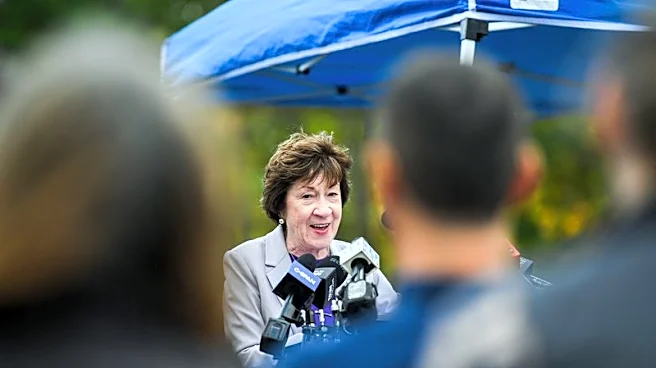
Collins, who has served in the Senate for nearly three decades, is struggling to pull ahead of Democrat Troy Jackson.
Hinson is in a closer-than-expected race in a state President Donald Trump has won three times – including by 13 percentage points in 2024.
Their struggles show what it's like to be a Republican woman running in a tough, Trump-centered political climate not of her making.
Sen. Susan Collins may have met her match in Maine

Collins has trailed Jackson for
weeks. She is the only Republican senator seeking reelection in a state Trump lost in 2024. A new Fox News poll has the two tied at 49% among likely voters, perhaps because Collins got a bump from Trump's targeted tariff relief for Maine farmers.
She’s been through this before. In 2020, polls showed Collins trailing Democrat Sara Gideon, but she ended up winning by nearly 9 points.
Insiders say the race is less about Jackson than about whether Mainers are tired of Collins and ready for a change. In the same Fox News poll, 53% of likely voters said they're concerned she votes with Trump too much.
Trump's net approval rating in Maine is -32, according to a rolling tracker data from the pollster Civiqs. But voters aren't wild about Jackson, either: 46% in the Fox News survey worry he's too liberal.
Maine women could decide the race. In 2020, women made up nearly 60% of the electorate, according to NPR. They voted for Joe Biden for president by 23 points, but they also backed Sen. Collins, by 3.
Jackson leads among women this time, though narrowly: 51% to 47% in a Sept. 17-21 University of New Hampshire survey.
Abortion is an obvious point of contention, and Collins walks a tightrope on it. She supports abortion rights, but her 2018 Senate vote was crucial to Brett Kavanaugh's confirmation to the Supreme Court. Four years later, he joined the majority that overturned Roe v. Wade, ending the constitutional right to abortion and leaving the issue to the states.
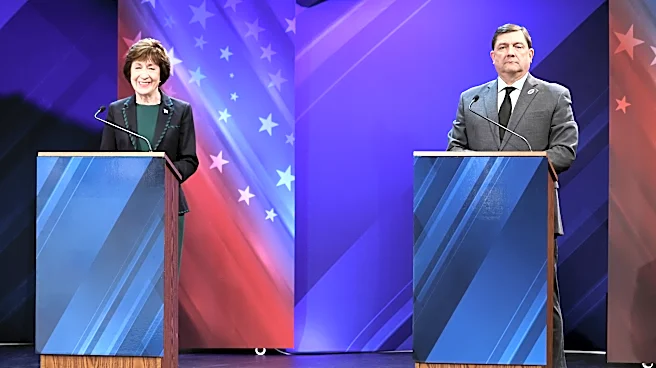
But like the rest of the country right now, Maine voters, women included, seem more worried about affordability than abortion. During an October debate, Collins touted getting Maine exempted from a road salt levy. Jackson pressed her on the cost of living, then quipped, "We can't eat road salt."
The line became a viral meme and a sign of where voters are on affordability. On that issue, Collins' ties to Trump could keep Jackson – who purports to be a champion of the working class, albeit while supporting contradictory policies – in a dead heat through Election Day.
Rep. Ashley Hinson faces a Democratic populist in Iowa Senate race

Collins' tight race is understandable. Maine hasn't voted for a Republican president since 1988. Iowa is a different story.
It hasn't elected a Democrat to the U.S. Senate since 2008, yet Hinson holds only a narrow lead over Democratic state Rep. Josh Turek. They're running to replace Republican Sen. Joni Ernst, who is retiring after two terms.
Part of Turek's appeal is that he isn't a traditional Democrat. He's a two-time Paralympic gold medalist running as a centrist on a "commonsense prairie populist" platform. A smart strategy in a red state.
To counter Turek, Hinson has tried to have it both ways, sticking with the president where it matters and breaking with him elsewhere. She praised Trump at a recent rally but has criticized his diesel deal with Russia and, reversing her earlier position, called for an end to the Iran war.
"I don't think we should be making any deals with Russia," Hinson said in a recent interview. "I want to bring all of these conflicts abroad to an end as quickly as possible. I don't think anybody likes forever wars, but certainly we cannot be empowering dictators to win wars."
Still, Hinson draws just 85% of Republicans, while Turek wins 91% of Democrats. And each candidate does best with the opposite sex. Women favor Turek 52% to 42%, while men favor Hinson 52% to 40%, according to Quantum Insights polling.
Does the Republican Party have a woman problem?

At first glance, it might seem the Republican Party has a woman problem.
Of the 27 women serving in the U.S. Senate, just 11 are Republicans – and one of them, the late Sen. Lindsey Graham's sister, Darline Graham, was appointed to serve after his death in July.
Democratic women could make history in Alaska and Minnesota. But so could Republicans. If Rep. Julia Letlow wins, she'll become Louisiana's first Republican female U.S. senator. And in South Carolina, Graham narrowly leads Democrat Annie Andrews.
As a woman and a mother, I understand why many women see electing women as a matter of fair representation. Women in office are more likely to push legislation that uniquely affects women and children. But I think most Republicans, women included, care more about a candidate's platform, economic views and ideology than gender. Both races bear that out.
For Collins and Hinson, being a woman hasn’t helped or hurt much. In this climate, economic worries and loyalty to Trump seem to trump everything – including gender. So no, the GOP doesn’t have a woman problem. If it loses the Senate Nov. 3, it will be because two Republican women couldn’t escape the man who leads their party.
Nicole Russell is an opinion columnist with USA TODAY. She lives in Texas with her four kids. Sign up for her newsletter, The Right Track, and get it delivered to your inbox.
This article originally appeared on USA TODAY: The GOP doesn't have a woman problem. It has a Trump one | Opinion