






Twenty-five years after 9/11 deeply wounded the nation, construction will soon begin on a museum designed to tell the tragedy’s “final chapter.”
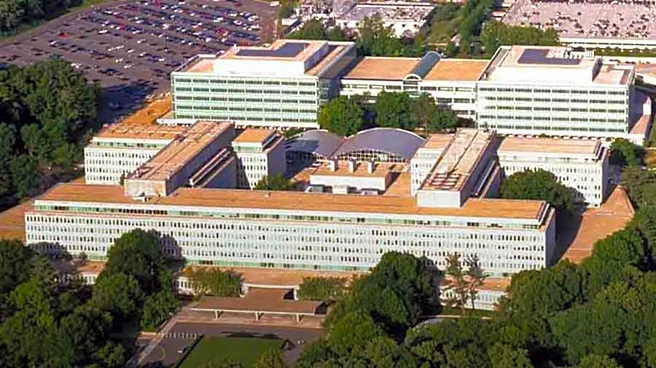
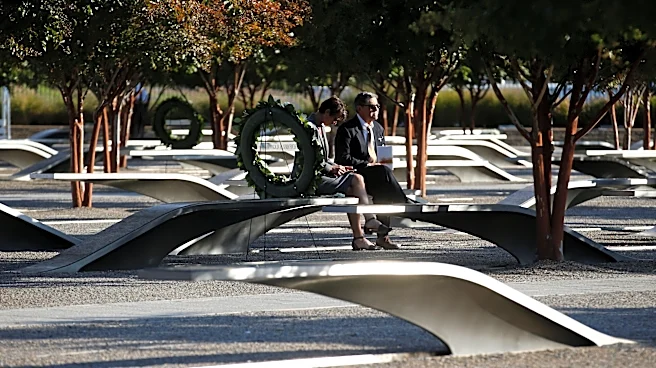
The project is led by the Pentagon Memorial Fund, a nonprofit created in 2003 by families of victims. In 2008, the group erected an outdoor memorial honoring those who perished in the Pentagon attack. Ever since, it has sought to build an accompanying education facility with information about the victims, the attack and the global war on terror.
Those efforts have been delayed for 18 years by a series of funding and planning challenges. But on Sept. 12, the organization is set to finally break ground on the National 9/11 Pentagon Memorial Visitor Education Center.
TODAY wants to hear your story
“It takes time to build buildings within the D.C. metro area,” said Joseph Kornhoff, the group’s executive director. “But we are shovel ready.”
A long time coming
When it opened in 2008, the Pentagon memorial became the first of its kind. Today, it is the only site attacked on Sept. 11 without a museum or education facility.
The 9/11 Memorial Museum at the World Trade Center site in New York City opened in 2014, three years after twin reflecting pools opened in the footprints of the Twin Towers. The Flight 93 National Memorial Visitor Center and Museum near Shanksville, Pennsylvania, opened in 2015.
The Pentagon’s 9/11 education center has taken longer, in part because of broader plans to expand Arlington National Cemetery nearby.
In 2011, the Pentagon Memorial Fund secured a land grant from Virginia to build the museum. Around the same time, the federal government was negotiating a land exchange with Virginia and Arlington County so it could increase the number of burial sites at the cemetery.
Then, in 2020, the Department of Justice opted to use eminent domain to acquire land and roadways from Arlington to build the cemetery’s southern expansion.
Over that time, the land given to the Pentagon Memorial Fund for the education center changed. The project is now included in the broader cemetery expansion plan, which also incorporates the Air Force Memorial.
The expansion isn't expected to be completed until summer 2029. Kornhoff estimates the education center will open sometime that year, too.
Also at issue is funding. The organization has so far raised about $13 million of the $100 million estimated cost for the project. That includes $12 million in federal funding and $1 million in state funding from Virginia. It’s enough to break ground, but the nonprofit will seek more from public and private sources to build the museum, Kornhoff said.
Private fundraising has significantly increased since the beginning of the year, when the nonprofit received money in a federal defense bill, Kornhoff said.
“That has really allowed the private sector to really jump off," he said.
Vision for the education center
The two-story education center will sit about 200 yards southwest of the existing memorial, across a roadway. A pedestrian pathway will connect the two-story building with the memorial, which lies close to the site where American Airlines Flight 77 struck the Pentagon.

The memorial draws about 1 million visitors each year. Kornhoff said people often view it as the “last stop” of their day when they’re visiting the nation’s capital. He hopes that the new connectivity to the Air Force Memorial and Arlington National Cemetery will make it more of a destination.
“Tours can be dropped off and go through each of the sites,” he said.
The center will feature 10 exhibits, including stories about each of the 184 people killed. Much of the museum will focus on how the terrorist attacks changed the world. Other exhibits will illuminate the national and global responses, as well as what it means for people to “never forget.”
For Kornhoff, the 25th anniversary of 9/11 marks an especially poignant moment for that mission.
About 30% of the U.S. population today, some 100 million Americans, were not alive on 9/11. Millions more were too young to understand what was happening.
“What we're trying to do as an organization is educate that one third of Americans that weren't alive and don't have any recollection of that day,” he said. “How do we do that? It's through making a personal connection.”
Ahead of the anniversary, the Pentagon Memorial Fund is preparing to create a pop-up digital visitor education experience showcasing some of the artifacts it plans to put up on display in the museum, Kornhoff said.
The nonprofit is still working with the Department of War, previously called the Department of Defense, on what will be included, though Kornhoff said there will probably be some never-before-seen footage of recovery efforts at the Pentagon from the days after the attack.
This article originally appeared on USA TODAY: 25 years later, a 9/11 museum is breaking ground near the Pentagon