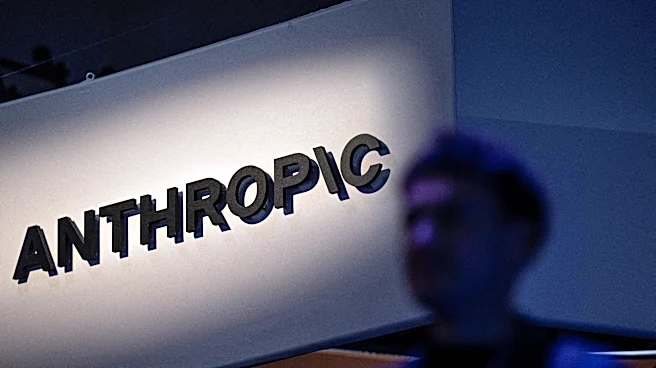






U.S. based AI company Anthropic, maker of popular chatbot Claude, filed for its initial public offering (IPO) on Oct. 26, giving the public a first official look into its business operations and ownership.
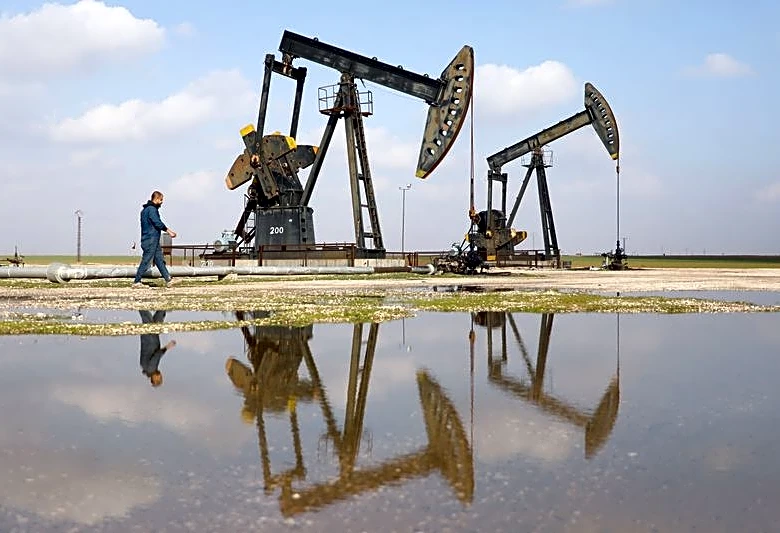
While the 335-page registration statement didn’t state the company’s valuation, some investors have guessed it could be as high as $2 trillion, which would make it the biggest IPO ever. A large IPO could inflate what is sometimes referred to as an AI bubble, or the idea that financial markets have overvalued AI companies, and that when the markets correct, a financial fallout will occur, according to Dennis Kelleher, CEO of nonprofit financial group Better Markets.
“If it is a bubble that bursts, then the economy and Main Street Americans will
suffer when that happens because that’s when companies lose money, debt and loans are not repaid, some companies and banks will go bankrupt, stock markets crash, and the economy contracts,” Kelleher wrote to USA TODAY, referring to the 2008 economic crash.
“If it is not,” he added, “then depending on which companies win the AI race and capture the most market share, the economy and Americans could benefit from the AI buildout.”
What is the AI bubble?
Financial bubbles can exist in any sector; a "bubble," put simply, is the concept of overinvestment in a space that won’t see a positive return on investment, eventually creating market instability.
Rob May, author of 2026 book “Investing in AI,” pointed to the railroad infrastructure bubble from the 19th century and the dot-com bubble from the 1990s as examples.
The AI bubble follows the same premise: People are overinvesting in artificial intelligence technology and will soon feel its fallout. But overinvestment in AI technology can refer to a lot of areas, from data centers to model providers like Anthropic or OpenAI, to startups.
“When you talk about the AI bubble, I think one of the mistakes people make is thinking it's sort of like a homogeneous, consistent kind of thing, and it's not,” May told USA TODAY.
Different areas, he said, could see higher returns on investment than others.
“I think analyzing whether or not this is a bubble is a little bit trickier than some of the technologies and bubbles that have come before it because we don't really understand and we don't have any good mental models to tell us what this is going to look like at maturity,” May added. “It's fundamentally different.”
Is there an AI bubble?
The existence of an AI bubble is up for debate among experts. Some think that no matter how much is spent on the technology, it will be worth it. Chipmaker Nvidia's CEO, Jensen Huang, for example, said in August that he is “happy to pay hundreds of millions of dollars a year so that we can go use these AI services.”
Others worry that the money companies and individual investors are spending on AI isn’t seeing the return they thought it would. In 2024, Sequoia Capital estimated that this gap was at $600 billion.
“I think there are pockets of bubbles, but overall, I don’t think it’s going to be a violent pop,” May said.
“There's no reason to believe it's going to stay linear. There's going to be an asymptote,” or a point at which growth plateaus, he added, predicting that in the next 18 months, investors will stop pumping money into the startups and model labs.
What does Anthropic have to do with it?
The paperwork Anthropic filed on Monday is only their registration statement to go public. They are expected to start trading before Thanksgiving, which will serve as a litmus test for investor demand and set the stage for other private AI companies, including OpenAI.
If Anthropic is overvalued, the AI bubble will continue to grow, creating a bigger fallout if it pops, according to Kelleher.
“Anthropic is a powerful business, bringing in over $16 billion in revenue last quarter alone, but a great company can still be a bad investment if you overpay for it,” accredited financial counselor Tess Waresmith wrote to USA TODAY.
According to Anthropic, the company generated $16.3 billion in revenue in first-half earnings, which ended on June 30, which is up $15.1 billion from the prior year’s period.
“Anthropic has committed to more than half a trillion dollars in computing costs,” Waresmith added. “Those are real expenses, so growth is going to have to keep pace for a high stock price to make sense.”
If there is a bubble, May emphasized that Anthropic has an edge over other companies because they have access to data from customers about where AI is actually valuable and applied.
“I would say, Anthropic is overvalued given the current state of their business,” he said, “but I think fairly valued based on the potential of where their business could go.”
Greta Reich covers the artificial intelligence industry for USA TODAY through a fellowship from the Tarbell Center for AI Journalism. Funders do not provide editorial input.
This article originally appeared on USA TODAY: What is the 'AI bubble' and what happens if it pops?