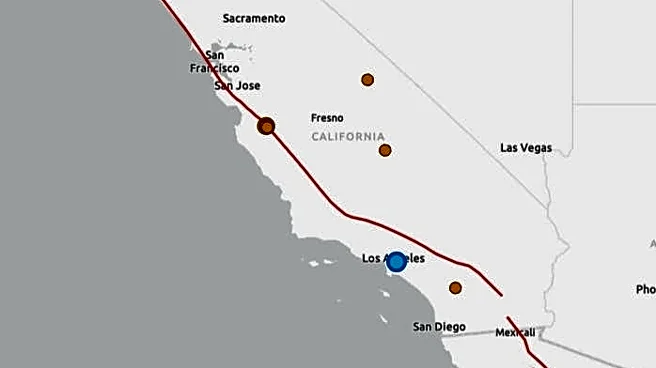








City officials across Southern California are reversing course on the controversial automated license plate reader systems amidst ongoing national pushback concerned about misuse and privacy.
San Diego, the most populous among the string of cities that recently took action, revoked its automated license plate recognition use policy on Nov. 16. A formal notice of contract termination was sent to Flock Safety representatives, Councilmember Sean Elo-Rivera said on social media, directing the system to be immediately shutdown, get cameras removed and delete “all associated city data.”
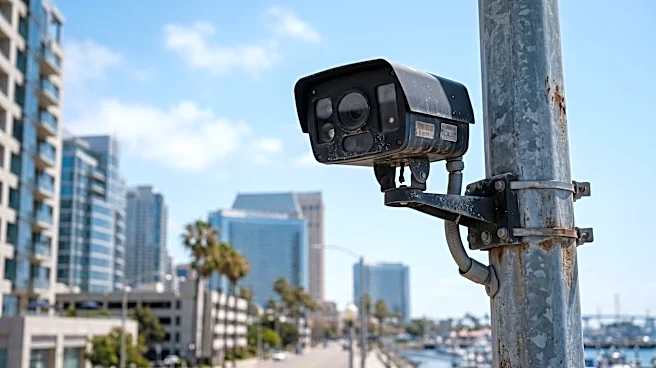
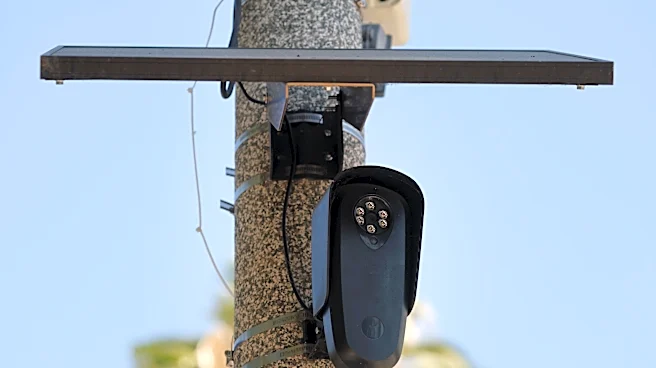
Flock says its license plate readers capture license plates and characteristics of vehicles like make and model; San Diego Police Department officials said during the
city council meeting that automated license plate readers help officers “identify and locate vehicles connected to crimes or public safety emergencies, often much faster than traditional policing methods.”
But public commentators took turns demanding the 500 cameras deployed citywide — a figure from the police department — get taken down during the lengthy meeting, one that captured the amount of frustration and misgivings for Flock and license plate readers.
People spoke about mass surveillance and described it as technology that infringes upon constitutional rights. They said data could be wielded against people, including for federal immigration enforcement. The Washington Post reported that Flock cameras “scan the roads of more than 6,000 communities,” in a report in August, citing the company.
One city councilmember soured on automated license plate readers after Voice of San Diego reported that police department officials used Flock in an investigation regarding an officer and a victim of domestic violence he became involved with.
“Learning that the police department used ALPRs inappropriately to surveil one of their own and a member of the public calls the entire program into question,” he said just days before the city council vote.
Mayor Todd Gloria weighed in about Flock in the days prior to the vote, too, saying the company and San Diego’s use of the technology “have clearly lost public trust, and that cannot be ignored.”
“At a time when each taxpayer dollar matters, every cty investment has to justify itself,” Gloria said in a statement. “That means delivering public safety value, operating with strong accountability, and maintaining the trust of the people who are paying for it.”
Cases of misuse have been reported nationwide. Right as San Diego reversed course on Flock, the Georgia Bureau of Investigation announced that three officers in Georgia were charged with misuse of license plate reader systems.
“My view of the effectiveness of ALPRs hasn’t changed. What has changed is the context,” San Diego City Councilmember Stephen Whitburn said during the Nov. 16 meeting.
He said that San Diego officials approved automated license plate readers during the Biden administration.
“The Trump administration and ICE and their un-American anti-immigrant brutality have created a police state in many of our communities,” he said, adding that while he’s “confident” city license plate readers aren’t being used for deportations, it doesn’t change the widespread fear of Flock cameras among immigrant communities.
Santa Ana, Ventura and more move away from Flock, but not all agree
San Diego wasn’t the only city to backtrack on Flock and automated license plate readers recently.
Pasadena won’t renew its contract with Flock, the city council voted on Nov. 17. Public commentators there also voiced concerns about it threatening people’s right to privacy and misuse of data. The contract will expire in February.
Santa Ana said its city councilors voted on Nov. 17 to end its agreement with Flock for the police department’s automated license plate reader program. Less than a week prior, Ventura voted to remove its Flock cameras, according to the Ventura County Star, which is part of the USA TODAY Network.
In a 3-2 vote earlier November, Perris opted to suspend its renewal with Flock until they feel comfortable to bring it back in a meeting that showed that not everyone is against Flock.
Perris Councilmember David Starr Rabb said that as deputy district attorney in San Bernardino County, he’s used Flock to help solve cases and that there are safeguards in place with the state.
“If we are prepared to disassemble Flock or stop Flock now, the council is going to have to go to the residents and for instance, somebody kidnaps a child, somebody is a victim of a hit and run, there’s somebody a victim of a DUI, we’re going to have to go those people and say that we took the cameras down,” Starr Rabb said. “Are we prepared to do that?”
Perris city officials had approved a two-year agreement with Flock to purchase and install license plate recognition cameras in 2024, according to City Manager Clara Miramontes. The agreement expired earlier this year, and Perris moved to a month-to-month approach pending a decision on renewing the contract, according to Miramontes.
Discussions about Flock are seemingly poised to continue throughout Southern California.
Gente Organizada, a nonprofit organization, celebrated the Flock defeats in Santa Ana and San Diego on social media and called for the City of Pomona to follow suit. And West Hollywood opted on Nov. 16 to table a discussion about the city’s automated license plate reader program for the incoming new council to address.
Paris Barraza covers Los Angeles and Southern California for the USA TODAY Network. Reach her at pbarraza@usatodayco.com.
This article originally appeared on USA TODAY: Southern California cities say goodbye to Flock license plate readers