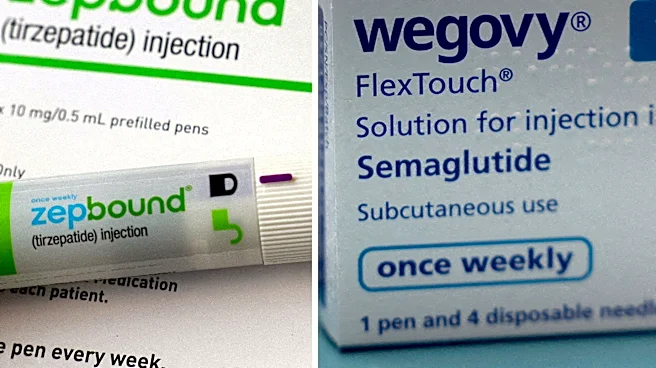







Celebrities such as "Real Housewives" executive producer Andy Cohen and "Pitch Perfect" star Rebel Wilson have touted microdosing GLP-1 weight loss drugs as a quick path to better health.
Yet medical evidence backing claims of effective use of smaller doses of the prescription weight-loss drugs Wegovy and Zepbound is limited, experts say.
New research sheds some light on potential dangers and benefits of taking smaller-than-recommended doses of the popular medications. A study evaluated two similar-sized groups who took and maintained low starter doses of the popular weight-loss drugs Wegovy and Zepbound, rather than following drugmaker recommendations to gradually increase doses until reaching a Food and Drug Administration-approved maintenance
level.
Researchers compared data on two groups each with more than 500 people who were prescribed three fills of semaglutide or tirzepatide over six months. Study participants took starter doses of .25 milligram of semaglutide, sold by Novo Nordisk under the brand name Wegovy, or a 2.5-milligram dose of tirzepatide, sold by Eli Lilly under the brand Zepbound.
Over one year, study participants on tirzepatide lost average weight of 5.5% while semaglutide users lost average weight of 2.2%, according to the study published Aug. 31 in Biology Methods & Protocols. The average weight loss at one year on the recommended higher doses was 20.2% with tirzepatide and 13.7% with semaglutide in an earlier head-to-head trial, Reuters reported.
The study results show that some patients who sustain lower doses, or microdoses, might lose some weight rather than gradually increasing doses until they reach a maintenance level as recommended by the drug manufacturers, said Venky Soundararajan, the study's co-author and founder of the artificial intelligence and health technology company nference.
He said the study aims to give consumers and physicians more information about potential benefits and risks of microdosing weight-loss medications.
"Talk with your doctor, but go in with your eyes open," Soundararajan said. "Expecting large amounts of weight loss at the lowest doses will not be practical."
Even at lower doses, patients had side effects
Soundararajan's study reported people on low doses of semaglutide generally had fewer side effects than those who took low doses of tirzepatide.
Novo Nordisk generally recommends doctors start new Wegovy patients on a weekly .25 mg shot and gradually increase the dose until patients reach their maintenance dose. Lilly recommends escalating Zepbound doses until patients reach their maintenance dose.
The study said low-dose tirzepatide was linked to higher rates of kidney injury, constipation, muscle cramps, lumbar disc disease, shortness of breath during physical activity or exercise, skin spots and other side effects compared to the semaglutide users. Users who took low-dose semaglutide had higher rates of ear inflammation, excessive sweating and ankle swelling, according to the study.
Study authors completed the study by gathering data from electronic health records and compared how patients fared on the lowest doses of the two medications. The researchers used AI to curate doctor notes to find out potential adverse events reported by patients.
As an observational study, the research doesn't prove the low-dose versions of the drug caused weight loss or the reported side effects. Study authors noted other unknowns such as whether patients consistently filled prescriptions or took the medications as recommended.
But study authors said it provides some evidence that sustained, lower doses of the medication might help people lose weight, albeit at lower levels than what clinical trials show for patients who follow recommended dose schedules.
Novo spokesperson Liz Skrbkova said it's important for patients to communicate with their doctor or other health care practitioner on best treatment options for them. Novo recommends maintenance doses of 1.7 mg, 2.4 mg or 7.2 mg for Wegovy injection or 25 mg for Wegovy pill.
"For Wegovy pill and injection, there are options to slow the dose escalation or reduce the dose to help mitigate gastrointestinal side effects, but any of these options should be considered in partnership with patients’ health care prescriber," Skrbkova said.
In a statement, Lilly said tirzepatide’s efficacy and safety is spelled out in FDA-approved labeling and has been established in clinical trials involving more than 25,000 participants.
"Treatment decisions should be made by patients and their healthcare providers, and Lilly is committed to offering health care providers resources to help them determine clinically appropriate options that best meet the needs of their patients," Lilly said.
Doctors in the dark on microdosing
Doctors are allowed to prescribe medications as they see fit, and some doctors are comfortable with microdosing if suitable for their patients. However, other doctors would like to see more studies showing benefits and risks of microdosing.
"The real question about microdosing is, does it have some sort of value at a lower level for people that are relatively normal body size?" said Dr. Angela Fitch, an obesity specialist and cofounder and chief medical officer of knownwell, an obesity care and primary care provider. "The people that are truly microdosing are doing it because they don't have a lot of weight to lose."
Fitch cited an example of an 80-year-old patient with heart disease who asked whether he should be on a small dose of a weight-loss drug. The man didn't have obesity due to a lower body mass index − a measure of height and weight − so she didn't recommend the medication.
Two GLP-1s are approved to reduce heart disease risk for some patients. The FDA recently approved Lilly's diabetes drug Mounjaro to cut down the risk of heart attack or stroke in high-risk adults with Type 2 diabetes. In 2024, Wegovy secured FDA approval to lower the risk of cardiovascular events such as heart attack and stroke in overweight or obese adults without diabetes.
In August, Novo launched a study on effectiveness and safety of lower maintenance doses of the Wegovy pill, but the study could take months, even years, to complete.
In the meantime, doctors such as Fitch are left with little medical evidence to share with some patients who want to microdose GLP-1 drugs.
"There are a lot of people asking for it (low-dose)," Fitch said. "The challenge we have academically is we don't know."
Ken Alltucker is a consumer health reporter at USA TODAY; reach him at alltuck@usatoday.com.
This article originally appeared on USA TODAY: 'Microdosing' GLP-1s can shed pounds, but here are the dangers