


PEÑITAS, Texas – Art Echavarria knocked on the screen door of a blue wooden house on a street where vehicles parked along the curb, some bearing Texas license plates, while others had plates from Tamaulipas, a neighboring Mexican state.
Many of the nearly 6,500 residents in the town of Peñitas, which is nestled along the Rio Grande River, commute back and forth between Mexico and United States, with homes or family they stay with on both sides of the border. Others who lived in the area mostly worked in construction and were away from their houses on an unexpectedly chilly Saturday morning in October.
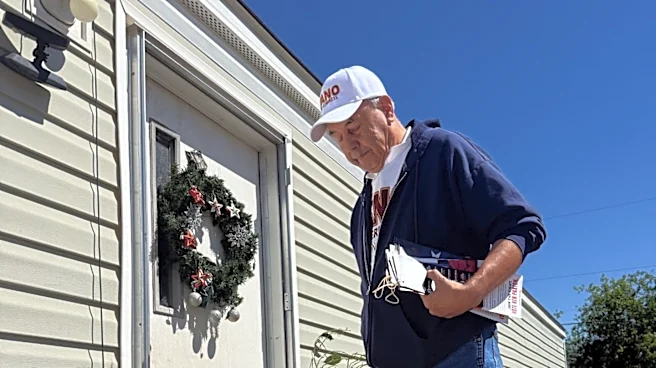
Echavarria, a precinct chair for Hidalgo County’s Republican Party, waited on the porch, holding a bundle of leaflets promoting Republican candidates.
Moments later, a woman popped her head out. His pitch to her was simple: vote Republican down the line. Before he walked away, he reminded the woman of one final thing.

“If we keep the Congress, what do we get?” Echavarria said. The woman, confused, said she didn’t know. “You get $5,000,” he responded, mentioning President Donald Trump’s promise if Republicans held on to the U.S. House of Representatives and the Senate. The woman seemed pleased with the possibility that she could get some extra cash in her pockets and said she’d support the people on the leaflet that had all the GOP candidates' faces and names.
As he walked across the lawn, Echavarria, who had knocked on over three dozen doors already, said that was his “carrot," and was confident that it had worked on the voter.
Republicans are facing tight races in ruby-red Texas, which hasn’t elected a Democrat to statewide office since the 1990s. But several GOP candidates, including state Attorney General Ken Paxton, the Republican nominee for Senate, and Republican incumbent Gov. Greg Abbott, are locked into tight races.
With Trump's approval at all-time lows and gas and grocery prices higher than when he took office, Democrats are hopeful that this election will deliver them to victory in even conservative states such as Texas. Voter concerns over the cost of living and immigration enforcement have risen throughout the election cycle, and some GOP candidates such as Paxton are particularly unpopular or controversial.
“The challenge in this cycle has been that there's been a real enthusiasm gap between Democrats and Republicans,” said Joshua Blank, director of research for the Texas Politics Project at the University of Texas at Austin. “Both nationally and in Texas, we can look at the stated levels of enthusiasm among partisans of the electorate and note that it's particularly low relative to a normal election cycle.”
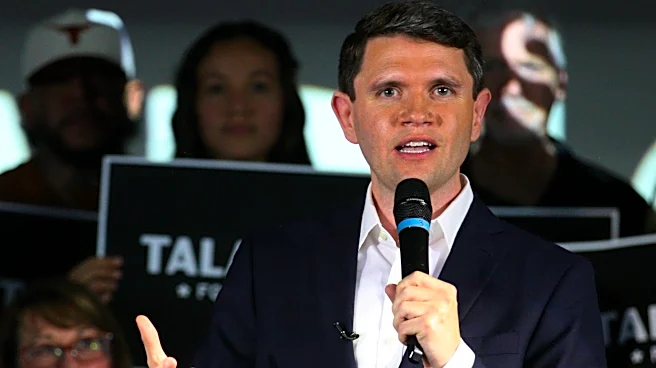
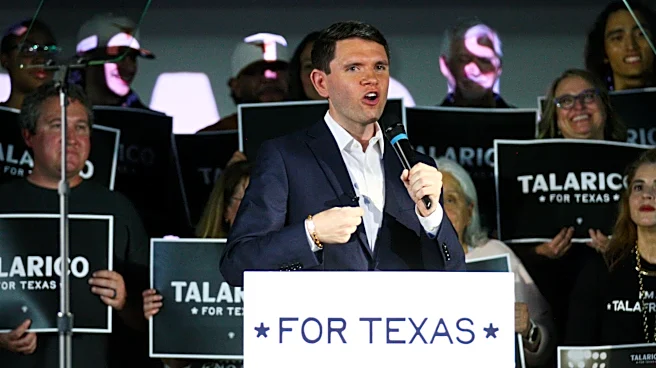
One sign of that grassroots enthusiasm gap: Talarico raised more than $146 million through Oct. 14, according to Federal Election Commission reports, while Paxton raised $22 million, including for the Republican primary, when he knocked off four-term Sen. John Cornyn.
But Republican mega-donors are able to more than compensate. Elon Musk, the multibillionaire Trump supporter whose headquarters for SpaceX is in Texas, contributed $158 million to support Paxton's general election effort.
Musk’s major donation isn’t the only sign that Republicans are worried about losing Texas, which holds 40 electoral votes, the second most in the country behind California. From House Speaker Mike Johnson to the president to local volunteers, Republicans are fanning out across the state to keep it red.
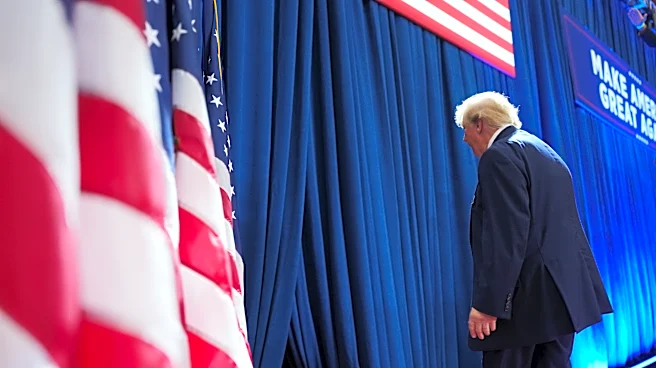
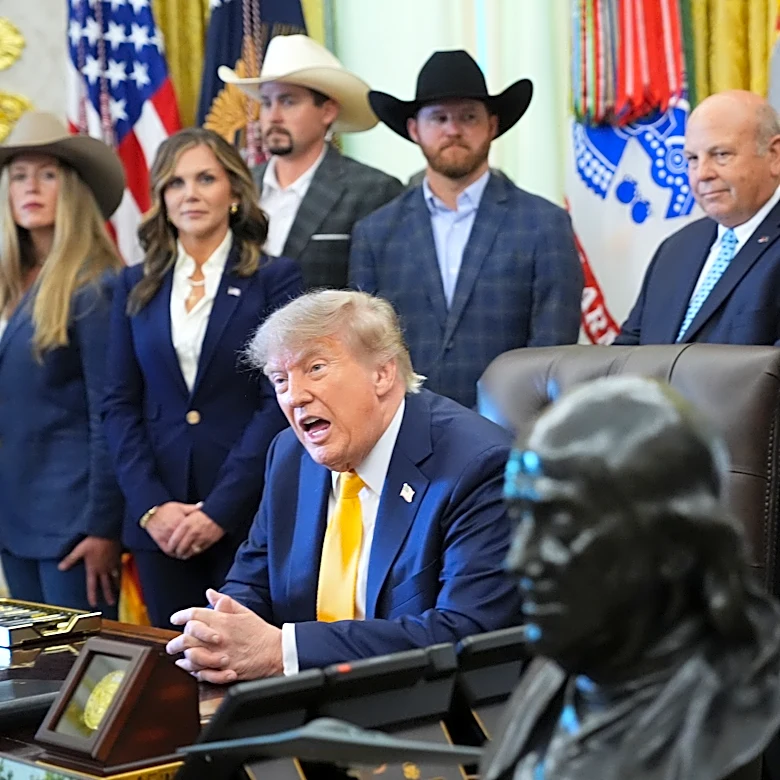
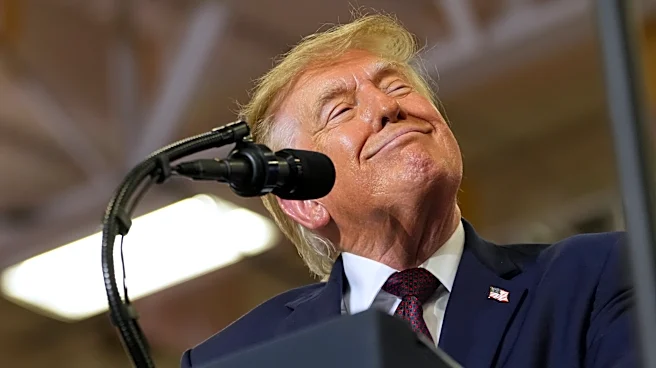
Trump, who won Texas with roughly 56% of the vote in 2024, visited the state twice in two weeks in October, rallying in San Antonio, Corpus Christi and Lubbock to boost support among his base for Republican candidates, such as Rep. Monica De La Cruz in South Texas, as well as Paxton. Trump also held the Republicans' first-ever midterm convention in Dallas, where he first introduced his promise to give out $5,000 checks if the GOP kept hold of Congress.
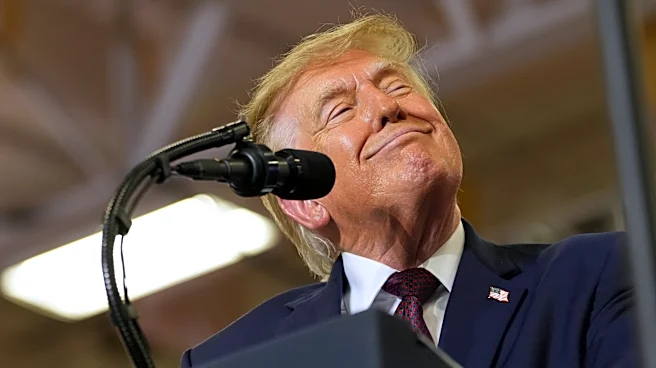
"So on election night, Texas is going to prove that America does not belong to those who hate it," Trump said at his Oct. 27 rally in Corpus Christi. "America belongs to those who love it. And the only choice for proud patriots is the greatest attorney general in the history of your state."

GOP loses ground with Latinos
Support for Republicans is especially slipping among Latino voters, whose rightward shift helped fuel key Republican wins in the state in the last several election cycles and was the premise for Texas’ redrawn congressional district maps in heavily Latino South Texas, in the hopes that they would create more Republican seats at Trump's behest.
In 2024, Trump garnered 55% support from Latino voters in the state, a record-high figure for a Republican that was a 13 percentage point increase from 2020 and a 27 point increase from 2016, according to data from the Texas Politics Project.
In South Texas, Republican canvassers like Echavarria are fanning out across the Rio Grande Valley – from the major cities including Harlingen, McAllen and Brownsville, to the smaller towns such as Peñitas and La Joya.
Still, some are worried about holding on to the gains that were made by Republicans in the past, saying the process of converting the Hispanic vote still has a long way to go.
“It's going to take time for the Hispanic community to see the light,” Echavarria said.
In Texas, which has taken a large brunt of Trump’s crackdown on illegal immigration, the increased Immigration and Customs Enforcement roundups of neighbors and coworkers has slowed down construction work, shuttered businesses and restaurants, and made community members fearful of attending school or leaving their homes.
"ICE is running rampant, terrorizing communities and people," said Hidalgo County Democrats Chairman Richard Gonzales. "Those problems that we never thought we'd see have now kind of come to our front door."
Recent polls show Democratic state Sen. James Talarico leading Paxton 49.2% to 46.5%, according to an average of polling by FiftyPlusOne, a site devoted to political polling and elections.
Abbott, who was first elected in 2011, leads state Rep. Gina Hinojosa, the Democratic nominee for governor, 49.5%-46.8%, according to FiftyPlusOne's polling average.
Democrats are leading in recent polling in several key districts that encompass the Rio Grande Valley, including Texas’ 34th, 15th and 28th Congressional Districts. Bobby Pulido, a Tejano-star-turned-Democratic-candidate, is leading against GOP incumbent De La Cruz in the 15th Congressional District.
In the 28th Congressional District, where Peñitas is located, Tano Tijerina, a county judge who was a Democrat but switched to the Republican Party in 2024, is trailing behind longtime Democratic incumbent Rep. Henry Cuellar, according to a DCCC poll released in October and a separate poll from Texas Southern University in August.

Gonzales said the Democratic Party in 2024 didn’t have good messaging in response to Republican attacks blaming the Biden administration for the post-COVID spike in prices.
“Our biggest talking point was, ‘hey, Donald Trump's a threat to democracy. We need to vote against him.' Well, you know that that didn't pan out right because it came down to the kitchen table issues,” Gonzales said.
Now, he said, Republicans are in the same position, "but about 100 times worse.”
Conservatives hit the streets to rally support
“We need to keep our Valley red,” said Sylvia Cardenas, 64, of Mission, Texas, a city of nearly 86,000 close to the U.S.-Mexico border and home to the National Butterfly Center that was locked in a legal battle over Trump’s border wall in the Rio Grande Valley.
Cardenas, along with Yolanda Gonzalez, a local business owner, are part of a local chapter of Team Red, a group that was formed to help Trump win in 2024. The group gets some support from the local Hidalgo County Republican Party, like leaflets and door signs.

Driving around in a silver SUV with a sticker that said “Team Red” on the side door, Cardenas and Gonzalez, along with Echavarria, visited a trailer park community, an apartment complex and more than two dozen homes in the span of two hours. The volunteers mapped out their course using a phone application of residents that voted Republican in the past. But they quickly expanded beyond those residents, hitting up the homes and apartments nearby regardless of voter registration.
Local candidates, such as Celeste Cabrera-Huff, who is running for Texas House of Representatives in South Texas, have goals of knocking at least 1,000 doors a week, Cabrera-Huff's team said. The Abbott campaign aims to hit upwards of 5 million doors statewide, according to his campaign.
Abbott and Paxton have been crisscrossing the state in an effort to garner support, as well. Just on Oct. 30 alone, the final day of early voting, Abbott went from Amarillo, in the Panhandle, to Laredo, along the U.S.-Mexico border in South Texas. In an effort to swell support down the ticket, Abbott also features local Republican candidates at many of his rallies. “Republicans have always worked as a team,” the Abbott campaign said.
Abbott’s campaign said they are relying on peer-to-peer campaigning, noting that the governor’s team launched a phone application called the Abbott Impact App, which is being used the for time this election cycle, that allows his supporters to send text messages to friends and family who haven’t cast their ballot yet, as well as reach up to 100 neighbors each day to vote.
While Abbott didn’t appear with the president at his recent rallies in the state, Paxton has made several appearances with Trump.
Some canvassers have promoted Trump’s promise of $5,000. Leaflets and pamphlets for the Republican candidates laid out where the candidates highlighted issues such as Paxton supporting the Tax Cuts and Jobs Act of 2017, a federal tax overhaul that was signed by Trump in his first term, and the SAVE Act, legislation that would require voters to provide proof of citizenship in order to register to vote (federal law already prohibits non-citizens from voting in federal elections.)
Out on the trail, Republicans have acknowledged voter anxiety about high costs. Paxton during a rally in Edinburg, Texas, on Oct. 22 said that voters are “telling me the same thing.”
“Everything costs more, groceries, gas, electric bills. Everything's up except your paychecks,” he said. “I am going to fight so that every Texan can buy a home, raise a family and live a healthy life without struggling to make ends meet.”
In his same speech, Paxton hit Talarico on an array of social issues, including on trans rights, saying that the Democratic Senate nominee wants to “transition our kids.” Talarico has said he opposes gender-reassignment surgery for minors.
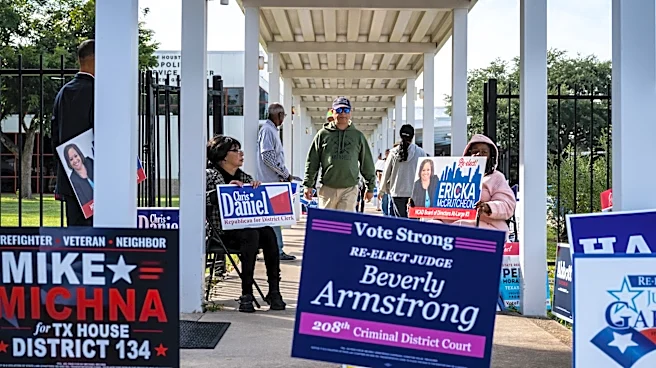
While Cardenas said she was accosted by some voters who said they were voting Democratic, Echavarria ran into a handful of Republicans who said they were going down the street to vote at their public library for the GOP ticket – even though one said she wasn’t a fan of the current “guy in office.”
Cardenas said that while she understands some of the concerns for voters such as prices and the ongoing Iran war, which has impacted the cost of gas, she said she’s “thinking long-term" that Trump will prevent a nuclear war and address high prices.
Gonzalez, 74, who was canvassing with Cardenas, said that it's going to take time for Trump to bring down the high prices.
“I'm not thinking about today,” she said. “I'm thinking about what could happen tomorrow.”
Despite Paxton's baggage of scandals with his marriage and his past impeachment by the Texas House, Cardenas said she is still supporting him. It comes down to Republicans holding on to the Senate chamber.
“We have to keep the Senate, and he's also been, in my view, a very productive attorney general,” Cardenas said of Paxton, without specifying how. “I don't care about his personal history. I don't care about anybody's personal history, left or right. It's more their policies. He is my most important one on the ticket because of the Senate.”
Cardenas, who is supporting Tano Tijerina for Texas’ 28th District, said she voted on the second day of early voting. Although she has organized and has been out canvassing for Republicans during most weekends, Cardenas said she has concerns over whether Republicans will hold Congress.
“I'm kind of scared. I'm worried,” she said. “I'm worried with this election.”
Contributing: Bart Jansen
This article originally appeared on USA TODAY: $5,000 and Latino outreach: How Republicans are trying to hold Texas