






If you think the Netherlands denying Russian gymnasts visas for the upcoming world gymnastics championships in Rotterdam is about just one event, impacting only one country, you aren’t thinking broadly enough.
Since the International Olympic Committee lifted its ban on Russia in July, a suspension imposed because of the unprovoked war on Ukraine, each sport's international federation is free to decide whether or not to welcome Russia and its teams back to its events.
That has created a debacle. With no repercussions for host countries who pick and choose who to let into their international parties, the IOC and the sports federations are blessing an environment where no competition is safe from individual whims.
If the IOC and the IFs cannot, or
will not, compel host countries to align their competitive fields with those decisions, international sports will become a free-for-all. And that's before we even take into account the 2028 Summer Olympics in LA, where the U.S. government’s shameful treatment of Iran during the men’s World Cup foreshadows even more headaches.
"The IOC has to navigate the complex realities and consequences of the current geopolitical context. Amidst growing global instability and conflict, the IOC must uphold its mission to preserve a values-based and truly global sporting platform that provides hope to the world," the IOC said in a statement.
"While visa decisions remain the sovereign responsibility of individual governments, the IOC works within its remit to support International Sports Federations and National Olympic Committees in their efforts to facilitate athletes' participation in international sport, including for visa-related matters."
As we're seeing at the world gymnastics championships, however, without tough actions to back them up, those words are meaningless.
What happened with Russian gymnasts' visas
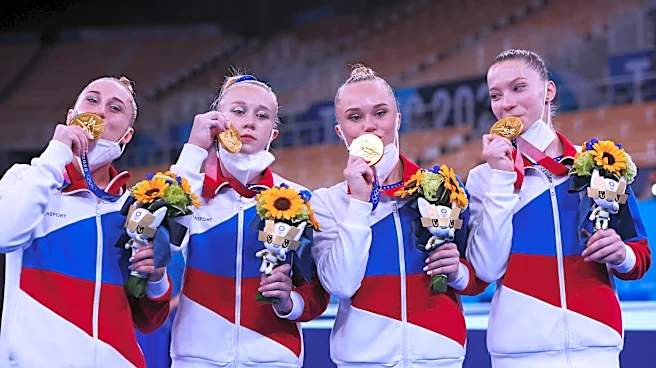
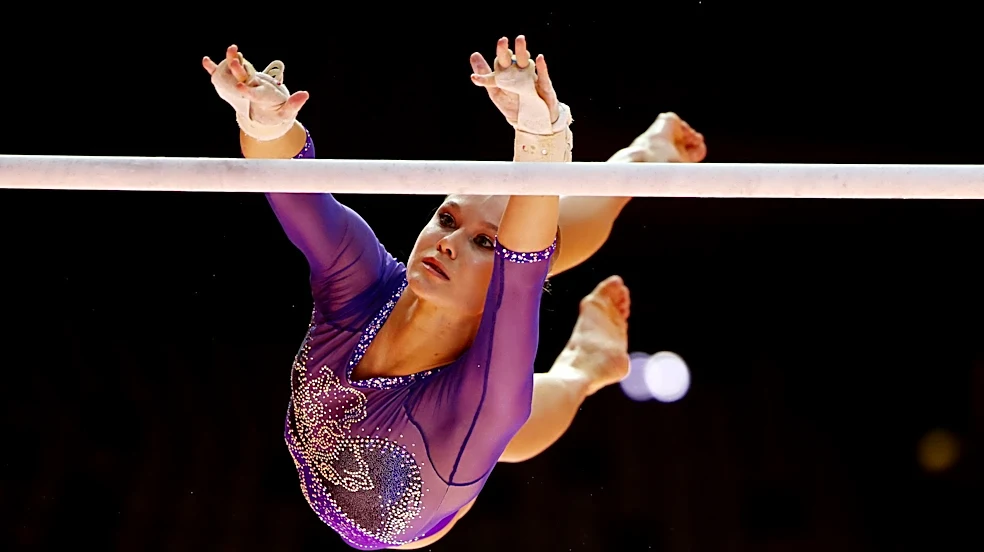
Russia said Tuesday, Oct. 13, that three of its top gymnasts, including reigning world all-around champion Angelina Melnikova and fellow Tokyo Olympic gold medalist Viktoria Listunova, had been denied visas for worlds.
Other athletes were cleared, including the five gymnasts on Russia’s men’s team. But all are arriving late, after days of uncertainty about whether they’d be able to compete at the first qualifier for LA28. Without Melnikova, Listunova and Anna Kalmykova, a member of Russia's team that won gold at the European championships, the women go from favorites for the team title to longshots to make the podium and secure a spot in Los Angeles.
The world championships begin Saturday, Oct. 17, in Rotterdam, the Netherlands.
“This is direct discrimination against Russian athletes and a gross violation of the principle of equal conditions for Olympic selection,” the Russian gymnastics federation said on its official Telegram channel.
You can bet it won't be the last.
How Olympics qualifying for LA28 could be affected
Qualification for LA28 will pick up speed in the coming months. No doubt other countries hosting Olympic qualifying events who are sympathetic to Ukraine are watching what happens with the world gymnastics championships and thinking they can do something similar.
"Sports and culture must not become vehicles for whitewashing Russian aggression. Based on today's discussion, my services together with the Commission, will put forward proposals on how to sustain Russia's isolation in global sports," Kaja Kallas, the foreign policy chief for the European Union, said Monday, Oct. 12.
But that would be an awful precedent to set.
This is not a defense of Russia or its unprovoked war on Ukraine, which has left thousands of Ukrainians dead or injured and displaced millions more. Nor is it an argument advocating for Russia’s return to international sports. If the leaders of the sports world shun Russian athletes until Vladimir Putin ceases his malevolent and monstrous behavior, you’ll get no argument from me.
But allowing host countries to impose their own punishments opens up a Pandora's box. What's to stop a host country from banning the athletes of countries it fundamentally disagrees with? Or to make it as difficult as possible for athletes to compete in order to send a message to a country that it disapproves of its actions? Heck, a country tired of seeing one of its rivals dominating the podium could simply pick and choose which of their athletes they allow at competitions.
Look hard enough, and you could find an excuse to ban athletes from any country.
Listunova has shown public support for the war on Ukraine, attending a March 2022 rally while wearing clothing with the "Z" symbol. Melnikova once ran for a seat in local government as part of Putin's United Russia party, though she ended her campaign so it wouldn't jeopardize her status as a neutral athlete. They might well deserve to be banned. But that’s a call for World Gymnastics or the IOC to make.
When individual host countries are allowed to impose their moral judgments on who can and can’t compete, it opens the door for less-defensible positions.
What if China, host of next year’s world gymnastics championships, decides to take issue with gymnasts from countries that have criticized its treatment of Uyghars, the Netherlands included? A gymnast from Israel was banned from the worlds in Indonesia last year because of the war in Gaza.
Governing bodies have power if they choose to use it
The IOC and World Gymnastics say there’s nothing they can do, just as FIFA did when the United States forced Iran to move its base camp from Arizona to Mexico at the last minute and said the Iranians could only arrive 24 hours before their games in Los Angeles.
"The issuance of visas to all participants is a process determined solely by the Dutch authorities," World Gymnastics said in a statement. "World Gymnastics fully regrets the negative impact on the preparations of the Russian delegation and the confusion felt among the wider Artistic Gymnastics World Championships community."
That's not good enought. These are your championships. You can pull them. Fine the host federation. Impose a punishment on it for future events. Anything that signals being a host is not license to settle scores or make statements.
The IOC and its affiliates have long touted themselves as being above politics, saying sports can promote unity in the world. But their refusals to do anything to enforce their own decisions only leads to more division.
Follow USA TODAY Sports columnist Nancy Armour on social media @nrarmour.
This article originally appeared on USA TODAY: Why Russia's gymnastics visa dispute could reshape Olympic qualifying worldwide