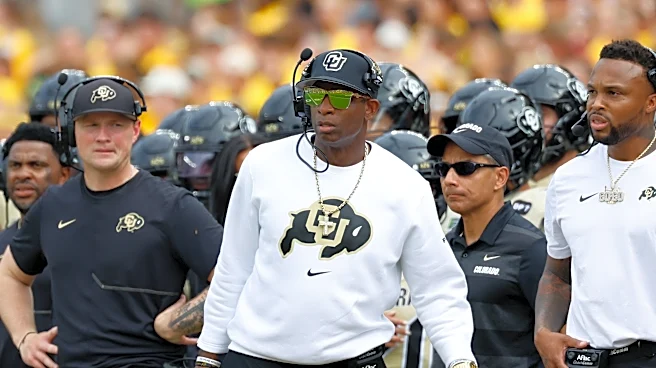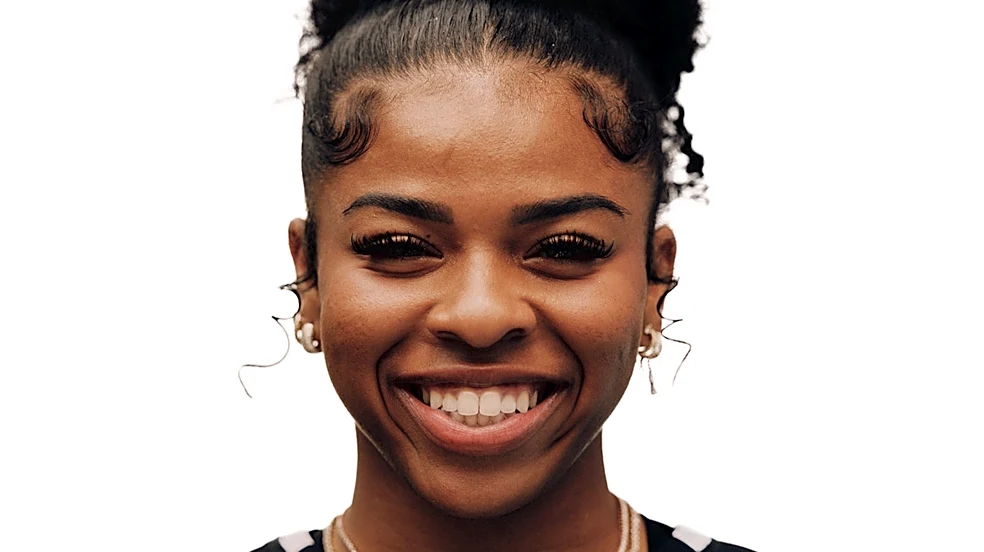







It happened around the time Shelomi Sanders was working out a lot with her dad, Deion Sanders.
“I was losing weight,’ ” she says, “and I'm like, ‘OK, I'm doing this. I guess you know what you're talking about, Prime Time.’ ”
She was also really thirsty and sleepy and her mother, Pilar, thought something might be wrong.
The night she was diagnosed, Shelomi remembers her father was on his way home from a football event with her brothers.
“His whole remedy is just take a Nyquil and you’ll feel better,” she says. “I threw that right up, got rushed to the ER. My (blood sugar) levels were so high. So it was a tough time because I was young and people aren't really educated on diabetes.”
The youngest of Deion Sanders’ five children was 13 at the time. That
was about 10 years ago, and Shelomi Sanders is now a guard for Division II Colorado State University Pueblo. She has also played Division I basketball and, being part of a famous athletic family, she has become an advocate for living and thriving with Type 1 Diabetes.
She is one of 27 collegiate athletes who are part of Dexcom U, the technology company’s NIL program exclusively for college athletes with diabetes. She has learned to lean on others with Type 1 Diabetes and be a mentor to kids who are struggling with it like she once did.
“When you get diagnosed, they give you these pamphlets and they're like, ‘Oh, there's groups and peers that you can talk to,' blah, blah, blah,” she says, “but I was just so in denial and I didn't, like, want any help. I didn't want anyone to know that I was a diabetic.
“Just being able to share and connect with other athletes that are going through the same thing I'm going through is probably the most special thing.”
She also has a keen perspective for sports parents on growing up with sibling rivalry and as the daughter of Deion Sanders.
“It was pretty cool,” she says. “Hard at times just because, you know, he's him. It was like this thing that just we have to live up to.”
She shared her point of view on sports, family and competition, and talked about her journey with diabetes, with USA TODAY Sports:
What is diabetes?
Diabetes causes your blood glucose (blood sugar) levels to rise too high. A report by the U.S. Centers for Disease Control and Prevention, updated in March, estimated there are more than 29 million people with diagnosed diabetes in the United States.
According to the report, an estimated 2.1 million have Type 1 Diabetes, where the immune system mistakenly treats beta cells in the pancreas that create insulin as invaders and destroys them.
Insulin, according to the American Diabetes Association, is a hormone that helps blood glucose enter your body’s cells.
Shelomi Sanders remembers a “honeymoon phase” after she was diagnosed.
“Everything still kind of seemed like normal,” she says. “My levels and everything were still steady and it didn't really seem like anything was wrong, but we all knew like, ‘OK, I can't go about life the same.' I didn't accept it. I was just stubborn. It was embarrassing because a lot of people aren't educated on what it is. So all the stereotypes about diabetes and all that, that would definitely get to my head.
“Sometimes it still gets in my head now, but I was just like, ‘I can't believe I have to go through this, I have to do this every single day.’ It's really no off days for a diabetic. And I don't think people realize that. It's much more than they think.”
How does diabetes affect athletes with sports? And why does Shelomi Sanders say it can give you strength?
Dexcom, which creates technology to help people manage diabetes and track their glucose, has released a 2026 survey that shows, like with Sanders, there can be gradual shifts in attitudes among Type 1 diabetes patients.

The survey, which also included parents of children under 18 with Type 1 diabetes, found that the percentage who quit sports after diagnosis dropped over four years from 24% to 16%, while young adults with diabetes reporting frequent loneliness dropped to 15% from 28%, and those feeling embarrassed because of Type 1 diabetes dropped to 12% from 20%.
“I would say, just talking to other, like, diabetic friends and stuff, everyone is different,” Sanders says. “For me, when my levels tend to run high, I get headaches and I'm just, like, a little bit more moody. So I’m like, ‘I'm a little bit moody right now. My levels are high. Just leave me alone.’
“It took me a minute to be open and honest and just accept it. So just finding friends, literally my age, that are going through the same thing, that are athletes, too, it definitely helped. Just knowing that, ‘OK, they have these days too, I'm not alone. It's gonna be OK.’ ”
Dexcom U promotes athletes sharing their stories and experiences about diabetes with one another, as well as working with mentors and eventually serving as them to others living with it.
More than 80% of those surveyed by Dexcom felt more represented seeing people with diabetes in sports and media, while more than 90% reported a positive experience with a diabetes mentor.
Sanders has learned she has no restrictions as an athlete but, at times, “Maybe I just need to sit out for a minute, and then I'll just be good to go back.”
“We go through the same thing and we're all playing at this next level,” she says. “It's really special because, like I tell the kids, the diabetes doesn't stop anything. Like, it's just a little bump in the road and not even that. It’s not a weakness, if anything, it's a strength. So just having community, having people to talk to about it, even on the bad days, it really helps a lot.
“We have to do extra stuff,” she says. “Being diagnosed at 13, it just made me step into (having) a bigger responsibility at an early age. So I feel like with that, it's like, ‘OK, I'm kind of growing up in a different aspect of my life, and I'm just using that, taking that, and growing with it.’ ”
How has the Sanders family handled Shelomi's diabetes diagnosis?
Sanders says her Continuous Glucose Monitor (CGM) connects to her phone and Apple Watch, and it has a follow app that allows others to monitor her, too.
“I'm able to share my levels with my parents, really anybody,” she says. “I booted my mom off, so she's not a part of it anymore, but my trainers do have my levels, so they'll be able to see, like, what it is while I'm on court.”
She says her brother, Shedeur, a quarterback for the Cleveland Browns, “always used to act like he was sick or he didn't feel good. He was like, ‘Oh, can you please test my sugars? Can you please make sure my levels are OK?'
“Then (brother) Shilo, he calls my pancreas pancakes. So he's like, ‘Oh my gosh, your pancakes aren't working anymore.’ ”
That undercurrent of fun and conflict seems to fuel the family dynamic.
“They’ve been super-duper supportive, ever since the jump,” Shelomi says. “They just make sure that I'm OK with everything because it is tough mentally and physically for sure. So they definitely help. For real.”
What's it like to grow up as an athlete in the Sanders family?
Shelomi, 22, is the youngest of Deion Sanders’ five children. The others are Deiondra, 34; Deion Jr., 32; Shilo, 26; and Shedeur, 24.
“I feel like with the Sanders last name, it's an expectation and there's a standard for it,” Shelomi Sanders says.
Deion Sanders is a Pro Football Hall of Famer who also played in Major League Baseball. Shelomi describes him as someone who encouraged his kids but also had an understanding of what they could do.
“I feel like it's not more on him,” Shelomi says. “It's more on us. Like, I want to be great.”
Their dad tells a story of when, on the way to school, their kids tried to see who could pray the longest. They would look out the window and pray for birds and grass to keep it going.
When the contests moved to sports fields, Shedeur, Shilo and Deion Jr. played college football. Shelomi feels like she’s establishing her own identity as a basketball player. While she started out at Jackson State and Colorado, where Deion Sr. has coached football, she left her father's school for Alabama A&M and now Colorado State Pueblo.

She still talks to him almost every day, and he makes sure she’s putting in extra work.
“Half the time it's my dad or my mom, like, calling all of us and we're just trolling each other and getting on each other's case, but hopefully they'll be able to come to some games in season,” she says.
What's Shelomi Sanders' opinion on Deion Sanders ranking his children?
Embedded in the Sanders culture are dad’s power rankings of his children, which he has been posting on and off for at least four years. Shelomi and her siblings smile and laugh at their releases, but are they really just a playful attempt at levity?
“This is real,” Shelomi says with a laugh. “I've been doing good lately, so we're gonna pray on the next droppings of the kid rankings. And if I'm not top two, then parent rankings for me are coming out very soon.”
What is Shelomi Sanders' advice for young athletes who have diabetes? (And for those who don't.)
Shelomi says she speaks with Shedeur less frequently as he stays ready behind quarterback Deshaun Watson in case Cleveland decides to play him. But sometimes he offers her insight into being a professional.
His latest: It’s easier to go through the motions to improve than it is to approach training with intent.
“It's intentional that you want to get better. It's intentional that I'm doing this drill because it's what I'm seeing at a game,” she says. “That's all that matters, and that's the most important part, is going into a workout or practice with intention.”
Using her words, she says, “don't let anyone else's opinion mess up how you feel about yourself.”
She says to those with diabetes: “We’re different and use that as a strength.”
Over the years, she has learned about her body and can tell when her blood sugar levels are dropping low, or when they’re up.
Find your own schedule or routine, she says, and stick to it.
“I don't like to eat or anything before a game or before practice, because my levels tend to drop low,” she says. “So I just tell them, once you learn something, just keep that in mind and, like, grow off that. But also, you can't really take the bad days and just think, ‘Oh, I'm a bad diabetic. My levels are everywhere.’ We have good days, we have bad days, but as long as we just keep on going and we don't let it stop us, it's gonna be OK.”
Steve Borelli, aka Coach Steve, has been an editor and writer with USA TODAY since 1999. He played baseball in high school, rowed in college and spent 10 years coaching his two sons’ baseball and basketball teams. He and his wife, Colleen, are now sports parents to a college and high school baseball player. For his past columns, click here.
Got a question for Coach Steve you want answered in a column? Email him at sborelli@usatoday.com.
We may earn a commission when you buy through links on this page. Our editorial recommendations are made independently of that compensation.
This article originally appeared on USA TODAY: Deion Sanders' daughter Shelomi talks hoops, living with diabetes, being Prime Time's kid