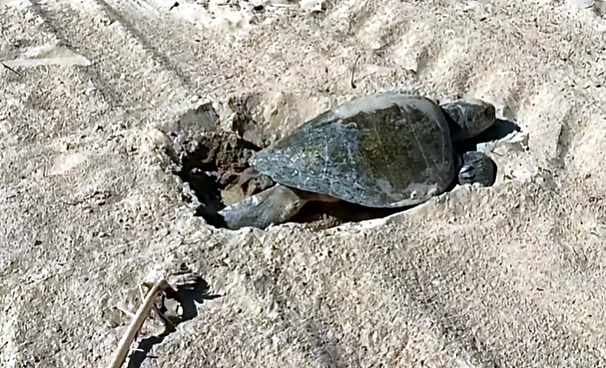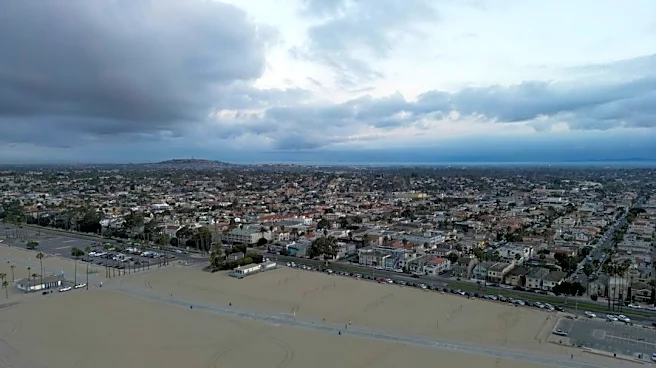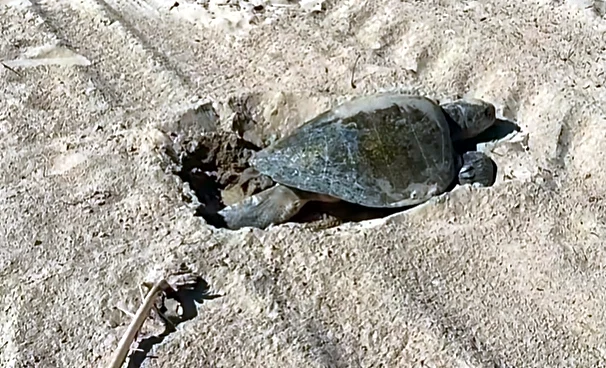







When researchers observed an olive ridley sea turtle digging a nest and laying eggs at a Southern California beach in September, it was considered a first.
More specifically, it was the “first-ever recorded natural nesting for any sea turtle species on the U.S. West Coast,” the National Oceanic and Atmospheric Administration Fisheries said on social media on Tuesday, Sept. 22.
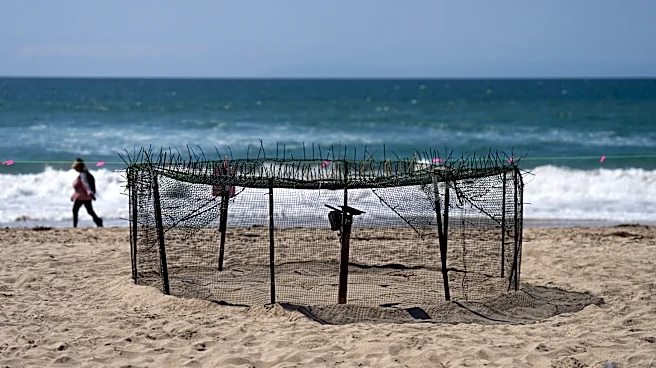
Just days after this sea turtle was spotted near Seal Beach in Orange County, another sea turtle was seen nesting several miles south near Huntington Beach. NOAA confirmed on Sept. 23 that two olive ridley sea turtles nested at Southern California beaches.
That’s changed it from “one haywire event” to a “pattern,” said Jeff Seminoff, leader of the Marine Turtle Ecology &
Assessment Program with NOAA Fisheries Southwest Science Center. And it’s “very likely” that a major El Niño has helped drive these two turtles to Southern California’s beaches, he told the USA TODAY Network.
“This is the first time in California that nesting has happened, so it really has turned the turtle world upside down in terms of California is now a nesting beach,” Seminoff said.
“Not just that, but olive ridley sea turtles their nesting range has now been extended 700 miles to the north, so it forces us to kind of redefine the distribution of the species,” he continued. “It forces us to redefine what California beaches’… role is for wildlife — in this case with sea turtles.”
What we know about why these sea turtles landed in California
The olive ridley sea turtle is one of the smallest sea turtles, according to the Aquarium of the Pacific. These turtles live in the tropical and warm waters of the Pacific, Atlantic, and Indian oceans, the aquarium said. The closest nesting beach to Southern California is at the southern tip of the Baja California peninsula, Seminoff said.

The coastal waters off California are “anomalously warm” at present, he said, creating an environment that allows tropical species to be found in California, pointing to other marine wildlife seen in the region lately, including a whale shark.
Sea turtles also respond to many different cues, such as “their own internal GPS,” “currents,” or food that keeps them in one spot longer than expected.
“I do believe that these turtles probably thought that they were much farther south than they were,” Seminoff said, later adding that the turtles have been duped into thinking they were in tropical waters. “Somehow their navigation went haywire, and they ended up on the California beaches.”
An animal that’s going to nest typically responds to various environmental cues, he said. Those conditions “stacked up” right off California, making the turtles think they were in a spot where they could nest.
The Aquarium of the Pacific, which said it’s home to two olive ridley sea turtles that hatched from eggs confiscated in an illegal wildlife trafficking incident, also pointed to El Niño as a probable influence on the sea turtles’ behavior. The Long Beach-based aquarium also pointed to “the recent tropical storm, range expansion, or perhaps navigational mistakes” as well.
Plus, olive ridley sea turtles are a “flexible” sea turtle species, able to eat different foods and live in different climates. That characteristic played a role in their arrival to Southern California’s beaches, according to Seminoff.
Will there be more sea turtles in California?
Olive ridley females nest two to three times a year. Assuming this was their first nest, Seminoff says it’s “very likely” they will be back soon.
“We have a pattern of two. What's to say that there won't be a third or a fourth?” he said. “We are in this potentially historic El Niño, and so it's expected to have these unprecedented changes in the local environment and habitat and animal behavior.”
Female olive ridley sea turtles usually return to the same beach where they hatched years earlier, according to NOAA Fisheries. While these turtles didn’t originate from California — hence their “navigational blunder,” according to Seminoff — their hatchlings will. That’s assuming these hatchlings come to term and that the oceanic conditions are right for them to be back in the water in California, Seminoff explained.
“Their internal compass in 15, 20, 25 years, when they become adults, will be telling them to come back to Southern California. That is that founding event,” he said. “Like these could be the pioneers for Southern California, if you will. Then later on, their offspring may be inclined to come right back to California.”
Paris Barraza is a reporter covering Los Angeles and Southern California for the USA TODAY Network. Reach her at pbarraza@usatodayco.com.
This article originally appeared on USA TODAY: El Niño strikes again. Why sea turtles came to California in a ‘first’