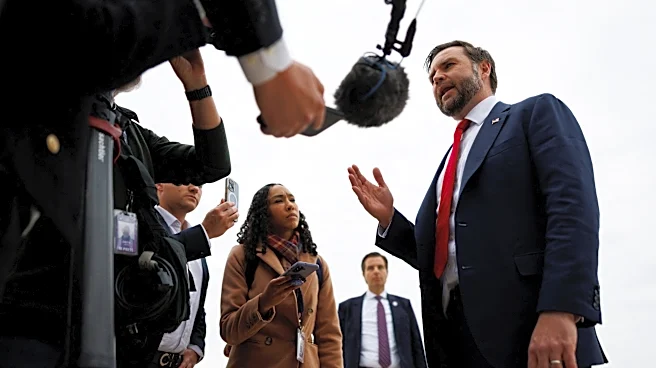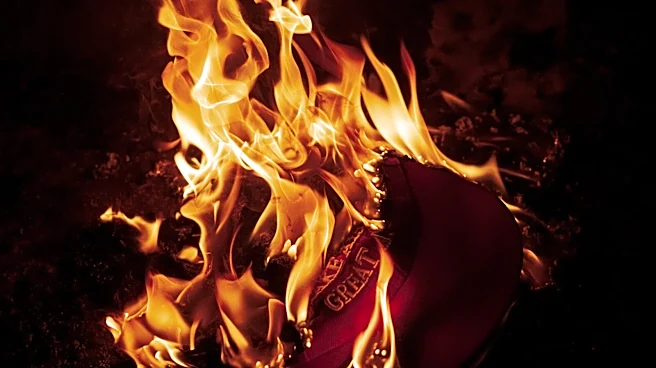

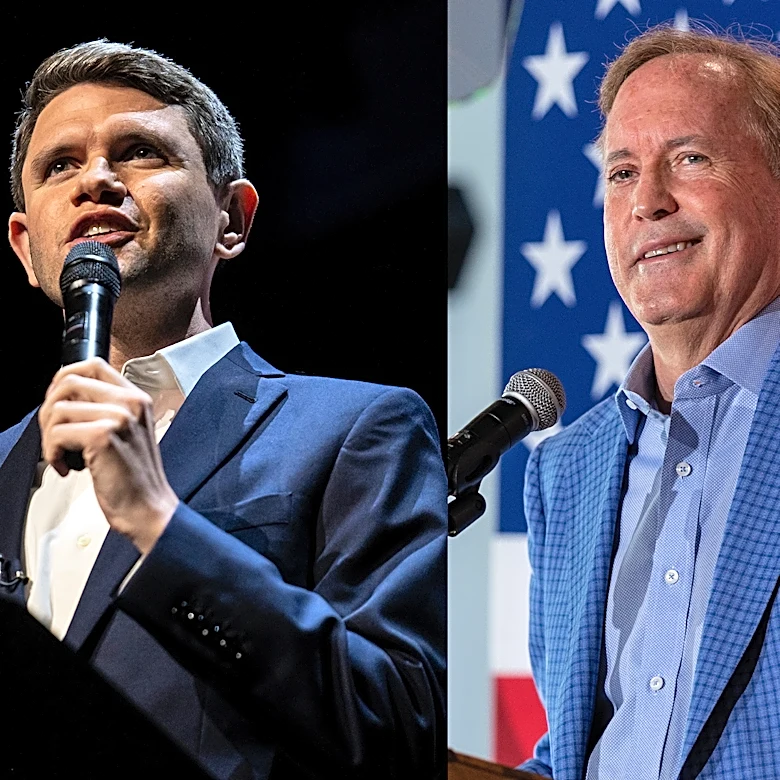


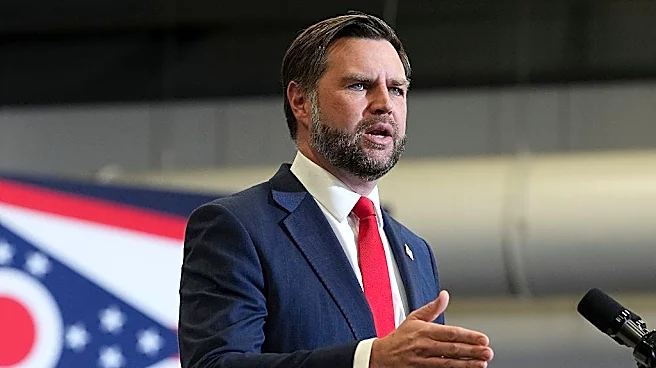

WASHINGTON, D.C. – Vice President JD Vance huddled in the East Room of the White House with President Donald Trump and other members of the administration, watching the GOP’s stunning midterm election losses roll in.
First, the House fell, then the Senate. A landslide wiped out Republican lawmakers in deep-red states and districts Trump and Vance had personally campaigned in.
Vance entered the midterms facing questions about whether he could win over Trump’s coalition and keep Secretary of State Marco Rubio from challenging him in the party’s next presidential contest.
By the time his 2028 audition was over, he had a much bigger issue: Influential Republicans were writing off his anticipated bid altogether.
The midterms were a “clear repudiation”
of the Trump administration’s tactics, Tony Perkins, a leading social conservative, said the morning after the election.
“I don't see someone within the Trump administration being the flag bearer for the conservative movement in 2028,” the Family Research Council president added.

In the days since, leading Republicans have described the midterm wipeout in apocalyptic terms – and opened up a debate about the wisdom of the Trump administration’s second-term approach.
Some are calling for a competitive presidential primary, and pointing the finger at Vance. The vice president, in turn, sought to do damage control the morning after the election in a lengthy social media post.
The missive on his personal account blamed the war Trump started in Iran for the GOP’s midterm shellacking, drawing an apparent contrast with a president to whom he’d been unfailingly loyal publicly, even as he critiqued the conflict in private.
Long-term frustration from voters and party leaders over the war and the midterm losses could be especially consequential for Vance, as Trump’s top lieutenant and a leading booster for administration policies. It shattered the MAGA coalition the vice president hoped to inherit.
“The scale of the Republican defeat is so great that it makes the race for the GOP presidential nomination wide open,” former House Speaker Newt Gingrich, a Trump ally whose wife is Trump’s ambassador to Switzerland, wrote on social media.
Gingrich warned that Sens. Ted Cruzand Tom Cotton, Florida Gov. Ron DeSantis and former Virginia Gov. Glenn Youngkin – even Trump’s embattled Pentagon chief Pete Hegseth – were among “a surprising number of people [who] may decide this is their chance to take advantage of the chaos.”
‘The bench strength is so good’
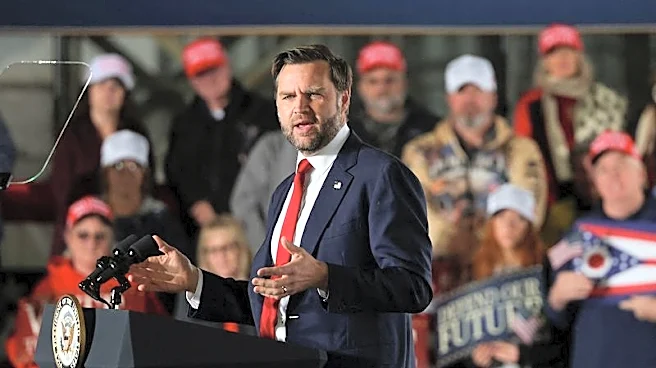
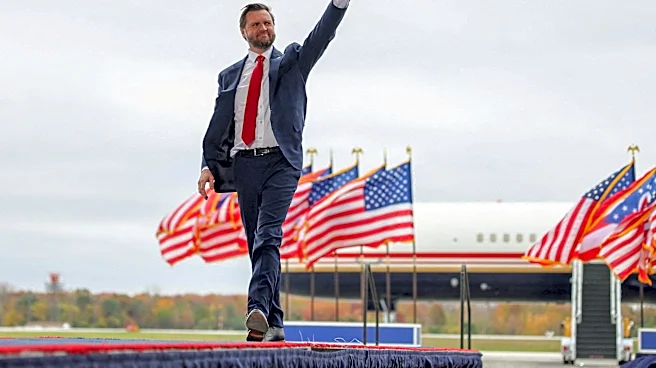
Vance’s navy blue, dark red and gold-painted airplane came to halt at the Toledo Express Airport. The soundtrack from “Top Gun” pulsated throughout the hangar.
The vice president had arrived in his home state to campaign for GOP Sen. Jon Husted and gubernatorial candidate Vivek Ramaswamy on the eve of the election.
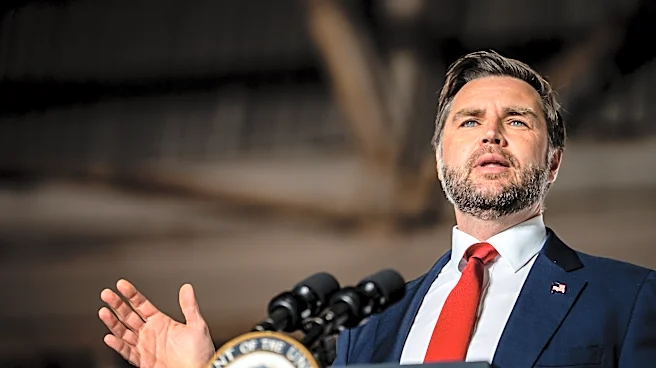
At a glance, the campaign blitz showed promise – Vance was attracting decent crowds at lunchtime rallies. He’d knock down the intermittent protester by making them the punchline of his speech.
He was raising fistfuls of cash for the Republican National Committee, where he served as finance chair, and breaking new ground for himself by acting as Trump’s fraud czar.
But under the surface, trouble was brewing with the MAGA, evangelical and the white working-class voters he’d be counting on to make up his base of support.
After a primetime midterm convention address, 19 election rallies and nearly two years in office, even enthusiastic Vance supporters were still weighing him against the rest of the Republican lineup.
In Swanton, David Russell, a 65-year-old retiree from northwest Ohio, searched through his phone for a photo he took with Vance when the vice president was his senator. He said he’d like to see Vance seek higher office.
“Yeah, but I’ve got to be honest, the bench strength of the Republican Party is so strong. I don’t know yet ... I mean, I want him to run, I want Rubio to run,” Russell said, bringing up Vance’s chief rival unprompted.
“We’ve got a problem, we’ve got too many A-players,” Russell said at the rally on Nov. 2.
Mary Cooperwaser of Ann Arbor, Michigan, said Vance would have her support if he were the nominee, but she’s currently torn between him and Rubio. The retired college fundraiser, who came to Ohio to see the vice president, ultimately assessed: “Whoever’s first in line, which is Vice President Vance. I think that it would be a fabulous ticket if they were both on it.”
Earlier in the day, at a rally in support of a die-hard Trump candidate in New York, Vance found a friendly crowd as he leaned into his surroundings and called the Democrat running for Congress “an asshole.”
"Listen to your parents," Vance told children attending the morning event. "Do not talk like the vice president.”

Sharon Stevens, 70, a retired postal worker from Pratts Hollow, New York, said she’d only seen Vance on television and came to the event because she wanted to see the VP in person.
Vance would get her vote if he runs, Stevens said. “He believes in a lot of the stuff that Trump believes in, and I like Trump.”
'Trump would knife him’
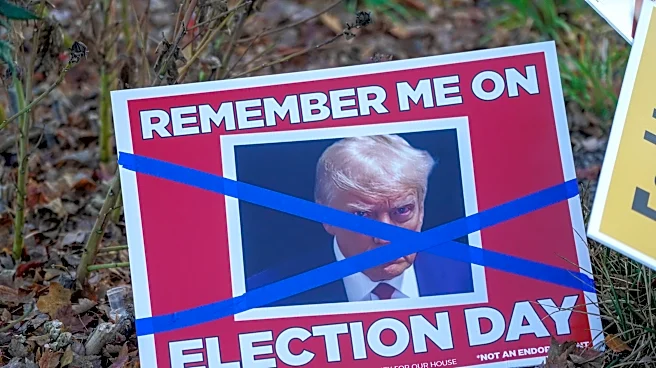
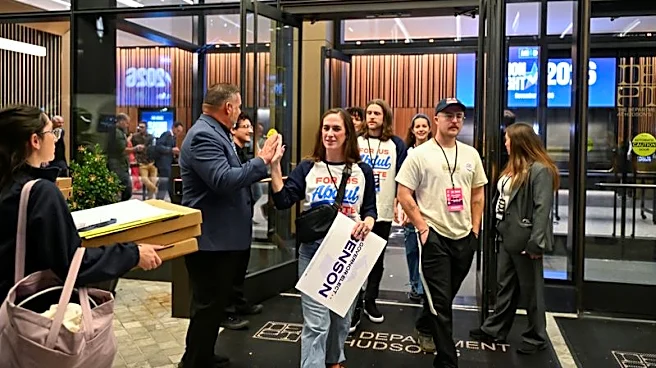
Just how much political capital the midterm campaigning bought Vance is up for debate. Many of the candidates who were on the ballot in areas where he and Trump campaigned went down in the blue tsunami.
The GOP lost seven Senate seats and more than 40 House races in the midterm blowout that outgoing Florida Gov. Ron DeSantis, a possible 2028 candidate, called an “extinction-level event.”
Ohio Republican Party chairman Alex Triantafilou, a Vance supporter, said in an interview before the election that headwinds facing Husted were part of “a classic midterm environment.”
Husted was facing off against former Ohio Sen. Sherrod Brown, who was defeated in the 2024 election, when Democrats across the country went down with former Vice President Kamala Harris.
“We knew it'd be a dog fight. Every midterm is,” he said. “Generally speaking, I mean, it's a place where races can be competitive.”
The sitting vice president’s predicament drew comparisons to Harris from Republicans who spoke on the record or requested anonymity to speak about the 2028 election. Harris struggled with how to differentiate herself from an unpopular president, and her short-lived presidential bid later tanked.
She was either unable or unwilling to separate herself from former President Joe Biden, ex-Trump national security adviser John Bolton said.
“I’m not sure Vance even has that option,” he said, adding, “if he did try to distance himself from Trump, you know Trump would knife him.”
An ally of the vice president argued that he’d already demonstrated that he can differentiate himself from Trump by speaking directly to disaffected voters about the economy.
Another predicted that new pathways would open up next year for the VP to draw contrasts between himself and Democrats in control of Congress.
In Ohio, where Vance, the state’s one-time senator, has a political profile of his own, he has come under scrutiny for a stance he took in the state’s gubernatorial race.
He ripped into Republicans for criticizing a controversial Ramaswamy ad that featured Democratic candidate Amy Acton’s estranged mother calling Acton a liar. Acton was removed from her mother’s home after she accused her stepfather of raping her. He was charged but fled the state. Acton’s mother remained married to him until his death.
Vance spoke out before Trump, who later encouraged Ramaswamy to keep the ad up.
“I think he’s damaged himself,” former GOP Rep. Fred Upton of Michigan said of Vance. “My guess is it’s poisoned the waters.”
Upton added, “People don’t have the stomach for that crap … it’s going to haunt him, it’s going to stick.”
Former New Jersey Republican Gov. Chris Christie called Vance’s support of the ad “a disgrace” in commentary on ABC News.
“Vivek Ramaswamy will be forgotten. He is going to be sent to the dustbin of history,” Christie said. “But JD Vance is going to be remembered, I think, from this campaign, for more than anything else … that he stood by that ad, a man who wrotea book on Catholicism.”

Vance allies batted down the criticisms as primarily coming from failed presidential candidates. They criticized what they described as bad-faith arguments coming from people who don’t have their finger on the pulse of the party and insisted that the attack wouldn’t resonate with voters in a Republican presidential primary or a general election.
Former Ohio Gov. Ted Strickland, a Democrat, brought up Vance’s elevation of the baseless claim in 2024 that Haitian migrants in Springfield, Ohio, were eating pets.
“He has continued to operate in that way. His endorsement of this Ramaswamy ad, it's really pathetic,” Strickland said. “I think the guy’s lost his way.”
Since he became vice president, Vance’s unfavorable rating has risen sharply, increasing by roughly 10 points in the two years since his inauguration, surveys show.
Vance shrugged off a question about his approval rating on the eve of the election, saying he doesn’t put much thought into it.
“I just try to do my job, and obviously, the American people can make the judgments they’re going to make,” he told USA TODAY after his trip to Ohio. “We just need to do good things for the American people and if we do that, I think the politics will work itself out.”
Rubio, Cruz, DeSantis are potential candidates
A couple weeks earlier, Vance said in an interview that if he ran, he expected to have Trump’s endorsement. But in comments to USA TODAY, Trump said he hadn’t even spoken to Vance about the issue. Trump said he liked Vance but also brought up cheering at his rallies for Rubio.
Rubio has brushed off 2028 talk, saying in September he has no plans to run. He didn’t rule out a presidential campaign, though, and the comments were taken as a signal by some Rubio allies that, after indicating he’d stay as long as Trump would have him and encouraging Vance to run earlier in the year, he was reassessing his options.
One Republican close to the White House said that it remains to be seen how much the outcome of the midterms would hurt Vance’s presidential prospects, noting that it was no secret that Vance had been against the war in Iran.
The person also noted that Rubio was getting the rockstar treatment on the trail, and that he’d clearly learned a few lessons from his 2016 campaign and is displaying better political acumen.
Rubio denied last week in an interview with The New York Times that he had designs on leaving the administration. He would not talk about 2028.
Other potential 2028 contenders have been outspoken in diagnosing Republicans’ problems, with Cruz saying in a lengthy social media post that an “economic disconnect” led to the resounding defeat.

“Tariffs have made everything too expensive, and the Iran war has dragged on too long,” Cruz said. He called it “a Watergate-level repudiation.”
DeSantis, in multiple press conferences and media appearances after the election, highlighted Florida as the only GOP stronghold to resist the blue wave. He touted his record of conservative policymaking and said GOP midterm candidates “were fighting yesterday’s battles” in focusing on culture war issues, which he championed early on.
Vance backers argue that the vice president is still the party’s most articulate national spokesman among the potential future candidates.
“Who can keep the coalition together is the million-dollar question,” Triantafilou, the Ohio GOP chairman, said “And I think he's as strong as anyone to keep the coalition active and alive.”
Vance distances himself on Iran
The morning after Republicans lost the midterms, Vance informed the White House he’d be issuing a statement.
He wrote on his social media account that Trump-Vance voters did show up in the midterms. He used Florida, where he said the electorate was 9 points more Republican than Democrats, as an example.
“But the main problem is not turnout,” he assessed. “The main problem is that many people who voted for Trump/Vance in 2024 voted for Democrats in 2026.”
Vance said a pollster he respects told him the GOP’s “economic messaging wasn’t sharp enough down the stretch. I’m sure that’s true. But the real reason we lost is obvious to almost everyone.”
“The reason we lost is the war.” The president said so himself in interviews, he argued.
“If you'd like to argue it was worth it, that losing the Senate for the next 6 years was worth it, then do so. Argue it was a worthwhile cost to pay. Agree or disagree, that's at least honest.”

Vance said voters had a right to be upset and urged them to direct their anger toward electing Republicans who share their worldview, in the post that sought to reframe the narrative about the election losses.
Russell, the retiree from northwest Ohio, said at Vance's rally that he believed the Iran war, and the vice president's involvement in the talks to end it, would not hurt Vance in the long term, because people will begin to see the benefits.
“They took some hits with the Iran war, but I believe they had to do it, and Americans just have to stick through it,” he said.
Vance has had little to say publicly in the days since. He declined an interview request for this article. One of a handful of posts on social media was a clip of Trump being asked about his statement.
“I know how he feels about it. I think it was fine, yeah. I thought it was good. We knew that. I knew that when I went in,” Trump said of Vance’s views on Iran.
The president’s eldest son, Donald Trump Jr., a close friend of Vance’s who traveled with him on the final day of the campaign, backed up the VPon social media.
At the same event with reporters, though, when Trump was asked whether he’d spoken with Vance about 2028, the president was less than supportive.
“You could have a lot of people, maybe, a lot of people running, maybe nobody's gonna run," Trump said on Nov. 4. “Maybe he won't run, I don't know who's gonna run. But I can tell you that as far as that war is concerned, I would have done nothing different.”
One Vance ally said it would be foolish for for him to make a decision based on results of the midterms, given the volatility of American politics. The person also argued that more people running would help Vance split the non-Trump administration vote.
Advisers to Vance have always maintained that the vice president had until the end of the first quarter of next year to make a decision about whether he will run. They have stressed for months that an announcement this year was not likely to come. Vance said recently that his family would be a factor, and there's a chance he wouldn't run.
Bolton, the first-term Trump national security adviser, said: “I think it’s entirely possible that when we get to late 2027, that Trump’s brand may be so toxic that people like Vance are really going to be, even if they get the nomination, they’d be very hard pressed to win.”
This article originally appeared on USA TODAY: JD Vance couldn’t save Republicans. Can he save himself before 2028?