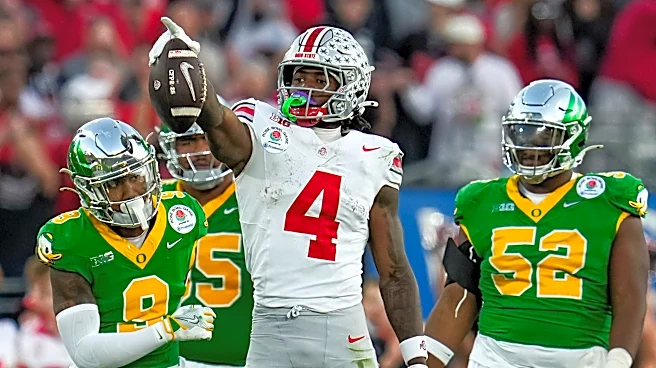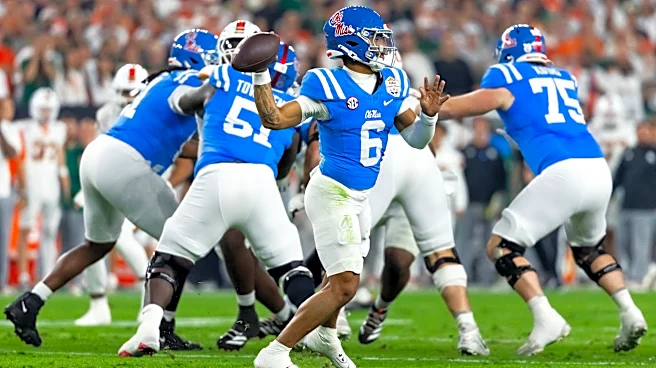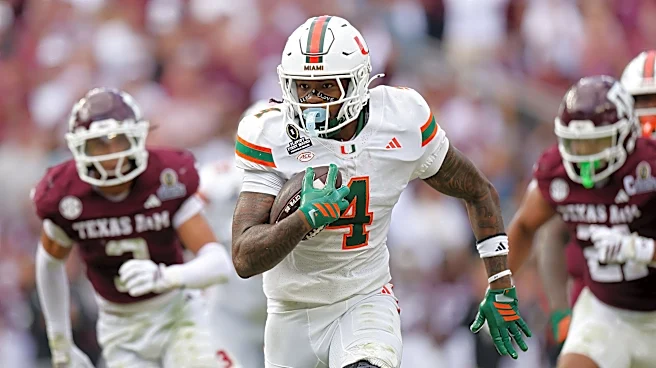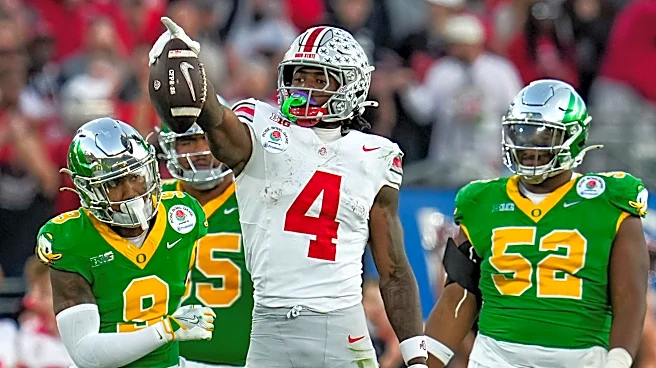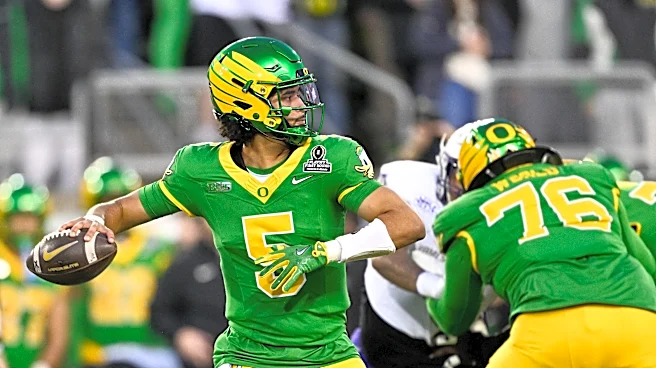

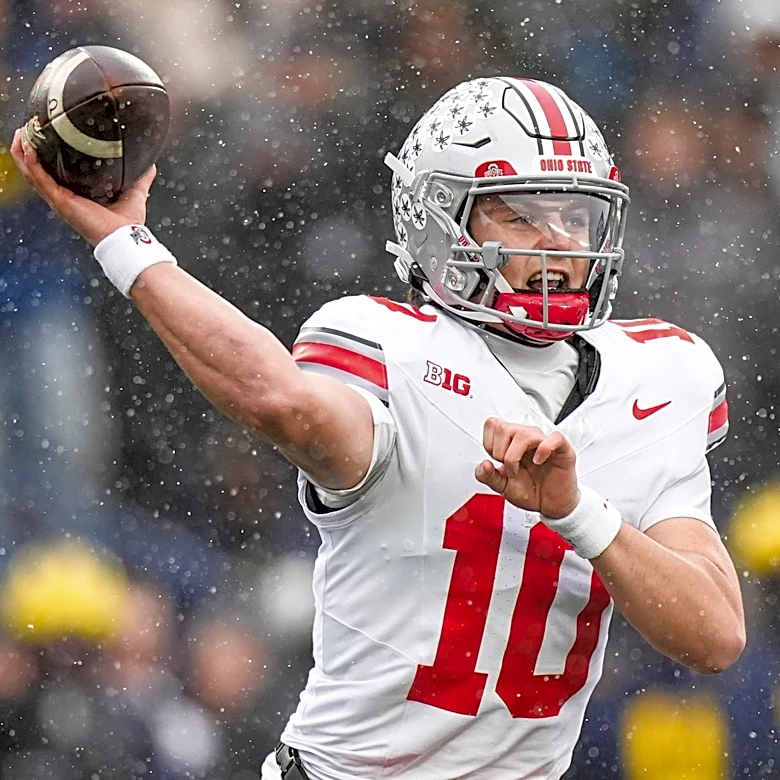
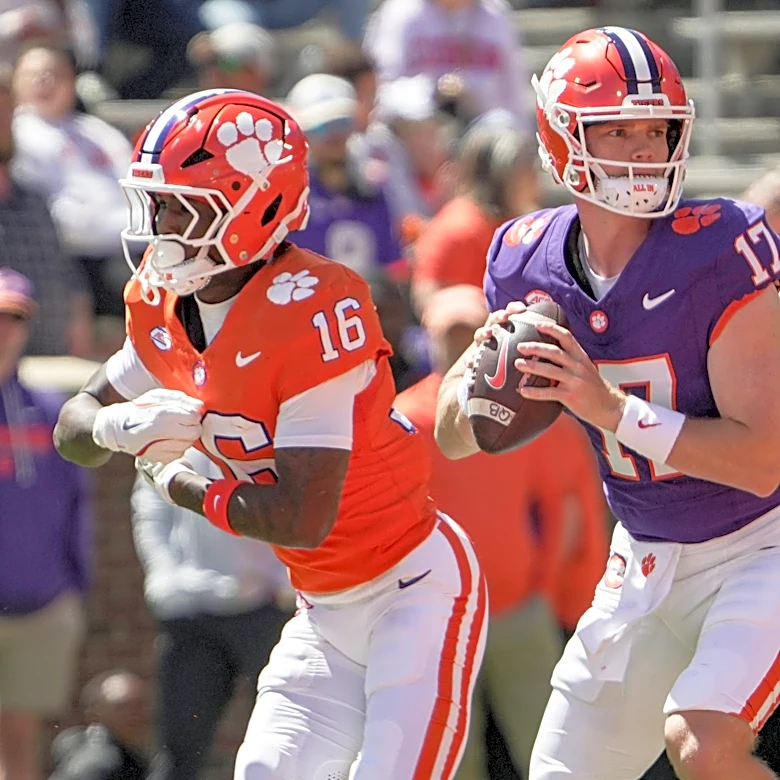
Last year’s Heisman Trophy winner. The past three quarterbacks to win the Heisman. Both quarterbacks in last year’s national championship game. The starters in the previous national championship game. The past three players to go first overall in the NFL Draft.
While quarterbacks have always stood at the center of attention, a new type has taken the Bowl Subdivision by storm and upended long-established theories on how to identify and develop a starting passer: the immediately eligible transfer.
One example of note is former Indiana star Fernando Mendoza, who led the Hoosiers to an unexpected national championship in 2025 after transferring from California. At least 15 teams in the preseason US LBM Coaches Poll will open the year with a transfer under
center.
For decades, programs would look to steadily develop starting quarterbacks over the course of years, reluctant to hand the keys to the offense over to any option lacking a certain level of experience and comfort in the system.
Several factors have led to a wholesale shift. Now, many of these same programs no longer have to devote time and resources to developing an in-house quarterback — they can let another program do the work for them.
That’s never been the case more so than in 2026.
Why transfer quarterbacks have taken over college football
Three recent developments have created a dramatic shift in how teams and coaches approach recruiting and developing quarterbacks.
- NIL offerings have led to wide gaps in spending between Power Four programs, giving deeper-pocketed programs the wherewithal to outspend much of the market for an established starter.
- At the same time, the transfer portal gives every quarterback the opportunity to test their value and earning potential. The ability to be eligible immediately allows passers to crisscross the map to find the best spot, as in the case of current Nebraska and former Virginia and UNLV starter Anthony Colandrea.
- And even before arriving on campus, a heightened level of readiness and the intense expectations heaped on Power Four prospects can send quarterbacks into the portal amid any early taste of adversity.
The end result is an NFL-like feeder system where teams in the Group of Six and the lower tiers of the Power Four consistently lose their starting quarterbacks to programs dangling two hard-to-refuse enticements: more money and a bigger platform.
“I'm concerned,” Iowa coach Kirk Ferentz said at Big Ten Media Days. “I kind of prefer to work with boundaries with a system, a system in place. Spent six years in the NFL. I really don't have any aspirations of ever going back there, haven't since I left.”
Transfers dominate 2026 quarterback landscape
Of the 68 programs in the Power Four, only Iowa has yet to name a single starting quarterback. (Ferentz listed Hank Brown and Jeremy Hecklinski as co-starters for Saturday’s opener against Northern Illinois.)
Twenty-seven starters transferred to their current programs from another team in the Power Four, including Ohio State’s Julian Sayin (Alabama) and Oregon’s Dante Moore (UCLA). No conference is more reliant on such transfers than the ACC, where 11 of the 16 starters arrived from elsewhere in the Power Four.
In many cases, the quarterback entered the portal in search of playing time. One prime example for this season is new Louisville starter Lincoln Kienholz, who played in 12 games over three years as the backup at Ohio State.
“He was highly recruited. He went to a good program,” said Louisville coach Jeff Brohm. “He had to sit for some years. That's not a lot of fun doing that. At the same time, you learn. Sometimes it's good for you.
“But I think he knows it's his time now to step up and show what he can do. That's what he wanted to do. He wanted to go somewhere and get on the field and showcase what he's all about.”
Another 17 starters transferred up from the Group of Six or a lower level of NCAA competition, including Oklahoma’s John Mateer (Washington State), Southern California’s Jayden Maiava (UNLV) and Oklahoma State’s Drew Mestemaker (North Texas).
Sixteen of these Power Four quarterbacks began starting at their original school as a true or redshirt freshman, such as Michigan’s Bryce Underwood, South Carolina’s LaNorris Sellers and Notre Dame’s CJ Carr.
And the rarest Power Four starter of all is the quarterback who spent at least two full seasons as a backup at his original school before climbing into the starting lineup. There are only seven such passers in 2026, led by Texas redshirt junior Arch Manning.
As we’ll see, these numbers represent a dramatic change from the quarterback landscape as recently as 2021, before the advent of NIL and the transfer portal led to a seismic shift.
The new normal takes over in the 2020s
The 2021 season marked the last iteration of college football’s more traditional market for quarterbacks, when the wide majority of Power Four starters were recruited and developed by their original programs.
In that season, just 12 starters transferred from another Power Four school and four from the Group of Six. Another dozen were at least redshirt sophomores before ascending into a starting role. Thirty-seven quarterbacks made their starting debuts as true or redshirt freshmen.
This was roughly in line with the quarterback environment over the previous five seasons.
In 2020, for example, Power Four starters were comprised of 12 Power Four transfers, three Group of Six transfers, 13 waited until at least their third season at their original school and 37 started as true or redshirt freshmen.
And as recently as 2017, there were only six Power Four transfers starting at another Power Four program and a combined 52 starters playing at their original school — 14 who spent at least two years in a backup role and 38 who started as freshmen.
Splitting the past decade into two chunks — from 2016-21 and 2022-26 — reveals how radically the atmosphere has changed for quarterbacks and Power Four programs:
- From 2016-21, the starting landscape featured an average of:
- 10.3 Power Four transfers
- 5 Group of Six transfers
- 12.6 who waited at their original school until at least their third year
- 37.7 who started as true or redshirt freshmen
- Since 2022, and including the starting quarterbacks heading into the 2026 season, the average has been:
- 26.8 Power Four transfers
- 9.8 Group of Six transfers
- 9 who waited at their original school until at least their third year
- 22 who started as true or redshirt freshmen
While NIL and the portal have changed virtually everything about the way coaches and teams approach roster management, no position has been more impacted by college football’s new normal than quarterback.
“I do feel fortunate to maybe have only been a head coach since 2022,” said first-year Florida coach Jon Sumrall, who previously held the same positions at Troy and Tulane, “and so the transfer portal and NIL and all the chaos that has ensued is all I know. It's not like I've been doing it forever and had to shift mid-stream. It's all I've known.”
Georgia and Alabama buck the transfer trend
Several schools embody the transfer-heavy way the Power Four has come to approach quarterbacks.
One is Florida State, which has leaned on a Power Four transfer in every year since 2020, with mixed results. Illinois has started a transfer in every season during the same span, though a Group of Six transfer, Katin Houser (East Carolina), will start in 2026.
Oregon has been remarkably successful with a recent run of Power Four transfers in Moore, Dillon Gabriel (Oklahoma) and Bo Nix (Auburn). Brigham Young has started a transfer quarterback in every season since joining the Power Four in 2023, including second-year starter Bear Bachmeier (Stanford).
“I think our approach to the transfer portal has always been the same from the beginning,” said BYU coach Kalani Sitake. "Most of the guys that we have brought in from the transfer portal are guys that fit our program already, guys that we knew from before and maybe missed out on.”
But other Power Four schools have bucked this trend, including two that rank among the most successful of the decade.
One is Georgia, which has started one true transfer quarterback (JT Daniels for seven games across two seasons) since Kirby Smart was hired in 2016. Since 2019, the Bulldogs have developed full-time starters in Stetson Bennett III, Carson Beck and Gunner Stockton. All three waited until at least three seasons before winning the job. (Bennett began his career at Georgia in 2017 and spent the 2018 season on the junior college level before returning to the Bulldogs in 2019.)
"You recruit guys that know what they’ve signed up for," said Smart. "They want to be the guy who waited. Carson waited because he saw Jake Fromm and others do it. Saw Stetson win two. You only get kids that fit your protocol. We’re going to have exodus out of our quarterback room eventually because we have a really good quarterback room now."
Nor has Alabama across the combined coaching tenures of Nick Saban and Kalen DeBoer. While recent starters Ty Simpson and Jalen Milroe waited until their fourth and third seasons on campus, respectively, to be named the starter, the Crimson Tide are scheduled to start sophomore Keelon Russell in their opener against East Carolina.
The records of these SEC powers during this decade span — Georgia is 117-21 and Alabama is 121-19 since 2016, with a combined four national championships — suggests that a developmental, in-house approach to quarterbacks is an asset compared to the constant reshuffling of the depth chart at most Power Four programs.
But the way college football has unfolded since 2022 paints a different picture. Alabama is 20-8 over the past two seasons amid the transition from Saban to DeBoer. The Bulldogs have been bounced in their College Football Playoff opener in each of the past two seasons.
Meanwhile, Miami has returned to prominence thanks to transfers in Cam Ward and Carson Beck; the Hurricanes have another high-profile addition for 2026 in Darian Mensah (Duke). Jaxson Dart (USC) and Trinidad Chambliss (Ferris State) helped turn Mississippi into a national player under Lane Kiffin, now at LSU.
And then there’s Indiana, which has gone from the weakest program in the Power Four to a juggernaut under third-year coach Curt Cignetti and his transfers: Kurtis Rourke (Ohio), Mendoza and now Josh Hoover (TCU).
"Do the study on it, it makes you question everything you’re doing," Smart said. "The two (quarterbacks) who played for it all last year, what were they? Transfers. Two before that? Transfers. One before that was a transfer. It’s crazy that has become the model. Go out and get the best. We’ve been fortunate that we feel like we’ve had the guys under our own roof. I don’t know if it will be that way forever, but it’s that way now."
Contributing: Matt Hayes
This article originally appeared on USA TODAY: Transfer portal didn't just change college football. It rewired QB development