









Audit spending on homelessness. Create an office to protect renters. Speed up building.
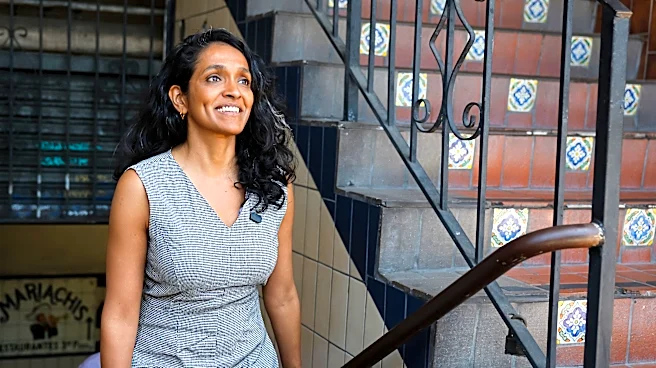
These are just some of the actions Nithya Raman, the progressive Los Angeles City Councilmember, plans to take if elected next mayor of Los Angeles.
It’s a tight race, as the latest poll shows Raman and Mayor Karen Bass tied just days out from the Nov. 3 election.
Bass, elected in 2022, has presided over a sprawling city that’s faced fires, federal immigration sweeps and ever-present questions about how to get people off its streets. A potential change in leadership looms.
Here’s a glimpse of what Raman says she plans to do—based on recent debate and forum appearances and her campaign—related to housing, public safety, and addressing homelessness.

Homelessness
Part of Raman’s
first 100-day plans includes moving Los Angeles' homelessness budget out of the Los Angeles Homeless Services Authority, which has faced scrutiny over its performance. Los Angeles County has already removed its homeless services funding.
She’ll give Los Angeles City Controller Kenneth Mejia the ability to audit every dollar spent on homelessness, and the public will have access to a real-time dashboard tracking homelessness services' performance and spending.
Raman said she’ll cut the number of encampments by at least half by the 2028 LA Olympics. Her approach, according to her campaign website, includes expanding teams that provide physical, mental and behavioral health care directly to those who are living on the streets, with the same clinical team staying with a patient as they transition into shelter and permanent housing.
Addressing homelessness requires a “whole-of-government approach,” Raman said in October.
“You work with LAPD to make sure that you are enforcing laws that need to be enforced, that you’re arresting people who are committing crimes and everyone else who simply needs a bed or needs shelter is able to go indoors,” she said.
According to Raman’s campaign, people would move from motels with intensive onsite services and into housing after 120 days. The effort will be made possible by expanding a program that provides people “up to 24 months of rental subsidies, intensive case management” and helps prepare them for permanent housing.
Housing
Raman's top priority is eliminating “red tape and bureaucratic hurdles” that stop Los Angeles from building homes.
Housing production in the county has slowed over the decades, leaving the region in part with a “deep shortfall in affordable options,” according to Neighborhood Data for Social Change, an initiative of the USC Lusk Center for Real Estate.
Raman will sign an executive order on her first day to put housing permits on a “shot clock” to speed up the approval process. The order includes a promise that fees will be refunded if the city doesn’t meet its deadlines.
Other plans include developing a citywide self-certification program to speed up permits for “straightforward projects”; creating “high-rise zones” in certain areas to allow for more housing; and allowing duplexes, triplexes, and fourplexes in single-family neighborhoods near transit hubs. California’s SB 79, which took effect earlier this year, has created new housing development standards that can allow multifamily housing projects near major transit stops generally ranging from five to nine stories, according to Los Angeles City Planning.
Raman previously said she’ll fight for Measure ULA reform, commonly known as the “mansion tax,” which, during an October debate, was criticized for “choking housing production and lending” because it “hits every sale over $5 million, including apartment buildings and businesses.”
The city councilmember is also turning to the Superior Court of Los Angeles County to share data on unlawful detainers being filed—a “precursor to an eviction.” That way, the city can use its resources—Measure ULA provides funding that can be spent on rent relief—to help people stay in their homes, Raman said at the end of September.
The homeownership rate in Los Angeles is about 36%, nearly 20 percentage points below California's rate, according to the U.S. Census Bureau.
Under Raman’s mayoralty, the city will open an Office of Tenant Protections to help people seeking support for evictions and landlord harassment, saying it’s time for the city to enforce its renter protections.
Public safety
Another action Raman will take in the first 100 days: Hire more 911 operators and scale up unarmed crisis response teams citywide — unarmed response teams that can be integrated into the 911 system, the city councilmember said at the end of September. This, she said, takes the call load off LAPD for calls that don’t require an armed response and lets armed officers respond to the incidents they’re needed for.
Bass also signed an executive directive in October to speed up the recruitment, hiring, and retention of 911 dispatchers and set up a unified call center to streamline dispatching civilian crisis response teams.
The city has two civilian crisis response programs under CIRCLE and Unarmed Mobile Crisis Response, but separate dispatch centers serve them, a process that eats up time, according to Bass’ executive directive.
The goal is for LAPD to focus on calls that require traditional law enforcement while unarmed crisis responders focus on calls that require “trauma-informed care,” the executive directive said.
The city councilmember has called for using data “to track and improve neighborhood safety outcomes.” She also wants to audit LAPD’s policies to ensure they follow Los Angeles’ sanctuary city ordinance—which began with a motion Raman and other councilmembers introduced and was adopted in 2024.
Raman has said the city needs to maintain the size of the police force. However, Raman has said she wants to replace Los Angeles Police Department Chief Jim McDonnell — she’s previously argued that, under his leadership, the LAPD appeared to prioritize protecting ICE over local residents.
Paris Barraza covers Los Angeles and Southern California for the USA TODAY Network. Reach her at pbarraza@usatodayco.com.
This article originally appeared on USA TODAY: LA could be in for a new mayor. What Nithya Raman says she'd do