



Spoiler alert! We're discussing how "The Social Reckoning" (in theaters now) incorporates real-life events in its final scenes, so turn away now if you want to go in completely cold.
Why did Aaron Sorkin want "The Social Reckoning" to end with Jan. 6? He has a scientific comparison to explain.
"A guy took a glass of water, perfectly clean water, and took a sip of it. Everything is fine," says Sorkin, recalling a demonstration he witnessed by an environmental group. "He took an eye dropper. One drop went in, nothing happened. He took another sip. Second drop went in, nothing happened. He took a sip. He did that six times. And on the seventh drop of water, the whole thing turned brown."
The sequence depicting Jan. 6, Sorkin adds, is "what happens
when the seventh drop of water hits."

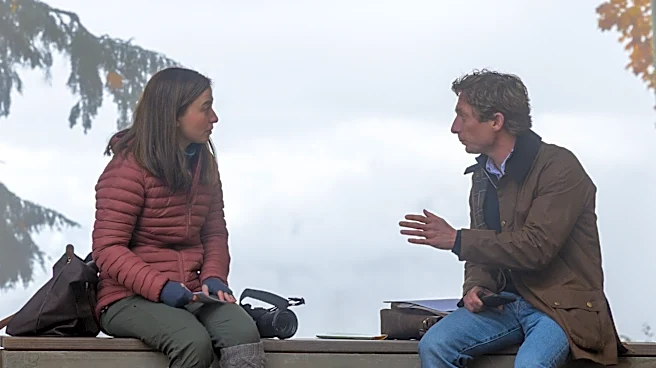
"The Social Reckoning" makes the case that Facebook allowed divisive rhetoric and harmful misinformation to spread on its platform in a way that had real-world consequences. Mikey Madison stars as whistleblower Frances Haugen, who in 2021 leaked internal documents to Wall Street Journal reporter Jeff Horwitz, resulting in a series of news stories dubbed The Facebook Files.
The reports concluded that Facebook "knows, in acute detail, that its platforms are riddled with flaws that cause harm, often in ways only the company fully understands," the WSJ reported at the time. Among the findings, as depicted in the movie, were that Facebook changed its algorithm in 2018 in a way that made the platform "angrier," according to the WSJ.
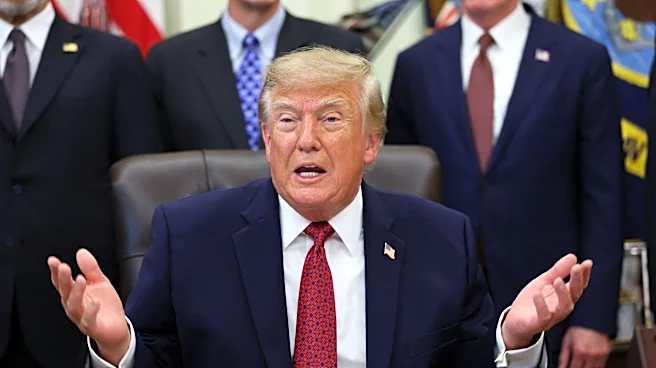
Meta CEO Mark Zuckerberg has denied the charge that Facebook bears responsibility for the events of Jan. 6, 2021, when supporters of President Donald Trump stormed the U.S. Capitol to overturn Joe Biden's 2020 election win. "The responsibility here lies with the people who took the actions to break the law and do the insurrection," Zuckerberg said during congressional testimony in 2021.
Zuckerberg has also denied the core claims in The Facebook Files. "The argument that we deliberately push content that makes people angry for profit is deeply illogical," he wrote in a 2021 Facebook post. "We make money from ads, and advertisers consistently tell us they don't want their ads next to harmful or angry content."
Why Aaron Sorkin didn't use archival footage for 'Social Reckoning' Jan. 6 scene
For Sorkin, it was important to bring viewers onto the ground by recreating the Jan. 6 Capitol riot, as opposed to showing archival footage from the day or having it play out on TV screens. The sequence, which highlights the police officers who were injured, was filmed over two days.

"The footage we usually see of Jan. 6 was recorded on cellphones or news cameras at a distance, and what we're seeing in that footage is the size of it," Sorkin tells USA TODAY. "So many thousands of people rushing the Capitol. That wasn't what I was going for. I wasn't going for the size of it. I was going for the moments of contact, the moments of conflict: a hand going on fencing, the bicycle rack going through the glass, a club hitting a policeman in the head."
From Sorkin's perspective, Jan. 6 shows the consequences of misinformation running wild and poisoning Facebook just like that glass of water.
"Throughout the film, Frances keeps overhearing people talking about ridiculous things that are incorrect because they read them on Facebook," he says.
Sorkin had Jan. 6 on his mind from the start: Before the film was formally announced, the screenwriter revealed on "The Town" podcast in 2024 that he was working on a project that would explore why "I blame Facebook for Jan. 6." When asked to explain why, he said, "You're going to need to buy a movie ticket."
This article originally appeared on USA TODAY: Aaron Sorkin explains the provocative ending of his Facebook film