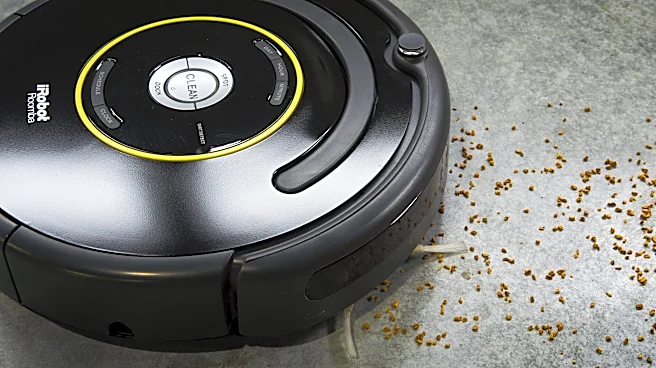




Roombas may be under attack by the U.S. government.
The U.S. Federal Communications Commission (FCC) announced on July 28 that it is banning new foreign-made robotic devices due to national security threats. Though not explicitly outlined, Roombas, and other self-sufficient vacuums manufactured outside of the country, may fall under the ban.
Technology publication The Verge reported that FCC media relations director Katie Gorscak confirmed Roombas fall under the ban. The FCC did not immediately respond for confirmation when contacted by USA TODAY on July 30.
Here's what we know about how the new FCC regulation may impact Roombas and other robot vacuums not made in the United States.
here
Roombas meet the qualifying criteria
The FCC's updated ban defines "advanced robotic devices" as a "mechanical mobile device" capable of "locomotion, obstacle avoidance, navigation or movement on the ground." These devices also operate at a distance from a human operator, weigh more than 4.4 pounds and either feature a sensor capable of perceiving its environment, component that offers Bluetooth, WiFi or cellular connectivity, or a software that controls the device's navigation, like firmware of a machine-learning model.
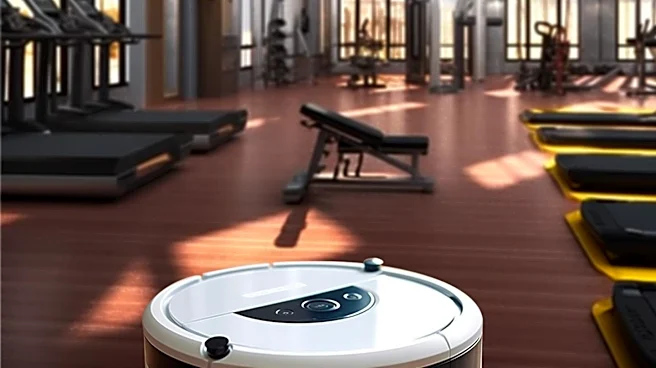
By these definitions, Roombas, and many at-home robotic cleaners, fall under the ban.
Where are Roombas manufactured?
Though iRobot launched Roomba in the United States as an American company in 2002, iRobot was acquired by Chinese manufacturer Shenzhen Picea Robotics in January.
According to the news release announcing the news, Piece Robotics operates development and manufacturing facilities in China and Vietnam.
USA TODAY reached out to iRobot on July 30 for more information.

Ban would not affect the Roomba in your home
If the FCC's ban on "advanced robotic devices" does affect Roombas, the ban would only affect newly-manufactured ones. The ban does not make the Roomba in your home illegal.
Are any robot vacuums made in the U.S.?
Largely, vacuums and robot vacuums are manufactured outside of the United States. In addition to Roombas, Dyson is headquartered in Singapore, Shark products are manufactured in China and Vietnam, Roborock is based in Beijing and Ecovacs is in Suzhou, China.
However, there is one U.S.-based robotics company that produces the vacuums: Matic. But it comes with a hefty price tag compared to others on the market. The latest Matic robot vacuum, which includes a dock, is listed for $1,245. For comparison, similar, newly released Roombas range between $200 and $700, with the latter options including self-emptying docks.
What is the reasoning behind the government ban of foreign-made robotic devices?
According to an FCC news release, "advanced robotic devices" made outside of the United States are banned because they pose a risk to supply chain vulnerabilities that could disrupt the U.S. economy. The devices could also create a cybersecurity risk, threatening American infrastructure.
Greta Cross is a national trending reporter at USA TODAY. Story idea? Email her at gcross@usatoday.com.
This article originally appeared on USA TODAY: Did robot vacuums get sucked into new robot ban?