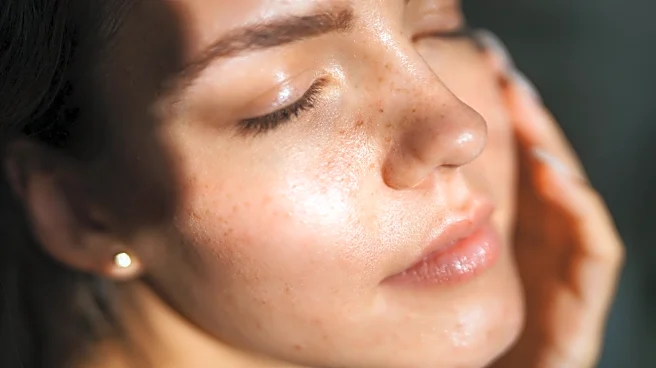









There's no shortage of trending procedures for aging and wrinkles, and products to preserve skin and hair health.
One such treatment is found in exosome products and therapies, though experts say more research and oversight are needed.
What are exosomes?
Exosomes are tiny messages that your cells send to each other, according to Dr. Gina Maccarone
, a triple board-certified cosmetic surgeon and founder ofThe Surgeonista in Cincinnati."The key difference between stem cells and exosomes is that a stem cell is a living cell that can divide and turn into other cell types, while an exosome is not alive and cannot reproduce," Maccarone said. In the world of aesthetics, some seek them out for skin rejuvenation, inflammation reduction, improving recovery after procedures
like lasers or microneedling, and potentially aiding hair loss through injections into the scalp, she adds.
Most treatments are topical, though.
Do exosome treatments work?
Experts say there isn’t extensive or long-term data to prove exosome treatment improves skin or hair.
“Most of what we have consists of small, short-term, open-label studies, so I can't give you a reliable answer on how long results last, because the durability data essentially doesn't exist yet," Maccarone said. "I would be wary of anyone promising dramatic or long-lasting results as there just isn't evidence for that."Maccarone says one promising controlled trial for hair showed, in combination with microneedling, there was improvement in hair density over 12 weeks, but points out that microneedling itself could have contributed."The best evidence points to modest improvements in skin texture and quality and possibly faster, calmer healing after a procedure," she said.
Considerations before trying exosome treatments
In an unregulated industry, according to Maccarone, there are safety and quality concerns when it comes to these treatments, and she recommends proceeding with caution. She says consumers should ask and research the following before a procedure:
- What is the exosome source, such as umbilical cord, platelet, or other?
- How was the product tested for sterility, identity and potency?
- Is it topical or injected?
- Is it part of an FDA-authorized clinical trial?
- What are the risks and reported side effects?
"Given where the science and regulation stand, my candid advice is that anyone considering this should proceed thoughtfully and in the context of skin quality goals as an adjunct to a procedure that already works on its own,” she said. "I would steer clear of any practices/medspas offering IV or systemic exosome infusions; this is still in the process of being studied and is experimental."
She also warned that women who are pregnant or breastfeeding, anyone immunocompromised with an active infection, or anyone with a personal history of cancer should avoid these treatments.
This article originally appeared on USA TODAY: The dangers of exosome treatments in skin care