


On the Monday, August 31, 2026, episode of The Excerpt podcast:
A rare point of agreement is emerging around one of President Trump's biggest domestic policy wins: rural health care. Even some Democrats who opposed the broader Big Beautiful Bill are now seeking a share of its $50 billion health fund. What's driving the shift and just how far can the money go? USA TODAY's White House Correspondent Joey Garrison explains.Hit play on the player below to hear the podcast and follow along with the transcript beneath it. This transcript was automatically generated, and then edited for clarity in its current form. There may be some differences between the audio and the text.
Podcasts: True crime, in-depth interviews and more USA TODAY podcasts right
here
Dana Taylor:
Democrats blasted President Donald Trump's massive One Big Beautiful Bill Act when it became law. Now, many are championing one of its biggest investments, a $50 billion Rural Health Transformation Program, so why the shift? As many Americans face increasing healthcare costs, will it be enough to make a difference? Hello, and welcome to USA TODAY's The Excerpt. I'm Dana Taylor. Today is Monday, August 31st, 2026. Joining me for a deeper look into this program and why funding is so urgently needed right now is USA TODAY White House Correspondent Joey Garrison. So good to speak with you again, Joey.
Joey Garrison:
Hey. Thanks for having me on, Dana.
Dana Taylor:
Joey, tell me about this five-year, $50 billion Rural Health Transformation Program. What was it designed to do?
Joey Garrison:
So as part of President Donald Trump's One Big Beautiful Bill that was passed about a year ago, a little more than a year ago, it authorized $50 billion to go across the country to rural parts of states to address healthcare needs. And these kind of had a broad definition there, where states could come up with their own plans to use this funding. They applied to the federal government, they got it, and it's going to, whether it's from rural hospitals or to try to bring services such as mental health services and other things that aren't plentiful in rural parts of the country, that's what this money was tailored to do.
Dana Taylor:
Why are rural hospitals and rural healthcare such a politically important issue right now?
Joey Garrison:
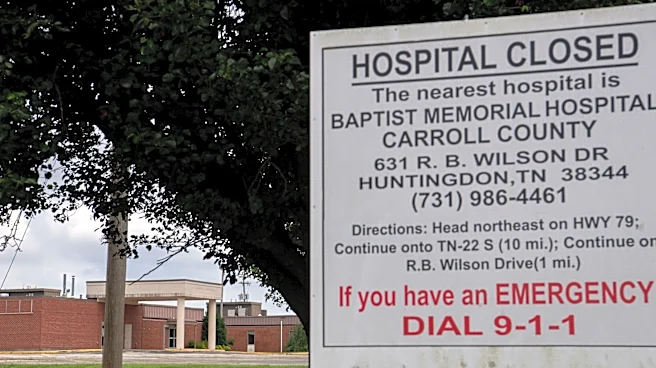
Well, the White House argues, and the reason this money was tucked into that bill, is that there's been decades of neglect, underinvestment, in rural hospitals across the country. The populations in a lot of rural parts of the state are declining. That's meant it's been difficult to keep a lot of rural hospitals open. You see headlines all the time about the latest hospital closing, and so this is meant to alleviate some of those concerns.
Dana Taylor:
Trump's biggest legislative achievement of his second term passed with only Republican votes in Congress. Why did Republicans see a need for this program when crafting the bill?
Joey Garrison:
Well, part of the genesis behind this funding was there were concerns from Republicans, and of course Democrats alike, about Medicaid funding getting cut as part of this bill. You'll recall it includes new work requirements for eligibility for Medicaid, and so that's a way that it's going to cut the program. It'll de-enroll some people from it. And so there were concerns from a lot of Republicans, who tend to be the ones whose districts are rural areas, that, "Hey, what's this going to mean for my small town, for my counties that are part of my district?" And so this was a way to offset some of that money in those rural areas. "Hey, here's money that'll go to this part of Virginia and this part of New York, this part of Alabama." That kind of alleviated some of those concerns before they voted for this measure. Of course, Democrats still pounded hard on the fact that Medicaid funding would be decreasing.
Dana Taylor:
In your piece, you noted Medicaid covers 16.1 million people in rural areas. They're about one in every four adults. That's according to KFF, an independent healthcare research organization. What cuts in Medicaid are coming because of Trump's spending bill, and will the $50 billion tied to this program meaningfully offset those cuts?
Joey Garrison:
Yeah. Most of the cuts from Trump's One Big Beautiful Bill for Medicaid are going to kick in 2027. That's when the new eligibility requirements for Medicaid begin, and so most studies have shown we're going to have a dramatic decrease in enrollment for a lot of people, and that's when we're going to see that happen. Of course, that 2027 date meant that these cuts happen after the midterm election. I think a lot of people thought that that was made so Republicans didn't get any political blowback before voting comes in November.
And so, yeah, the question whether that $50 billion offsets it, I mean, there's been a lot of research that, no, it's not going to be enough to totally patch that. And of course, the $50 billion is only for rural parts, whereas those Medicaid cuts are going to be felt in cities and suburbs across the country. And so it's not a perfect way to put a band-aid on this situation, and Democrats have pointed that out.
Dana Taylor:
Democrats have also voiced concerns about new work eligibility requirements for Medicaid. What are the projected impacts of that requirement?
Joey Garrison:
Yeah. So those work eligibility requirements, again, kick in in 2027, and that's where you're going to feel the brunt of the cuts. Now, the White House argues that, hey ... and they've said this from the beginning ... that these aren't cuts, that we're simply doing what Americans and polling show that they want to have happen, which is that people who are getting these social program, Medicaid dollars, are actually trying to work and aren't just relying on government help. So that's one important thing I think to point out from the White House perspective, is in their view, they're not slashing the program, they're just simply adding new restrictions. They say they want to make sure people who are undocumented aren't receiving the money as well, but again, this has a total impact where there will be funding cuts because of those decisions.
Dana Taylor:
Democrats oppose Trump's bill in part because it allowed pandemic-era enhanced Obamacare health premiums to expire. How much does this fund address the increasing cost of healthcare?
Joey Garrison:
Well, yeah, those ACA enhancements that were originated during the pandemic, those actually expired at the end of this past year. And no, that really hasn't been able to, in a meaningful way, make up for the premiums, the higher premiums that people are paying as a result of those. Really, a lot of states have used this funding more for increasing different types of services at hospitals and that kind of thing. And so it's really not had an impact, insurance premiums that people are paying.
Dana Taylor:
Joey, while Democrats have not had a change of heart about the One Big Beautiful Bill Act, still some are taking credit for this particular healthcare program. Maryland Governor Wes Moore and Arizona Governor Katie Hobbs are among those now touting it. Why are we seeing the shift?
Joey Garrison:
Yeah. I mean, it's kind of interesting. If you look from when this money first started going out to states, you just look at the past year of comments from a lot of these governors. Whether it's Governor Moore or Governor Shapiro in Pennsylvania or Governor Green in Hawaii, they're really touting this money and saying it's transformational for rural parts of the state. And really, I think Moore's comment, which I highlight in my story, almost makes it sound like it's his administration's investment. And so I think that they, politically for them, again, Democrats haven't always performed. I think their weakest political support is in a lot of these rural parts, and this is a way that they can show that they are paying attention for rural Americans and they've been more than happy to tout the funding from them, but despite giving these dire warnings about what this bill would do just a year ago.
Dana Taylor:
Joey, how has the White House responded to the way Democrats are framing this funding?
Joey Garrison:
Well, the White House is saying, "Hey, they're trying to take credit for something they didn't support." And they point to all these quotes and say, "Look, they're basically endorsing it now, whereas a year ago they had only negative things to say." It reminds me a lot ... you know I've covered the White House for several years now, and it reminds me. The White House under President Biden used to complain when Republicans would go out to ribbon cuttings of projects that were funded by Biden's infrastructure law. It's sort of a classic thing of one party telling the other, "Hey, you're being a hypocrite. You voted against it, but are more than happy to take credit for the good things that are coming out of this legislation."
Dana Taylor:
All 50 states applied for funding. What did individual states have to do to receive a cut of this rural healthcare fund over the next five years?
Joey Garrison:
Yeah, they just had to submit plans by -- there was a deadline in late 2025, and they had a pretty broad range of how they could devise plans for this rural funding to go. A lot of them are very similar in terms of trying to ... I cited a real common theme is a lot of mental health services and some that they're trying to bring to some parts of the state, trying to boost hospital supplies and services that are lacking in certain rural parts of their states. And so they have broad latitude to come up with their own plans, and the funding that they've received so far is just the first year. This is a five-year program, and so they should continue to get a lot of this funding over time.
And I'm going to be really interested to see whether some of these states can use it in a way that prevents some of these rural hospitals to be closing. We've seen countless studies where people in rural parts of America are living further and further away from a community hospital. And so can this actually make a meaningful difference, or is that Medicaid money that is going to be no longer going, flowing to those hospitals, is that going to make this all offset like some of those studies? We cited one earlier. Is that going to make this all a moot operation?
Dana Taylor:
Joey Garrison is a White House correspondent for USA TODAY. Thanks for sharing your reporting here, Joey.
Joey Garrison:
Hey, thanks so much for having me on, Dana.
Dana Taylor:
Thanks for listening. I'm Dana Taylor. Make USA TODAY's The Excerpt part of your weekday routine. New episodes are available every weekday morning.
This article originally appeared on USA TODAY: Democrats fought Trump's bill. Why back part of it now? | The Excerpt