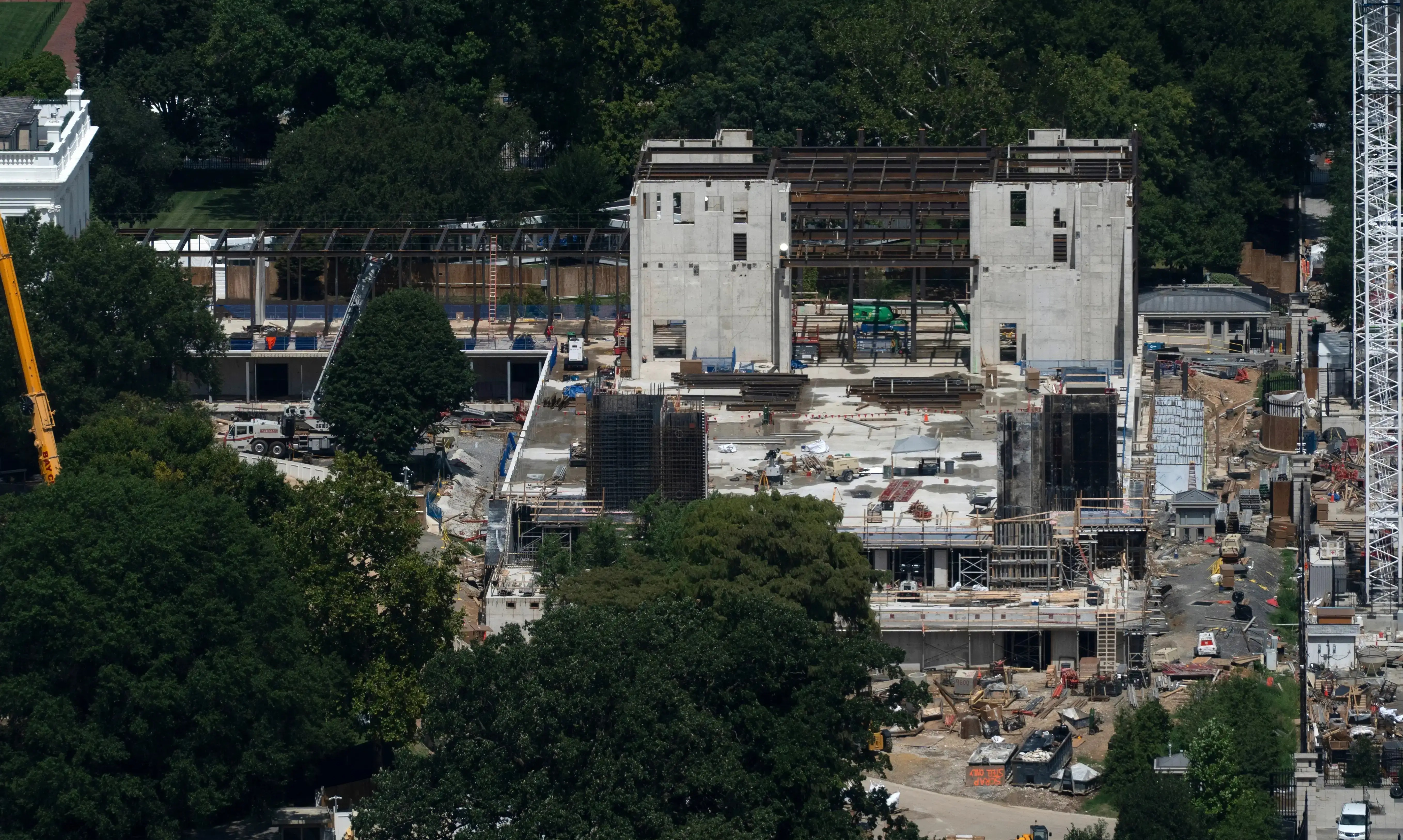







WASHINGTON – The Supreme Court on Aug. 31 cleared the way for President Donald Trump to continue construction on his $400 million White House ballroom, a major win for Trump's controversial effort to make over Washington landmarks.
Acting on an emergency appeal from the administration, a divided court said a federal judge wrongly paused the project until a legal fight could be resolved.
In an unsigned opinion, a majority of the justices said the administration is likely to win its argument that the group suing to stop construction cannot show its been sufficiently harmed.
Chief Justice John Roberts joined the court's three liberal justices in dissent, calling the construction "likely unlawful."
The National Trust for Historic Preservation, which
is challenging the ballroom, had told the justices that project would likely become irreversible unless it is stopped now.
The Justice Department said in its appeal that the construction, which includes an underground security complex, is 65% complete and has “passed the point where major changes” to the design are feasible.
A federal district judge ruled this spring that only underground work on bomb shelters and other security-related components could move forward for now unless the president gets approval from Congress.
A divided federal appeals court backed that decision in early August, but kept the order from going into immediate effective to give the administration time to appeal.
On Aug. 21, Roberts extended the pause on the order to give the justices more time to consider the appeal.
The project began last October when Trump bulldozed the East Wing to begin construction of a 90,000-square-foot ballroom paid for by private funds.
The administration argued that congressional approval was not needed and that the National Trust for Historic Preservation couldn't challenge the ballroom based on a trust member’s “subjective preference” about how the White House should look.
The administration also heavily emphasized security concerns, including Trump’s reference to the structure as a “military center.”
"The Project is critical for ensuring that the White House can serve as a secure location for the gathering of the President, gathering of senior government officials, and gatherings that further the interests of the United States," Director of National Intelligence Jay Clayton told the Supreme Court in the appeal.

Because the materials being used are meant to withstand even nuclear blasts, there would be no way to take down or even alter the building if courts issued such an order at the end of the legal battle, according to the Justice Department.
The National Trust for Historic Preservation told the Supreme Court that the administration’s “striking admission” that the project is “on the brink of a fait accompli” was exactly why construction needed to be stopped to prevent the administration from outrunning the courts.
In its Aug. 7 ruling to pause construction, the U.S. Court of Appeals for the D.C. Circuithad said the administration’s national security arguments “are not an automatic get-out-of-law-free card.”
“The bold assertion that the Executive can act with utter lawlessness, destroying treasured national landmarks and harming the interests of individuals, and that no court can stop it, flouts our constitutional order,” the majority wrote. The opinion referred to the White House as “the People’s House.”
Circuit Judge Neomi Rao disagreed, writing in her dissent that the district court judge had improperly seized control of construction in his March ruling.
“The government should not be forced to rely on the district court’s architectural approval to secure the President’s home and office,” Rao wrote.
Rao was appointed to the U.S. Court of Appeals for the D.C. Circuit by Trump. The two judges who upheld the district judge’s ruling – Patricia Millett and Brad Garcia – were appointed by Democratic presidents.

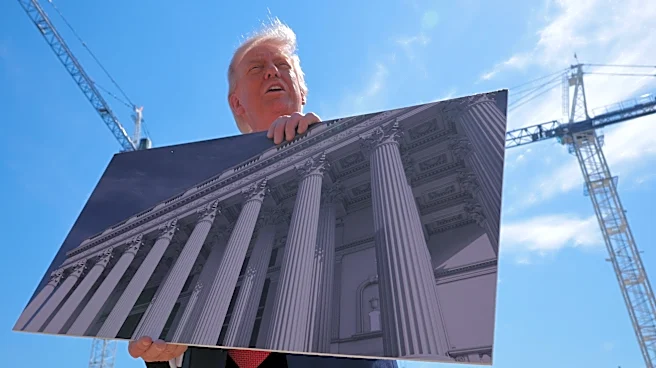
Trump, whose background is in real estate, has made several changes in the White House, including replacing the Rose Garden lawn with a paved patio and gilding the Oval Office.
For years, Trump has been pushing for a ballroom in the White House that would accommodate large gatherings, such as state dinners. He has lamented the fact that many of the fancy affairs in the past were held in tents.
The National Trust for Historic Preservation has argued that the project's size would "overwhelm the White House itself.”
The administration has said construction is expected to be finished a few months before the end of Trump's term.
This article originally appeared on USA TODAY: Supreme Court lets Trump's White House ballroom construction continue