





Pumpkin spice lattes, Halloween and, of course, changing weather. Fall is almost here, and the fall equinox will make the start of the season official.
There are two equinoxes in a year: the first in March, which marks the first official day of the spring season, and the second in September, which marks the first day of fall.
Unlike the summer solstice, which marks the longest day of the year, or the winter solstice, which marks the longest night of the year, during the equinox, night and day are "nearly equal," according to Time and Date. But both the fall and spring equinoxes have more daylight.
Here's what to know about the fall equinox.
When is the fall equinox?
In 2026, the fall equinox will fall on Tuesday,
Sept. 22 at 8:05 p.m. ET, according to NASA.
Other names for the fall equinox
The fall equinox is known by several names, per NASA and other sources, including the following:
- Fall equinox
- Autumnal equinox
- September equinox
- Southward equinox
When will the leaves begin to change?
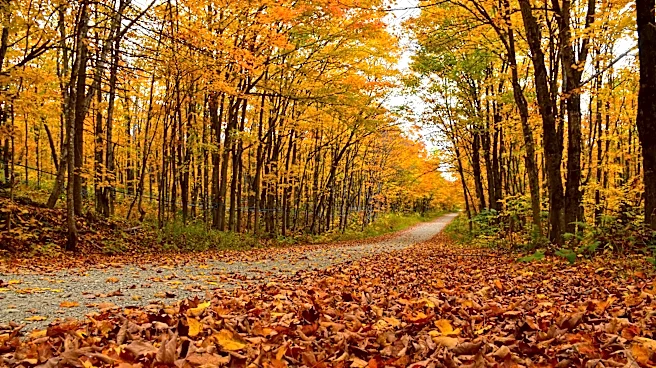
The U.S. will begin to see leaves change colors from late September to mid-October, USA TODAY has previously reported.
Some parts of southern California and most of the South can expect leaves to change in November, according to ExploreFall.com. But other parts of southern California, southern Texas and most of Florida won't see the leaves change until December.

When does the equinox usually happen?
The equinox happens twice a year:
- Once when the spring equinox occurs in March
- And again when the fall equinox occurs in September
"The equinox marks the exact moment when the center of the Sun crosses the plane of our planet’s equator," according to NASA. "The day of an equinox, observers at the equator will see the Sun directly overhead at noon."
Usually, the fall equinox falls on any day between Sept. 22 and Sept. 24, per Time and Date.
Google has a cute fall surprise
Americans love fall, and Google knows it.
When you google "fall equinox" or "autumnal equinox" leaves of various shapes, sizes and colors will appear to slowly fall from the top of your internet browser.

When is the first day of winter?
The fall equinox also means we're moving closer to winter and the holiday season, but how close are we?
Monday, Dec. 21, at 10:03 a.m. ET marks the first day of winter in the Northern Hemisphere, according to the Old Farmer's Almanac.
The winter solstice is the shortest day of the year, but days will gradually get longer as time marches on toward spring and summer.
Julia Gomez is a Trending reporter for USA TODAY and covers space phenomena, scientific studies and natural disasters. Connect with her on LinkedIn, X, Instagram, and TikTok: @juliamariegz, or email her at jgomez@gannett.com.
This article originally appeared on USA TODAY: Get ready for fall weather. Here's when the equinox begins