







If you tuned into SpaceX's most recent Starship flight test, you likely saw what turned out to be an incredible milestone for the world's largest rocket.
After flying for about an hour halfway around the world, the upper-stage portion of the Starship vehicle managed to land intact in the Indian Ocean – without blowing up.
The achievement marked a major first for SpaceX in its quest to ready the spacecraft for future moon landings and crewed trips to Mars. Because the upper-stage didn't explode upon landing, as has happened in previous flight tests, it also means there's now a 171-foot vehicle just floating in the sea.
But Elon Musk, the tech mogul who founded the commercial spaceflight company in 2002, says there's a plan to go get it.
Here's what
to know about SpaceX's mission to save its Starship vehicle following the rocket's 13th flight test from South Texas.
SpaceX launches Starship megarocket on flight 13 from Texas
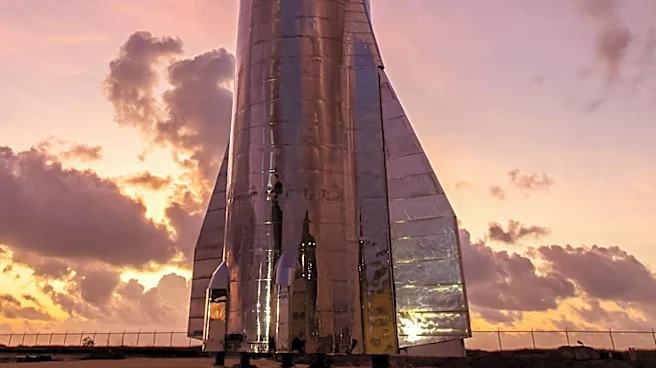
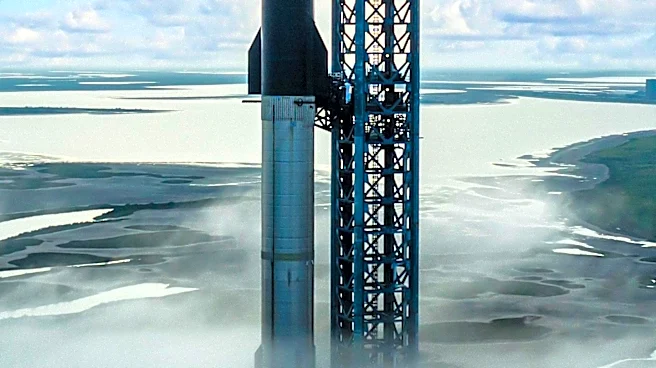
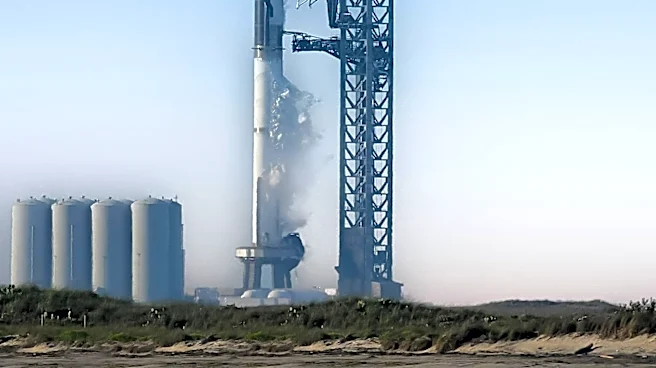
SpaceX's Starship rocket, the latest prototype of which stands at 407 feet tall when fully stacked, most recently got off the ground July 24.
The 236-foot first-stage booster known as Super Heavy provided the initial burst of thrust at liftoff, which took place at SpaceX's Starbase company town and headquarters in Texas near the U.S.-Mexico border. Following stage separation minutes later, the booster made a water landing off the Gulf coast of Texas while the upper-stage continued on into suborbital space.
Along the way, the vehicle hit a number of SpaceX's objectives for it, including the short-lived deployment of operational Starlink satellites that demised as intended in Earth's atmosphere.
Starship vehicle lands intact in major milestone
Live views during SpaceX's webcast of the mission, referred to as flight 13, then showed the upper-stage making a controlled splashdown in the Indian Ocean. The vehicle fired its engines to ensure it was upright as it landed in the water, after which video showed it slowly tip over and begin gently bobbing up and down.
The accomplishment marked a major milestone for Starship's upper-stage. While SpaceX has managed to capture and even later reuse a returning booster at the launch site, Starship's upper-stages have never survived a flight test.
Landing burn and splashdown of Starship on Flight 13 pic.twitter.com/I1BWnGKpPo
— SpaceX (@SpaceX) July 28, 2026
Previously, the best SpaceX had ever managed was to land the vehicle in the Indian Ocean, where it then exploded as expected following a successful test. Other times, Starship upper-stages have exploded unexpectedly mid-flight.
“This is the first time we’ve put an intact Starship in the water,” SpaceX spokesman Dan Huot said during the livestream. “This is a dream scenario."
Elon Musk says SpaceX has a plan to recover Starship in Indian Ocean
Since the flight test came to an end, the Starship vehicle has been left to float in the Indian Ocean.
SpaceX teams, though, are now racing to recover the spacecraft, Musk said in a July 28 post on social media site X. Musk, the world's richest man, made the comment while sharing a post from SpaceX showing pictures of Starship in the sea and the recovery team on a boat nearby.
We’re sending a ship out to recover Starship https://t.co/fUqUZTITO9
— Elon Musk (@elonmusk) July 28, 2026
Earlier that same day, Kiko Dontchev, a SpaceX vice president, teased on X that "deadliest catch meets Apollo 13 content coming soon."
What's next for Starship upper-stage?
While the operation appears to be a collaboration between meteorologists, engineers and other professionals, SpaceX has released scant details about just how it plans to recover the massive upper-stage.
The USA TODAY Network left a message Wednesday, July 29, with SpaceX's media team seeking more information.
Multiple spaceflight news outlets have speculated that Australia, the nearest body of land, is the most likely location for SpaceX to haul the spacecraft for closer inspections. After that, it's unclear what would ultimately happen with the vehicle, though it's unlikely it'd be in any condition to be refurbished and reused on a future mission after exposure to saltwater.
What is SpaceX's Starship megarocket?
SpaceX has been testing Starship since April 2023 on a series of flights from Starbase as it develops the massive rocket for future spaceflight missions, including interplanetary travel.
Musk's vision has long been for Starship to be the vehicle that takes humans to Mars, where they can establish a self-sustaining colony. While Musk has indicated that SpaceX will focus on building a lunar city first, the company has already announced a human-led expedition to Mars' orbit – though it has not set a target date.
SpaceX is also under contract with NASA to develop a lunar lander configuration of its Starship, known as the Human Landing System, to ferry astronauts to the moon under the U.S. space agency's Artemis program.
Eric Lagatta is the Space Connect reporter for the USA TODAY Network. Reach him at elagatta@usatodayco.com
This article originally appeared on USA TODAY: Starship has been floating in ocean. Elon Musk says SpaceX plans to get it