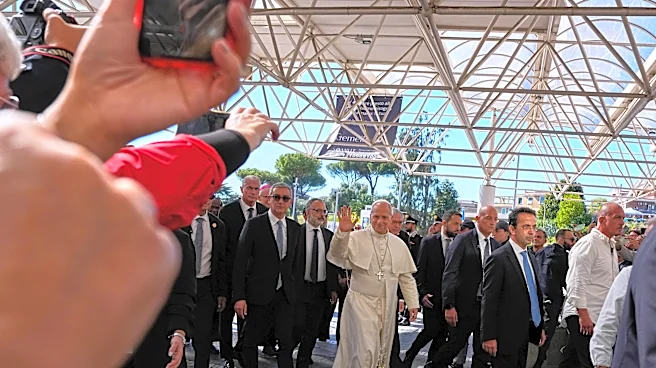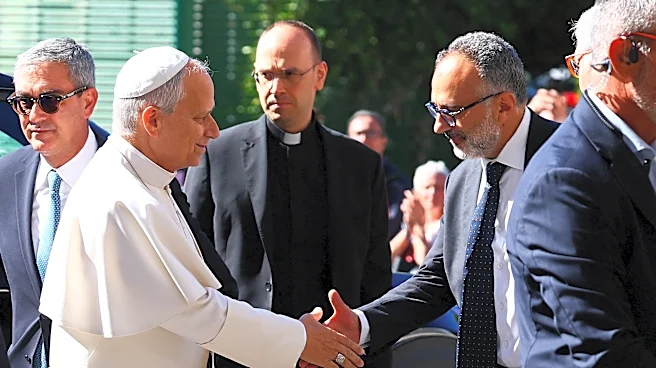




Pope Leo XIV is in recovery following surgery that ended in a cancer diagnosis.
The pope underwent a procedure on Tuesday, Oct. 13, to remove a small lung nodule doctors had discovered in a recent health checkup.
During the procedure, part of one of Leo's lungs was removed to address the growth that was later diagnosed as adenocarcinoma of the lung, a common form of lung cancer. The surgery was "completed successfully," according to the Vatican, which said Tuesday afternoon that the pope was recovering in his room.
The 71-year-old will be out of the public eye in the coming weeks as he recuperates from the first major procedure of his papacy. While cancer is not usually a welcome diagnosis, doctors seem optimistic that Leo is on the road to wellness
again. Here's what to know about his diagnosis, treatment and what to expect moving forward.
What is lung adenocarcinoma?
Adenocarcinoma of the lung is a type of non-small cell lung cancer that occurs when lung cells multiply out of control and create a tumor, according to Harvard Health.
There are two major types of lung cancer: small cell and non-small cell, named for what the cancer cells look like under a microscope. Small cell cancers only account for about 15-20% of lung cancer cases and are more aggressive, often spreading to other parts of the body more quickly than non-small cell, according to the American Lung Association. Small cell lung cancers are almost always associated with cigarette smoking.
Non-small cell lung cancers are the most common and can affect people who do and do not smoke. They are less aggressive and usually spread and grow more slowly. About 80% of lung cancer cases are non-small cell, according to the ALA.
Among the three different types of non-small cell lung cancers is adenocarcinoma, which forms in the glands that line the outer parts of the lungs. These glands usually produce mucus to keep the lungs moist.
Adenocarcinoma is the most common form of lung cancer in women and people under 45. It is also the most common non-small cell lung cancer, accounting for about 40% of cases, according to Harvard Health. It is more likely to stay in one area, but can spread to other parts of the body, like lymph nodes, bones, adrenal glands, the liver and the brain.

Did Pope Leo smoke?
There is no evidence that Pope Leo is or was a smoker, though neither he nor the Vatican has made an official statement on the matter.
While up to 90% of lung cancers in the U.S. are caused by smoking, the pope was diagnosed with the most common type to affect non-smokers, according to Harvard Health and the Cancer Treatment Centers of America.
"Lung adenocarcinoma in non-smokers has become more common. It now accounts for up to 20% of new lung cancer diagnoses, so about one in five new patients with lung cancer are non-smokers," Dr. James Stevenson, Vice-Chair of the Department of Hematology/Oncology at the Cleveland Clinic Cancer Institute, told USA TODAY. "There are definitely other risk factors for the development of lung cancer other than cigarette smoking that likely have become more prevalent in the past decades."
Exposure to radon – a colorless, odorless radioactive gas that is naturally released from soil, rocks and water – is one of the leading causes, he said, followed by secondhand smoke.
Other risk factors include exposure to other hazardous materials like asbestos, uranium, arsenic and diesel exhaust; particle pollution (breathing in microscopic bits of a substance, such as gas from an exhaust pipe); and a genetic predisposition to certain types of cancer.

What treatment did the pope get? Did it work?
The Vatican said in a statement on Tuesday, Oct. 14, that the pope had the lower lobe of his right lung removed to ensure a "radical" procedure, which means total removal of a tumor and any surrounding affected tissue.
When this form of lung cancer is detected in the early stages and removed with surgery, it's highly curable, Stevenson said. Usually, the whole area, such as the entire lower right lobe in this case, is taken out to ensure that all of the cancer goes with it.
"The fact that he was able to go right to surgery would indicate that the testing before the surgery showed that while he did have a tumor in the lung, there was no evidence, at least before surgery, that there was spread anywhere else in the body," Stevenson said. If doctors believed it had spread, the pope would have undergone other treatments before surgery, like chemotherapy and immunotherapy.
"The fact that he didn't get that suggests that this is potentially a stage one lung cancer," he said.
Like any cancer, the prognosis and recovery depend heavily on the type of cancer and treatment, how advanced it is, and the overall health of the patient. It is generally very favorable when caught early without complications, however.
"With a stage one lung adenocarcinoma, there's an 80 to 90% expectation of cure for that whole group of patients," Stevenson said. "So chances are very good that this lung cancer will not come back."
How long will it take for Pope Leo to recover?
The Vatican previously said Leo is expected to spend about a week recovering, and his public events have been canceled through Oct. 20.
Full recovery can take longer, though having otherwise good lung health can make it go faster. The pope also underwent a minimally invasive thoracoscopic procedure, which is performed via a small incision with the help of a tiny video camera and tends to have a quicker turnaround time than more invasive procedures.
"Most people (who get a thoracoscopic procedure) are out of the hospital within two to three days," said Stevenson. People without a history of smoking and related issues like emphysema bounce back quicker, so if the pope has no underlying issues, he should be back on his feet soon.
"For most people, within three to six months, they're really back to normal activity," Stevenson said. "You just kind of deal with interim improvement from week to week during that time period."
This article originally appeared on USA TODAY: What is adenocarcinoma of the lung? Pope Leo diagnosis explained