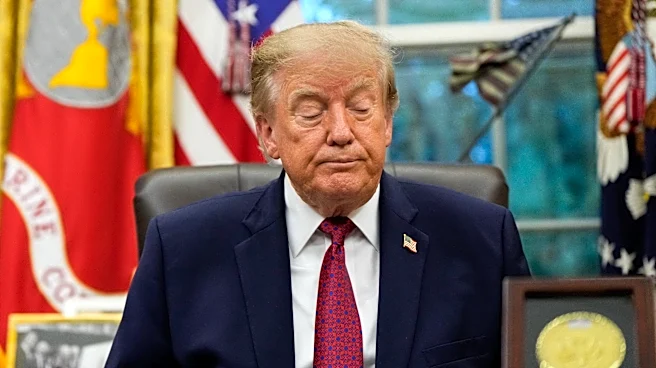

For two years, Americans have endured the unsettling spectacle of a would-be autocrat trying to monopolize power and rule by decree. In the midterm elections, voters put an emphatic end to President Donald
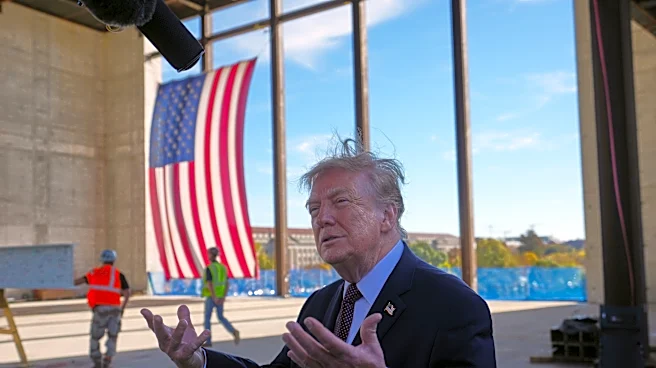
Trump's wild ride on Nov. 3.
The vote was a massive repudiation of the president's idiosyncratic governing priorities, especially his throwback tariffs and his rash decision to ignite an open-ended war with Iran. Both drove up the prices of everyday necessities, making a mockery of Trump's campaign promise to "immediately bring prices down, starting on day one."
Across the country, Republican candidates were dragged down by Trump's woeful job approval – 38% – and voters' dismal view of the economy. And their indictment of Trumpian chaos and misrule didn't end there.
Trump's corruption, the economy and ICE loomed large for voters

Exit polls showed the state of U.S. democracy was second only to the economy as a concern for midterm voters. Roughly 7 in 10 said Congress isn't doing enough to provide checks and balances on the presidency.
Corruption also loomed large – 90% of voters called it a crucial or major factor in their vote. Evidently, they've been paying attention as Trump presides over a pay-to-play White House and his family rakes in billions from crypto ventures.
The president has even managed to turn his one genuine accomplishment – closing the border to illegal immigration – into a political liability. Most midterm voters said his immigration crackdown has gone too far, 6 in 10 disapprove of how Immigration and Customs Enforcement is handling its job, and border communities now decry labor shortages.
Try as Trump might to deflect blame, disillusionment with him plainly fueled the GOP's Election Day beatdown. Congressional Republicans took the fall, which was fitting. They enabled Trump's abuses of power by abdicating their constitutional responsibilities and rubber-stamping his every whim.
The 119th Congress may go down as one of the sorriest collections of partisan hacks and sycophants ever to assemble on Capitol Hill.
With solid majorities in both chambers, Democrats can now put real checks on Trump's economic mismanagement, capricious military strikes, bullying of America's friends and allies, revenge prosecutions, election interference and his other polarizing pathologies.
Democrats also won a slew of important governor races and made surprising down-ballot gains in Texas and other states as Trump's 2024 coalition disintegrated.
Republicans lost independents by 22 percentage points and young voters by a whopping 48, while roughly two-thirds of moderates backed Democrats.
Hispanic voters, who drifted toward Trump in 2024, swung back to Democrats this time. Perhaps most encouraging for the long haul, Democrats nearly broke even with noncollege voters and swung White noncollege voters 14 points their way.
Not just the Senate. Democrats' statehouse wins are path to 2028
The Democrats' raid on America's red zone surpassed all expectations.
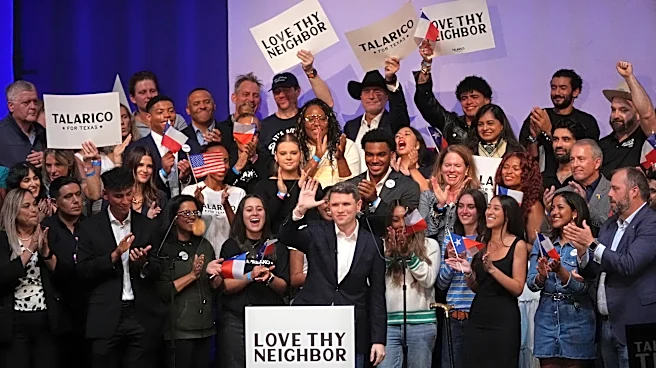
In Texas, which Trump won by nearly 14 points in 2024, Gina Hinojosa ousted MAGA stalwart Gov. Greg Abbott, while James Talarico beat Trump favorite Ken Paxton. Kansas elected Adam Hamilton, its first Democratic U.S. senator since 1932.

Iowa and Ohio both elected Democratic governors, Rob Sand and Amy Acton, and Democratic senators, Josh Turek and Sherrod Brown. In North and South Carolina, Senate candidates Roy Cooper and Annie Andrews defeated weak Republican opponents handpicked by Trump.
In short, an impressive crew of center-left Democrats put former battleground states like Ohio and Iowa back in contention and turned Texas into a new one. In North Carolina, Democrats didn’t stop at Cooper’s Senate win. They also flipped five U.S. House seats and the state House. They also showed they can compete in crimson GOP bastions such as South Carolina and Mississippi, where Democrat Scott Colom’s Senate race against Sen. Cindy Hyde-Smith remains too close to call at this writing.
Democrats still have a working-class problem
Are Democrats at last becoming nationally competitive again? Let's hope so, but some caution is in order.
The party is still underwater in public favorability; it just happens to be less unpopular than Trump. And Democratic leaders have yet to reckon seriously with their party's core strategic problem: the steady hemorrhaging of working-class voters of all races over the past quarter-century. That was starkly evident in the last presidential election, when Kamala Harris improved on Joe Biden's 2020 performance with just one group of voters: White college graduates.
This time, however, Democrats mostly fielded candidates with crosscutting appeal who were well matched to the competitive terrain of U.S. politics, where swing voters live and work.
Trump isn't going away. But the spell he cast on U.S. politics has been broken. Apart from the hardcore MAGA faithful, working-class voters no longer believe he's fighting for them. They see a president more interested in erecting monuments to himself, building gaudy ballrooms and golf courses, and staging showy, low-yield summits with strongmen like Vladimir Putin and Xi Jinping.
Mainstream Democrats like Andrews, Cooper, Hamilton, Talarico and Turek have proved they know how to turn red seats blue. As the 2028 presidential cycle gets underway, Democrats should follow their lead and make the priorities and values of working Americans their North Star.
Will Marshall is the founder and president of the Progressive Policy Institute.
This article originally appeared on USA TODAY: The 5 midterm winners Democrats should build 2028 around | Opinion