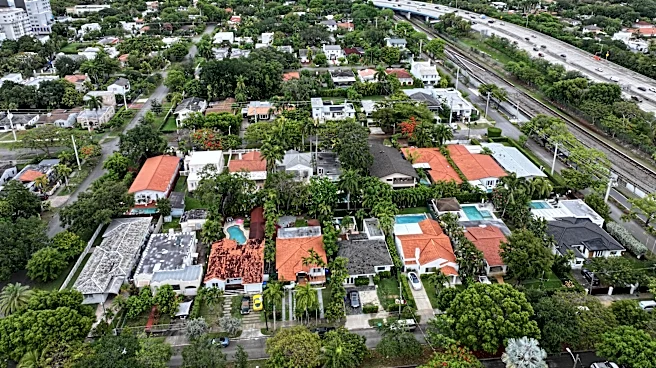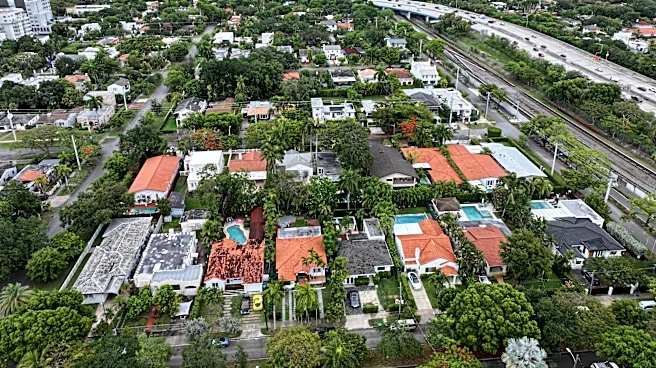

The Miami metro area has a significant shortage of affordable listings for many of those looking to buy homes.
That's according to this year's Housing Mismatch Report, released in May, produced as a collaborative
effort between Realtor.com and the National Association of Realtors.
The report tracks "listing-income alignment" scores, which show how "well the current distribution of home listings matches the distribution of household incomes in a given market." Essentially, "if a household at every income level tried to buy a home today, would they find listings proportional to their share of the local population?"
A score of 100%, for instance, means that listings are well-distributed across all income tiers, while a score of 75% would mean that, on average, households have access to 75% of what a "balanced market would offer them."
The Miami-Fort Lauderdale-West Palm Beach metro area had a significant shortage of affordable housing for all incomes in March of 2026, according to the report, with a score of 67%. It's an improvement over the area's score in March of 2019, which was 64.1%.
Significant shortages are common in "fast-growth Sun Belt metros," according to the report.
Nationally, "middle-income households" faced the largest supply gap. Buyers that earn about $75,000 can afford homes priced up to about $261,140, according to the report, but homes priced below that point only account for about 23% of national listings. In a balanced market, 44% would be priced below that point.
Miami metro area's cost of living surpassed the national average
The Miami area's cost of living surpassed that of New York, according to the most recent regional price comparison data available from the Bureau of Economic Analysis.
The report, which analyzes 2024 data, compares differences in "price levels across states and metropolitan areas" — though both regions had price levels above the national average, the Miami area beat New York in terms of overall expense.
Regional price parities, which the report uses to compare area price levels, have a national average set at 100. If an area's RPP is 120, for instance, then price levels there are 20% higher than the U.S. average.
The Miami-Fort Lauderdale-West Palm Beach metropolitan statistical area had an "all items RPP" of 114.155 — a value that includes all "consumption goods and services," and also covers "housing rents." The New York-Newark-Jersey City metropolitan statistical area, by contrast, had a lower "all items RPP" value of 112.563.
Fewer Miami-Dade households can make ends meet
During the same year, thousands of Miami-Dade households were incapable of making ends meet, according to data provided by United Way.
According to the 2026 State of ALICE in Florida report, which analyzes data from 2024, 155,328 households in Miami-Dade County were considered to be in poverty, up from 145,803 in 2023. Additionally, 408,619 households met the requirements for ALICE, an increase from 381,666 the year prior — the acronym stands for "AssetLimited, Income Constrained, Employed." It refers to "households that earn more than the federal poverty level, but less than the basic cost of living for the county."
Forty-one percent of households in Miami-Dade County were ALICE households, compared to the state average of 34%. Fifteen percent were in poverty, compared to the state average of 12%.
Within the county, there was also significant variation among ZIP codes. For instance, the percentage of households below the ALICE threshold — which includes ALICE households and those in poverty — ranged from 83% in both ZIP code 33142, which serves parts of Brownsville and ZIP code 33128, which encompasses parts of Downton, to 15% in ZIP code 33158, which serves parts of Deering Bay.
Sarah Perkel is a South Florida Connect Reporter for the USA TODAY Network's Florida Connect team. You can get all of Florida’s best content directly in your inbox each weekday day by signing up for the free newsletter, Florida TODAY.
This article originally appeared on USA TODAY: Miami area has shortage of affordable home listings. Who is left out