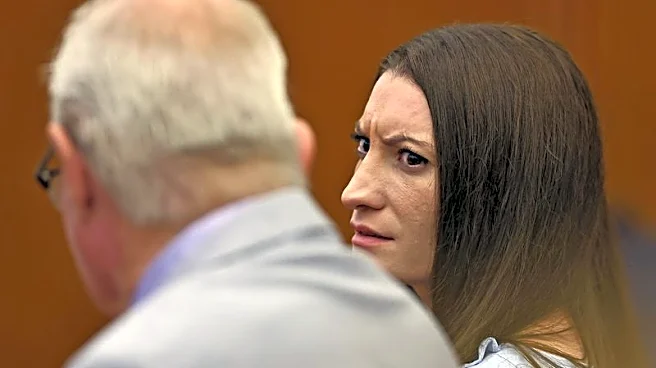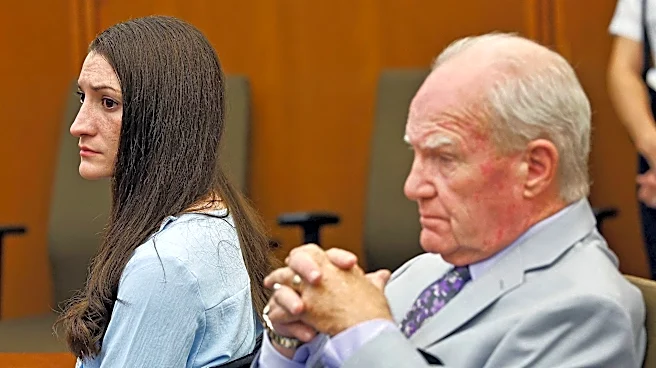





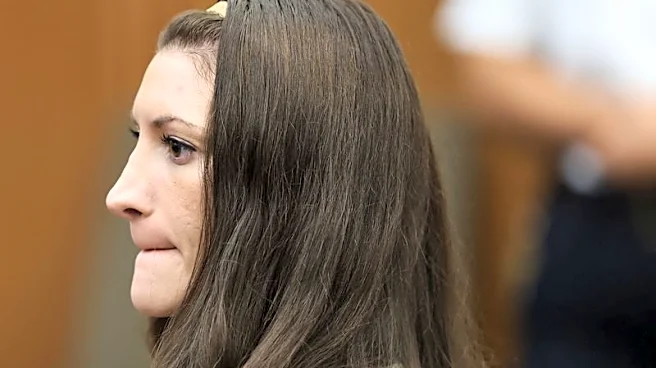

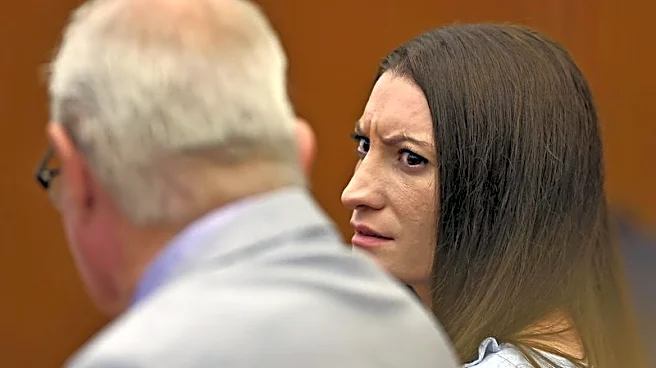
Jurors deliberating the fate of Massachusetts mother Lindsay Clancy received special instructions from the judge presiding over the case on Wednesday, Sept. 2, after they reported a deadlock for the second time.
Judge William Sullivan initially sent jurors back to deliberate on Tuesday, Sept. 1, after they said they were having trouble reaching a unanimous agreement. He then issued a state-specific instruction, called a Tuey-Rodriguez charge, when the jury reported the same issue the following day.
Clancy, 36, is facing murder chargesin the January 2023 strangulation deaths of her three children – Cora, 5; Dawson, 3, and Callan, 8 months – at the family's Duxbury, Massachusetts, home. She has pleaded not guilty to all three counts.
Prosecutors
allege she planned the killings by sending her husband, Patrick Clancy, to pick up takeout food and medicine, then strangling the children with exercise bands while he was gone. Afterward, Clancy cut her wrists and neck and jumped out of a second-story window, leaving her paralyzed.
Clancy's defense is arguing that she lacks criminal responsibility – also known as an insanity defense – because she was suffering from postpartum depression and psychosis at the time of the killings.
What is a Tuey-Rodriguez charge?
A Tuey-Rodriguez charge is a special jury instruction used in Massachusetts when a jury says it is deadlocked and cannot reach a unanimous verdict. It is an official form of encouragement from the judge to jurors to continue deliberating to try to reach a verdict, per the state government.
Specifically, the instruction emphasizes that while jurors should re-enter negotiations with open minds, no juror should abandon an honestly held belief just to achieve a unanimous verdict.
The charge comes from two Massachusetts cases: Commonwealth v. Tuey (1851) and Commonwealth v. Rodriguez (1973).
During the former, the court approved a special instruction encouraging a deadlocked jury to reexamine its positions. In the latter, the state supreme court revised the instruction to appear more neutral and reduced pressure on hold-out jurors to switch sides.
The general instruction model currently used in Massachusetts states that a jury should deliberate with "candor and with a proper regard and respect for each other's opinions," but that each juror should adhere to their own earnestly held convictions. It also advises jurors to consider if their view of fellow jurors gives them reason to reconsider their own conclusions.
In practice, invoking a Tuey-Rodriguez charge or instruction is often done with the hopes a jury will be able to reach a verdict, but is also a step judges are generally expected to take before declaring a mistrial in Massachusetts.
In the case of the Clancy trial, jurors were instructed twice to return to deliberations before Judge Sullivan gave them the Tuey-Rodriguez instruction, something that could be seen as a "final attempt" to reach a verdict or precursor to a mistrial.
This article originally appeared on USA TODAY: Lindsay Clancy jury can't agree. Here's what a Tuey-Rodriguez charge does