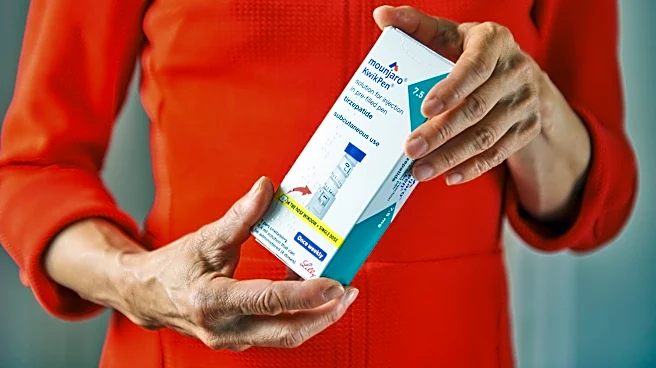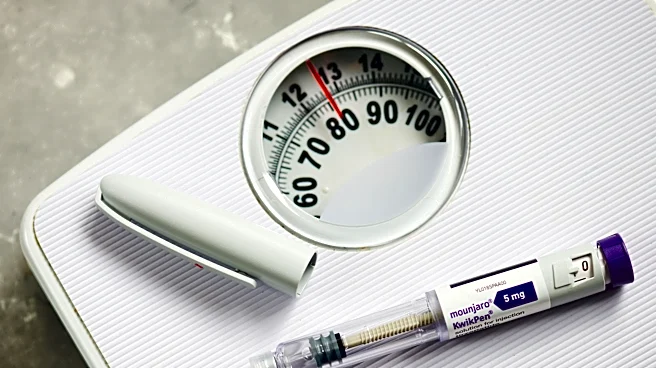







In her fast-paced job at Starbucks, Noah Stevens relied on the weight-loss drug Wegovy to speed up her metabolism and relieve joint pain.
Stevens paid $50 a month for the injectable weight-loss drug over the past two years with her company health insurance picking up most of the bill. But Starbucks recently halted insurance coverage for weight-loss drugs such as Zepbound and Wegovy when prescribed for obesity, and Stevens can't afford the $350-per-month it would cost for her to buy the medication on her own.
"It feels terrible to know my company is taking away my benefit," said Stevens, who lives in Southern New Hampshire and works at a Starbucks near Lowell, Massachusetts.
Companies such as Starbucks, PepsiCo and CIGNA have grappled with the rising
cost of covering the popular class of weight-loss drugs known as GLP-1s sold under brand names such as Wegovy and Zepbound.
A year ago, 43% of employers with 5,000 or more workers covered GLP-1s when prescribed for obesity, according to KFF's annual survey of employer health benefits. In 2026, just 33% of those large employers covered GLP-1s for obesity. Most large companies said GLP-1 coverage for obesity added a significant amount to their overall prescription drug spending.
These corporate cutbacks have left consumers scrambling to afford weight-loss drugs they believe are essential to good health. Some consumers have resorted to cheaper, compounded versions sold through telehealth companies while others have quit the medications altogether. Some companies are encouraging workers to buy medications from direct-to-consumer pharmacies or sending workers to third-party weight-loss vendors.
Stevens said she can't afford to pay for Wegovy out of her own pocket. She picked up her last one-month supply in September but can't afford to refill the medication.
Not only has Starbucks eliminated coverage of GLP-1 weight loss drugs prescribed for obesity, the coffee chain hiked the amount employees must contribute to their company health insurance plan. Stevens said $40 is docked from her paycheck each week for health insurance, a hike of $15 per paycheck from the previous fiscal year.
"And I no longer have access to the main reason I have insurance at all," Stevens said of the company's decision to halt coverage for GLP-1 weight loss drugs.
Starbucks officials did not respond to questions from USA TODAY about the decision to discontinue GLP-1 coverage.

Smaller employers are even less likely to cover GLP-1s to treat obesity. The KFF survey said 18% of employers with 200 or more employees covered these drugs for obesity, and just 1% of those firms said they were "very likely" to add coverage over the next 12 months.
Companies are taking a hard stance on how much they spend on GLP-1 medications due to rising costs, said Dr. Tim Church, chief medical officer of Wondr Health, a weight-management company that works with employers and health insurers.
"It's not surprising that companies are dropping this (GLP-1 coverage) because it's hurting their bottom line," Church said.
Why are employers dropping coverage for GLP-1s?
With nearly 157 million Americans under age 65 getting health insurance through the workplace, employer-provided health insurance is the most common source of coverage in the United States.
So any decision by employers to withhold coverage for GLP-1 medications could make it difficult for working-age Americans to afford the medications.
Employers this year scaled back coverage of GLP-1 obesity drugs for the first time in three years, according to a survey fielded this summer by the consultant WTW, formerly known as Willis Towers Watson.
The WTW survey found 53% of employers still cover the weight-loss medications, down from 57% a year ago. Among companies that still cover GLP-1s, 30% are considering eliminating coverage, WTW said.
Companies that dropped coverage overwhelmingly cited cost as the reason, WTW said.
Another survey released earlier this year by the benefits consultant Marsh, formerly known as Mercer, found about 6% of large employers expected to drop coverage of GLP-1 weight-loss drugs in 2026 and another 5% plan to drop coverage in 2027. Nearly half of large employers covered the weight loss drugs in 2025.
Employers are grappling with a large overall increase in health spending and might have limited options to trim costs, said Jeff Levin-Scherz, the population health leader for North America, WTW.
Weight-loss drugs are a popular target to trim because so many employees take the medications. About 1 in 8 Americans took a GLP-1 medication as of 2025, according to a poll from KFF, a health policy nonprofit.
"These are wonderful drugs. They've been very helpful in getting people to lose weight," said Levin-Scherz. "If they didn't cost so much, we'd be doing a dance of joy that we have such good tools that we didn't have before."
Levin-Scherz said the problem for employers is this: "How do you come up with the resources to pay for it?"
Because employees can achieve weight loss and overall improved health from GLP-1s, corporate decisions to discontinue coverage are never easy, said James Lucania, chief financial officer of HealthEquity, which offers health savings accounts.
"Employers know these medications can be meaningful for employees who are seeing results," Lucania said. "But for many companies, the annual cost is rising much faster than their ability to absorb it, especially when they are also managing higher medical, pharmacy and labor costs."
What are your options if you lose GLP-1 coverage?
Some companies realize consumers can buy GLP-1 medications at lower prices than what employer-funded insurance plans are charged for the medications.
So companies are directing workers to buy these drugs from direct-to-consumer sites such as Lilly Direct and NovoCare. About 8% of companies send employees directly to these consumer websites and another 28% of companies are considering this option, according to WTW.
Both Novo and Lilly have slashed prices for consumers who buy the medications directly from the respective companies.
Novo's starting prices for the lowest-dose Wegovy pill is $149 per month and the lowest dose Wegovy injectable is $199 per month. Lilly sells the lowest-dose injectable Zepbound for $299 per month. Lilly also sells a weight-loss pill, Foundayo, which sells for $149 per month for the two lowest doses.
Employers also are directing employees to third-party vendors such as Noom or Omada that provide weight-loss services. Nearly half of companies already have a weight-loss vendor in place - or plan to add a vendor in 2027, said Levin-Scherz.
Another 17% of companies are considering adding a vendor for 2028, he said.
He said companies are putting vendor requirements in place to make sure their workers get the most out of the medications.
As more lose employer insurance coverage for GLP-1s, those who can afford to buy the medications can purchase directly from Lilly or Novo of through telehealth vendors who prescribe the medications, experts say.
That could prompts drugmakers to further cut prices to capture a large share of the weight-loss market, according to David Clement, policy director of Consumer Choice Center.
"Employers like Starbucks dropping coverage for these drugs means a larger cash market, which means downward pressure on prices," Clement said.
This article originally appeared on USA TODAY: Your job-based insurance cut GLP-1 coverage. Here are some options