



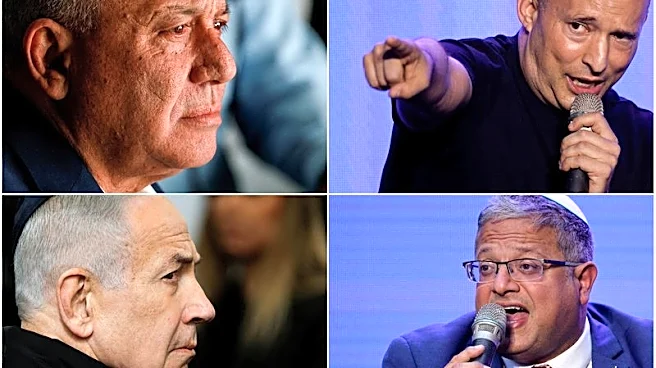
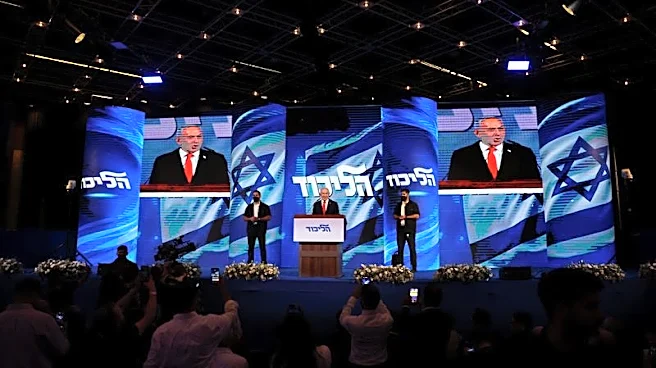
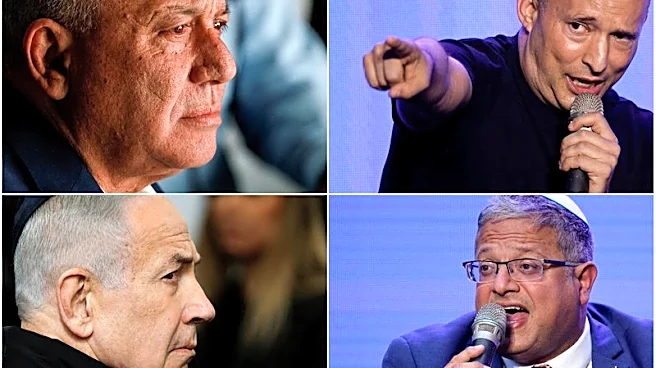

Israeli President Isaac Herzog has selected Gadi Eisenkot, the chief rival of longtime Israeli Prime Minister Benjamin Netanyahu, to attempt to form a governing coalition after the country’s parliamentary election last month ended without a clear winner.
Herzog tapped Eisenkot after holding meetings with Israel’s various political parties in recent days. Even though Netanyahu’s coalition won more seats in the Oct. 27 election, Eisenkot received more support from members of Israel’s parliament, the Knesset.
Eisenkot, the former chief of the Israel Defense Forces, will have an opportunity to become prime minister, charting a new course for Israel and ousting Netanyahu from power. A close political ally of President Donald Trump, Netanyahu has served
as prime minister for a cumulative total of nearly 19 years and has been a major influence in Israeli politics for more than three decades.

Netanyahu’s religious-nationalist coalition won 53 seats in the recent election, short of the 61-seat majority. Eisenkot’s opposition alliance won 48 seats and Israel’s major two Arab parties, Ra’am and the Joint List, won a record 19 seats in parliament.
The path to becoming prime minister will be far from easy for Eisenkot, who will have up to six weeks to negotiate with other political leaders in the hopes of establishing a governing coalition.
Eisenkot may struggle to form a coalition unless he agrees to an alliance with Ra’am and the Joint List, which achieved a historically strong result in this year’s election.
Some of the right-wing Jewish parties in Eisenkot’s coalition have refused to enter into government with the Arab parties. Eisenkot has stipulated a set of conditions that the Arab parties must meet, including recognizing Hamas as a terrorist organization.
“Now is the time to form a national emergency government,” Eisenkot wrote on social media. “I will do everything to ensure we are worthy.”
Eisenkot could also try to form a unity government with Netanyahu’s support or peel away the ultra-Orthodox parties in Netanyahu’s coalition, but both options risk angering the voters who supported Eisenkot.
If Eisenkot succeeds and becomes prime minister, the nature of the U.S. relationship with Israel could change dramatically. Trump endorsed Netanyahu ahead of the election, writing on social media that anyone other than him would be the “wrong leader” of Israel. In February, Trump and Netanyahu launched a joint war against Iran, a conflict that has continued for more than eight months.
Netanyahu has sharply criticized Eisenkot over the prospect of inviting Arab parties into government, accusing him of attempting to form a coalition “with those who seek to destroy the State of Israel, with those who want to establish a Palestinian state on its ruins.”
Sami Abu Shehadeh, leader of the Balad party, part of the Joint List, has denounced efforts to exclude Arab parties from Israel’s government as racist and undemocratic.
If Eisenkot fails to achieve a majority coalition after six weeks, Herzog must appoint another candidate – likely Netanyahu – to attempt to form a government. The second candidate would have 28 days to gather sufficient political support. If no one can form a government, the Knesset will be dissolved and Israel will schedule another election.
This article originally appeared on USA TODAY: Eisenkot, Netanyahu’s top rival, tapped to form government in Israel