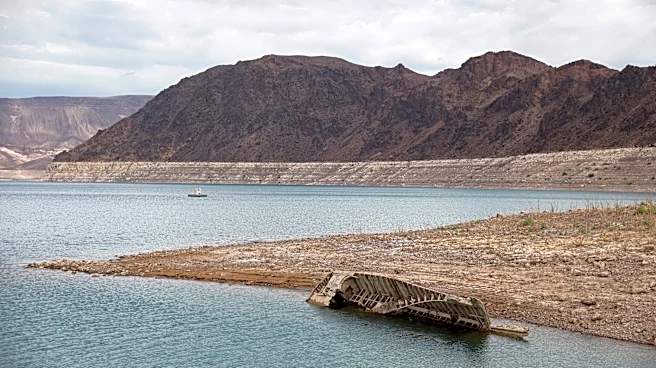

The United States' largest reservoir, Lake Mead, has reached its lowest level on record as the drought-stricken West faces a growing water crisis.
Lake Mead dropped to a new record-low elevation on Aug. 7, reaching 1,040.5 feet.
The lake elevation level has fallen every day since July 31, according to data from the Bureau of Reclamation. Elevation levels in the lake have been tracked since officials first began filling the reservoir in the 1930s.
The lake hit its previous modern record-low level of 1,040.58 feet on July 28, 2022. That was the lowest since July 24, 1937, when it was being filled.
Lake Mead is the source of drinking water for some 25 million people, of a total of about 40 million served by the Colorado River Basin.
The Colorado River
Basin, which serves seven Western states' and Mexico's water needs, has been experiencing drought for two decades, depleting water levels in the reservoirs, especially notable at Lake Powell in the upper basin and Lake Mead in the lower basin.
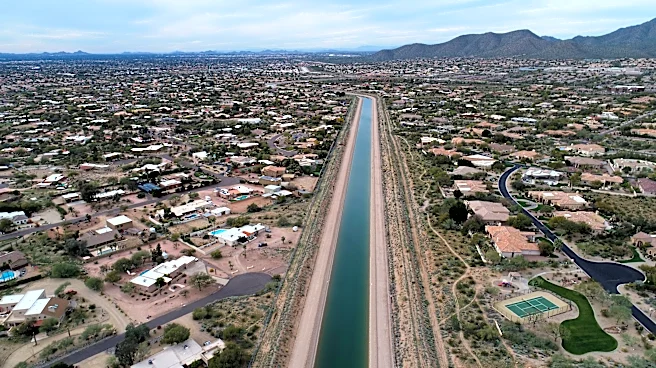
The seven states – Arizona, California, Colorado, Nevada, New Mexico, Utah and Wyoming – depend on the river for water supply for agriculture and drinking water, production of hydropower, recreation, and fish and wildlife habitat.

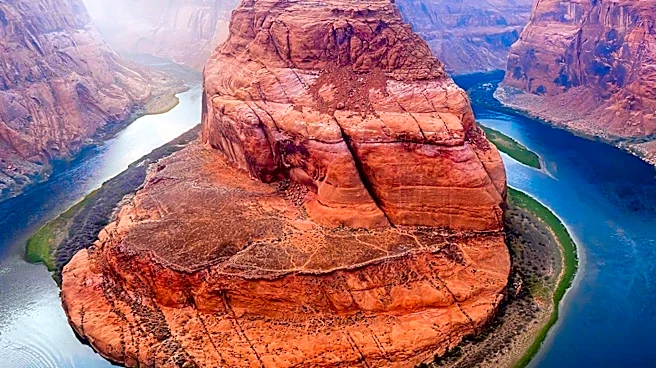
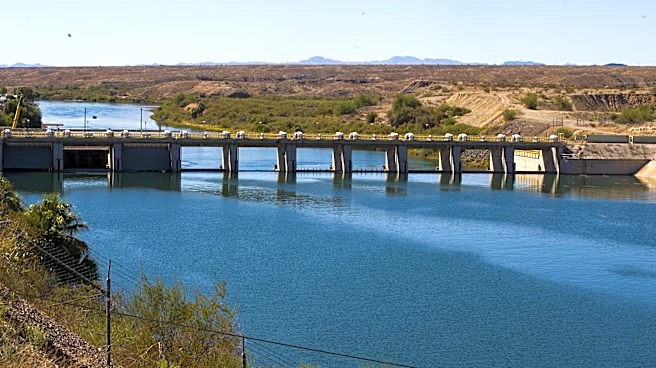
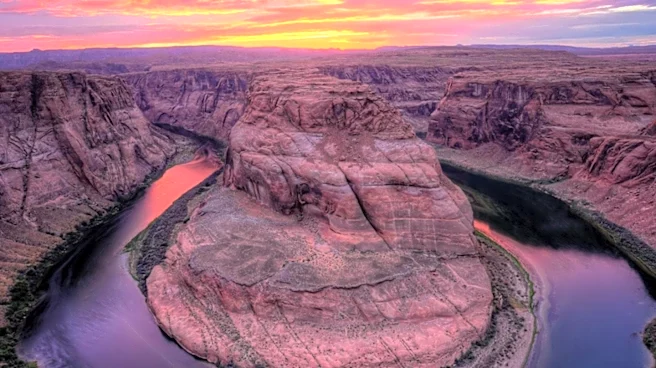
Water enters the 1,400-mile-long Colorado River as rain, snow melt and runoff from the Rocky Mountains and flows through the Grand Canyon, down to Lake Powell, the second-largest reservoir. Drought has led to decreased snowpack and water flowing into the river. Water is released downstream from Lake Powell to end up in Lake Mead, where it is distributed to lower basin states.
Because the river and its reservoirs are insufficient to meet water demand, groundwater has been extracted from aquifers, which have been losing water at an increasing rate, according to NASA. Since 2002, the reservoirs and the aquifers have lost a combined 13.7 trillion gallons of water, according to recent NASA estimates.
The record-low level hit at Lake Mead comes days after federal authorities released a plan to deal with water shortages, which includes cuts to the amount of water that can be drawn by states in the Colorado River's lower basin, including Arizona, California and Nevada.
This article originally appeared on USA TODAY: Lake Mead, nation's largest reservoir, hits record low