

Each week during the college football season, USA TODAY Sports' insiders will talk with coaches, athletics administrators, agents and more to bring you the behind-the-scenes news. They are granted anonymity to speak candidly. Here's what we're hearing this week:
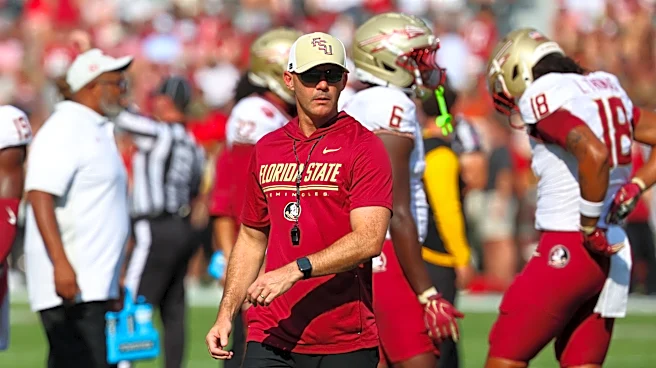
Mike Norvell's future may hinge as much on finances as wins and losses
Close loss or not, all eyes are on Florida State.
With the cash-strapped university owing former athletic director Michael Alford roughly $2.4 million, or 65% of his remaining base salary, according to contract records reviewed by USA TODAY Sports, attention now turns to Florida State's next move: hire a new athletics director first, or make what many view as an inevitable change atop the football program.
According to multiple people familiar with discussions among FSU leadership, there
are two prevailing schools of thought.
One is that Florida State, which would owe coach Mike Norvell more than $51 million if it fired him without cause, hopes he can do enough to retain his job through the 2027 season.
"The magic number on the buyout is $30 million," said one Tallahassee-based individual with knowledge of the situation.
Florida State would be much closer to that figure if it waited until late in the 2027 season to part ways with Norvell without cause.
The alternative path is for Florida State to identify and hire its next athletic director by year's end, then empower that person to make whatever decision is deemed necessary for the future of the football program.
That could mean freezing or reducing the roster budget, according to a person with direct knowledge of internal discussions. It also could lead to a clean break with Norvell.
"I'd be stunned if he's back next year. I just don't see it," said another individual with direct knowledge of the situation. "It's a lot of money for a place that doesn't have a lot of money. It's money they don't have."
There is another financial wrinkle. While Norvell agreed to a voluntary pay cut after the 2024 season, USA TODAY Sports has learned that contract language requires Florida State to repay a prorated portion of that $4.5 million reduction, approximately 75%, if he is fired without cause.
Big Ten's big spend on buy-games
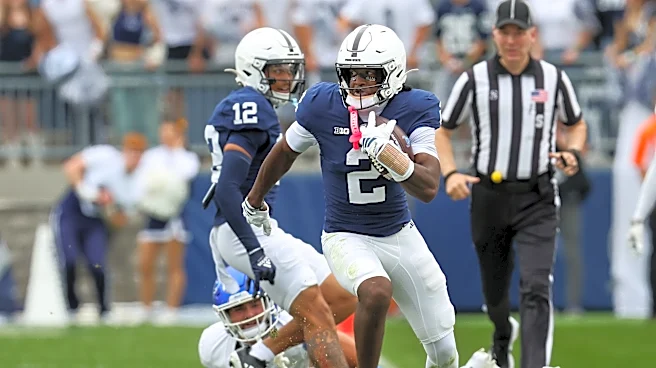
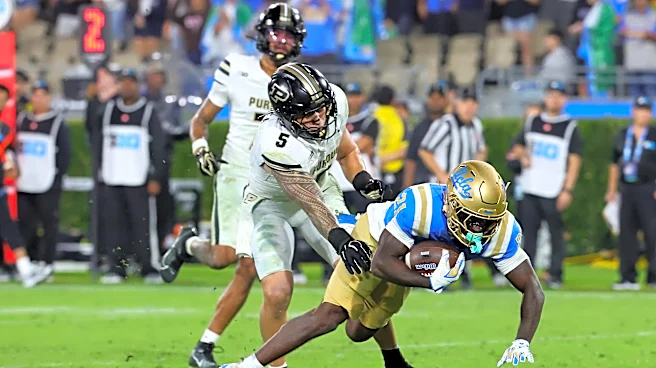
This past weekend, Sept. 19-20, the Big Ten produced one of the most egregious slates of overmatched nonconference opponents in recent memory.
Member schools didn't just line up lambs for the slaughter. They paid handsomely for the privilege.
How much did those bought-and-paid-for victories cost? USA TODAY Sports reviewed the guarantees attached to 11 nonconference games and found Big Ten schools spent a combined $11.47 million on their opponents.
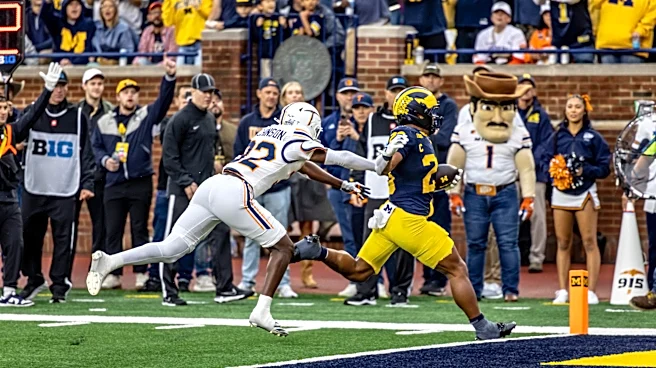
The biggest payouts came from Michigan and Ohio State, which each shelled out $1.9 million to UTEP and Kent State, respectively. Wisconsin paid Eastern Michigan $1.4 million, while Minnesota cut Akron a check for $1.2 million.
Defending national champion Indiana also joined the seven-figure club, paying Western Kentucky $1.1 million.
Iowa paid in-state FCS foe Northern Iowa $700,000, while Washington paid Eastern Washington a total of $862,000 across two installments, according to contract records.
Nebraska sent North Dakota home with $560,000, and Illinois added another $525,000 payday for Southern Illinois, helping round out the Big Ten's FCS tour of duty.
Colorado and Virginia Tech collected a combined $1 million for their trips to Northwestern and Maryland, respectively, though those contests are part of home-and-home agreements that require reciprocal return payments when the Big Ten schools travel.
And what did the conference get for its $11.47 million investment?
Eleven victories.
The Big Ten won all but one of those games (Maryland lost to Virginia Tech), leaving little doubt about the outcome of a weekend packed with expensive and largely noncompetitive football.
FCS coaches making FBS statements
The carousel will spin.
At blue-blood programs. At solid programs. At smaller programs. Across the FBS and FCS alike.
Two coaches this past weekend offered fresh reminders of why they were viewed as rising FCS names with FBS potential a year ago.
Start with Stony Brook's Billy Cosh.
The son of longtime college and NFL assistant Chris Cosh, he guided the Seawolves to a 56-24 dismantling of then-No. 10 Rhode Island, delivering the program's first victory against a top-10 opponent this decade.
The turnaround becomes even more impressive with additional context.
From late September 2018 through Sept. 6, 2024, Stony Brook won just 16 games.
From Sept. 7, 2024, through Sept. 19, 2026, the Seawolves have matched that total with 16 victories of their own. In other words, it took Stony Brook 2,170 days to accumulate its first 16 wins and just 742 days to collect the next 16.
People familiar with the coaching landscape say not to rule out Cosh as a potential candidate at Rutgers whenever the post-Greg Schiano era eventually arrives.
Then there's Austin Peay coach Jeff Faris.
A David Cutcliffe protégé who also spent time on Chip Kelly's staffs, Faris took his team on the road and delivered a convincing 38-16 win over nationally ranked West Florida.
The victory came after Faris successfully retained star quarterback Chris Parson, the former Mississippi State signal-caller who was heavily pursued by outside programs during the January transfer portal window.
Faris has steadily elevated the Governors' profile. Austin Peay knocked off FBS foe Middle Tennessee last season, pushed SEC member Vanderbilt into the second half of a one-score game earlier this month and now owns a ranked road victory that leaves the Govs alone atop the United Athletic Conference standings.
A former Duke player and high school teammate of Minnesota Vikings standout Harrison Smith, Faris is viewed by multiple coaching agents as a legitimate FCS-to-FBS candidate during the upcoming hiring cycle.
That said, Faris signed a lucrative contract extension in late 2025 and has consistently maintained that his focus remains on continuing the build at Austin Peay rather than chasing future opportunities.
College basketball's spending reaches point where the numbers no longer add up
As USA TODAY Sports chronicled in recent stories about both the cost of roster assembly at the FBS level and the nightmare tales of shopping in the NCAA Transfer Portal, the costs to field competitive teams in college athletics have never been higher.
For the college football bluebloods, there typically is a path to return-on-investment justification.
A college athletics leader recently made clear to USA TODAY Sports the same cannot be applied to the out-of-control spending in college basketball.
“I don’t care if you’re Duke or North Carolina or Kentucky,” the individual, who works closely with more than three dozen collegiate programs, told USA TODAY Sports. “You cannot make the math work.
"The investment isn't justified in basketball. We're talking about $20 million, $24 million, $25 million rosters. I understand there's television exposure and all of that, but you simply can't make the numbers work with rosters at those price points."
Agents and figures in the college basketball landscape told USA TODAY Sports the era of $18-25 million rosters in the sport has arrived — even if the math doesn’t math.
This article originally appeared on USA TODAY: What I'm Hearing: Mike Norvell's FSU future hinges on one 'magic number'