


More than 85 years ago, a team of writers dispatched by the Federal Writers' Project, part of President Franklin Roosevelt's Works Progress Administration, had a deadline.
Their reports on what Americans across the country ate and the traditions surrounding them were due on Nov. 20, 1941: Thanksgiving Day.
The "America Eats" project was envisioned as a record of meals and mealtime rituals compiled into a 75,000-word book edited by Katherine Kellock, the project's lead editor, according to NPR. Records in the Library of Congress include cocktail recipes, directions for a Maine clam bake, and a recipe for Choctaw Indian walakshi.
Two weeks after the field reports were due, the Pearl Harbor attacks occurred, launching the nation into World War II
and scuttling the project before it could be completed.
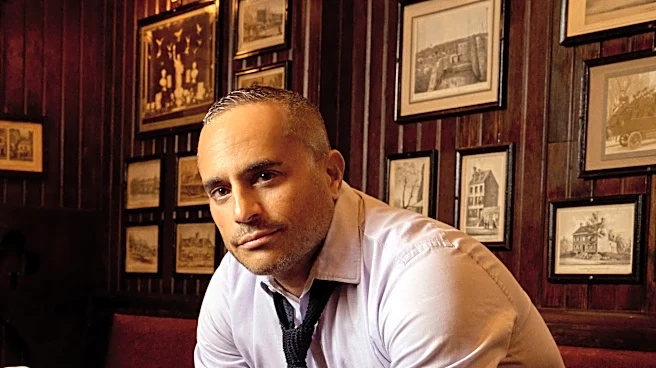
During the nation's semiquincentennial, Joe Ariel, the official food curator for America250, is picking up where "America Eats" left off.
"Eighty-five years ago, America sent writers out to document what we eat, and then the war came and nobody finished the job," Ariel said in an email to USA TODAY. "I intend to be the one who finishes it."

How food tells the story of America
In a sense, Ariel is both the Kellock and one of the Federal Writers Project writers sent out into the country of this effort to create a record of American food, having published a series of essays titled "250 Dishes That Made America" that documents the tentpole dishes of American cuisine.
He previously told USA TODAY that he views America, and by extension its cuisine, as less like the cliché melting pot and more like a gumbo, saying that the country's food demonstrates the "connective tissue" of a nation built by immigrants.
That sentiment echoes what Kellock sought to preserve with "America Eats." As immigrants assimilated into American life during the Great Depression, Kellock sought to "preserve not only traditional dishes, but also transitional attitudes and customs" around food, according to NPR.
Ariel said that along with documenting the food, creating a record of the people who create it is an important part of his curation work.
"History books tell us about the people who ran America. Food tells us about the people who made it," Ariel said.
Across multiple interviews with USA TODAY, Ariel, who is also CEO of regional American food marketplace Goldbelly, emphasized the role food plays in bringing people together.
"People aren't just naming what they love to eat," Ariel said of the Official State Dish Registry in his email. "They're telling you who they don't want to forget."
Latest on the Official State Dish Registry
Earlier in the year, people across the country were invited to vote on their state's most iconic dish. Ariel said he hopes the State Dish Registry will help lay the foundation of a national food registry.
"We have archives of our battles, laws, presidents, protests, music, and literature," Ariel said. "We do not have a record of the food that built our everyday life."
The voting for registry has been extended to Dec. 31.
As of Nov. 25, Ohio's buckeyes have the most votes, while Oregon’s marionberry pie, which led when USA TODAY last checked the tally, is in second place.
This article originally appeared on USA TODAY: America once tried to record its food. See who's trying to do it again