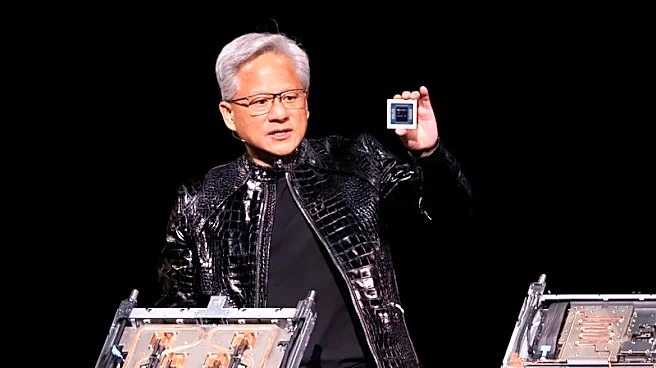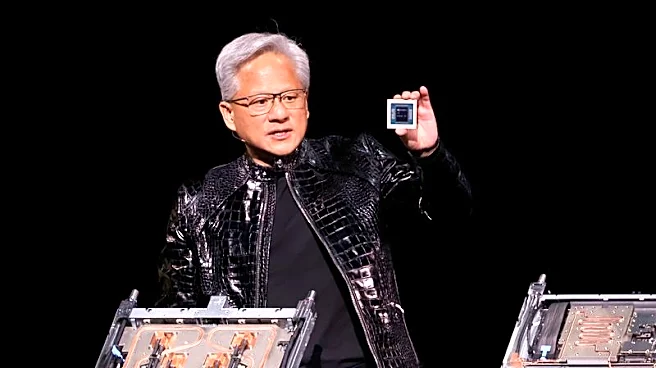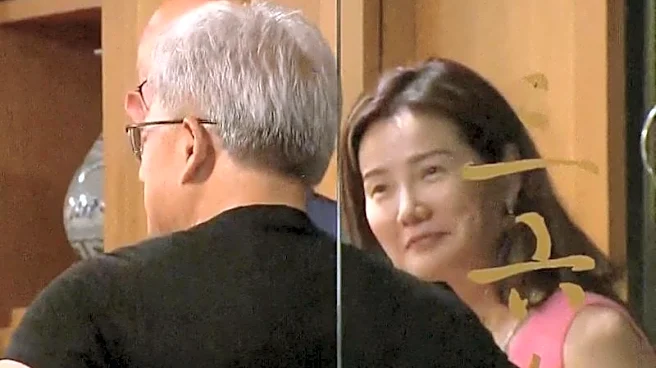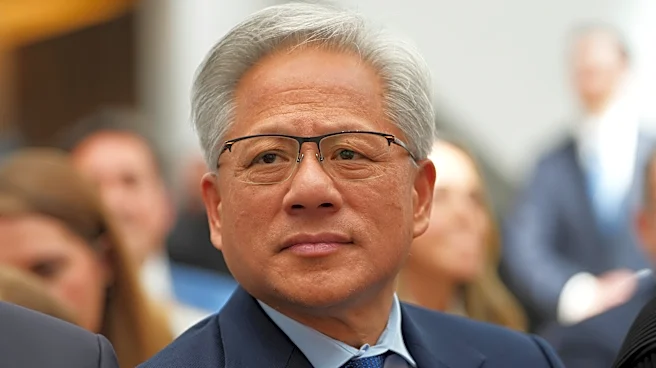






Nvidia CEO Jensen Huang has resigned from the company after mounting scrutiny over allegations involving his extramarital relationship and an investigation into whether he had been targeted by a foreign intelligence operation.
Colette Kress, Nvidia's chief financial officer, will serve as the company's interim CEO while the board of directors begins a search for Huang's permanent successor, Nvidia said in a Nov. 12 news release.
"The Board and the company thank Jensen for his immeasurable contributions to the company and the industry," the release said.
The abrupt decision marks a dramatic turn in a controversy that began with revelations about Huang's relationship with a Singapore-based tech executive whom U.S. intelligence officials suspect of spying
for China. The controversy intensified over the weekend after a New York Times report alleged Huang may have been the target of a foreign espionage operation.
Reuters, citing a source familiar with the matter, reported that Nvidia's board was meeting on Nov. 11 to decide whether to oust Huang. Earlier, the Wall Street Journal reported that directors were preparing to remove the longtime chief executive.
The prospect of Huang's departure has rattled investors and raised questions about leadership at the company he cofounded more than three decades ago. Nvidia shares fell about 8% in after-hours trading after the Journal's report.
Including those losses, the roughly $4 trillion chipmaker has shed about $600 billion in stock market value this week since announcing a board investigation into Huang's relationship with the suspected Chinese spy.
Any move to remove Huang would create a leadership vacuum at the company that has become the dominant supplier of chips powering the artificial intelligence boom. Huang, 63, owns about 3.6% of Nvidia's stock and has no obvious successor.
Meanwhile, The Washington Post reported Nov. 11 that the White House was not intervening in Nvidia's board deliberations over Huang's future.
Nvidia board investigation deepens
On Nov. 8, Nvidia announced that independent directors, assisted by outside legal counsel, would oversee an investigation into whether Huang had been the target of a foreign intelligence operation. At the time, the board said it had no reason to believe U.S. national security interests or Nvidia secrets had been compromised and expressed confidence in Huang.
In a memo to employees, Huang acknowledged being unfaithful to his wife and said he took "full responsibility" for his actions. He apologized to his family and colleagues and pledged to cooperate with the board's review.
Earlier, on Nov. 11, the Times reported that Huang also had an extramarital relationship with Kimberly Powell, Nvidia's vice president of healthcare. The newspaper cited five people who worked at the company.
According to the Times, Huang responded, "I don't think you should be talking to me directly," when asked about Powell before ending the phone call.
Nvidia faces national security questions
The controversy has drawn attention well beyond Silicon Valley because of Nvidia's central role in the global AI industry and the growing technology rivalry between the United States and China.
U.S. authorities have scrutinized Singapore-based company Megaspeed, which buys chips from Nvidia, and concluded that the company was a Chinese intelligence asset. Allegations surrounding Huang's relationship with Alice Huang, a woman U.S. authorities have said was involved in facilitating shipments of Nvidia chips to Chinese firms, have heightened questions about those ties.
Alice Huang has since returned to China and is living in Beijing with the knowledge of Chinese security officials, Bloomberg News reported Nov. 11, citing people familiar with the matter.
Jensen Huang also faces a potential congressional subpoena if he does not comply with a request to provide a closed-door briefing regarding allegations related to the Chinese businesswoman. President Donald Trump confirmed he was briefed on the spying allegation earlier this year but took no action.
Trump said Nov. 9 he was "amazed" by the allegations and confirmed he had spoken with the Nvidia chief. Trump also told reporters that the FBI was investigating the matter but said he expected Huang would ultimately be "in good shape."
"I hope there's no problem," Trump told reporters at the White House. "I know the FBI is looking into it, in terms of something else. I think that he'll be in good shape."
Huang cofounded Nvidia in 1993 with Curtis Priem and Chris Malachowsky. Under his leadership, the company evolved from a maker of graphics chips for computer games into the dominant supplier of processors used to train and run advanced artificial intelligence systems.
Contributing: Kim Hjelmgaard and Bart Jansen, USA TODAY; Reuters
This article originally appeared on USA TODAY: Jensen Huang resigns as Nvidia CEO amid affair probe