







Two men have been charged for allegedly selling more than 6 million counterfeit postage stamps, netting roughly $1.7 million in illegal profits, federal prosecutors recently announced.
One of the men has already pleaded guilty to a money laundering conspiracy charge, according to a July 23 news release from the U.S. Attorney’s Office for the Middle District of Alabama. The other made his first court appearance earlier this week.
Here’s what you should know about the alleged scheme to move millions of fake stamps across the United States.

How did the alleged scheme operate?
John Patrick Best, 55, of Hoschton, Georgia, and Kevin Douglas Padgett, 48, of Phenix City, Alabama, are accused of running a counterfeit postage stamp operation that netted at least $1.7 million, according to the
Justice Department.
A federal grand jury indictment handed down in April, and other court records, state that beginning in or around January 2024, Best and Padgett allegedly conspired to purchase counterfeit U.S. postage stamps from a vendor in China, which had listed the products as “Patriotic Series American Independence Day Doodle Stickers,” the DOJ’s news release states.
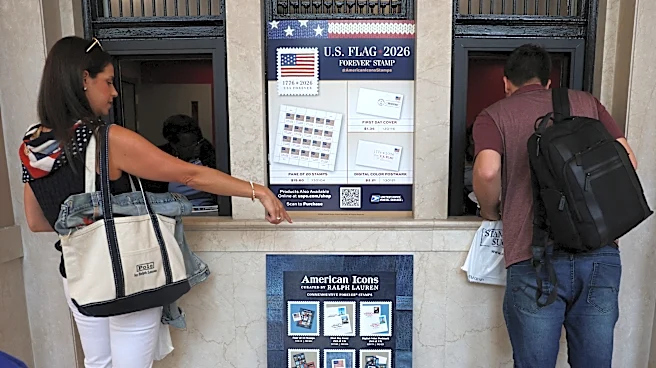
After allegedly setting up a shipping supply company in Georgia and opening bank accounts in the company’s name, the pair allegedly resold the counterfeit products in the United States as genuine U.S. flag forever stamps, according to the DOJ.
Best, who worked for a media organization, allegedly used that position to advertise the newly created company and sell the stamps through an online marketplace. Padgett, meanwhile, allegedly packaged and mailed the counterfeit stamps from multiple locations, including two post offices in Alabama.
More than 6 million stamps allegedly sold
All told, the pair allegedly sold 6,483,700 counterfeit stamps, netting at least $1.7 million, the indictment states. They allegedly had an additional 544,596 unsold stamps that were seized.
Federal prosecutors said that Best and Padgett attempted to hide the $1.7 million through a series of financial transactions involving multiple bank accounts.
“The US Postal Service is committed to protecting consumers and the US Mail from fraudulent activity and has no tolerance for people who create, distribute or use counterfeit postage,” said Shameka Jackson, inspector in charge of the U.S. Postal Inspection Service’s Houston Division. “These practices undermine the inherent trust of the USPS brand, and postal inspectors will continue work with our law enforcement partners and federal prosecutors to disrupt these criminal schemes and bring those responsible to justice.”
Facing a maximum of 20 years in federal prison
According to the DOJ, Padgett pleaded guilty to the money laundering conspiracy charge on June 30. His sentencing hearing will take place in October. Best made his initial appearance in federal court on July 22, the DOJ added.
Both men face a maximum sentence of up to 20 years in federal prison, as well as “substantial monetary penalties and restitution,” the DOJ noted. There is no parole in the federal system.
“The defendants are accused of moving approximately $1.7 million in proceeds through multiple bank accounts in an effort to disguise the source and ownership of their illicit profits from the counterfeit postage stamps scheme,” said Special Agent in Charge Demetrius Hardeman of the IRS Criminal Investigation’s Atlanta field office. “Although individuals may attempt to disguise illicit profits through intricate financial maneuvers, IRS Criminal Investigation special agents excel at unraveling complex money flows and revealing the hidden trail they leave behind.”
Drew Pittock covers national trending news for USA TODAY. He can be reached at DPittock@usatodayco.com.
This article originally appeared on USA TODAY: Duo made $1.7M selling over 6 million fake USPS stamps, feds allege