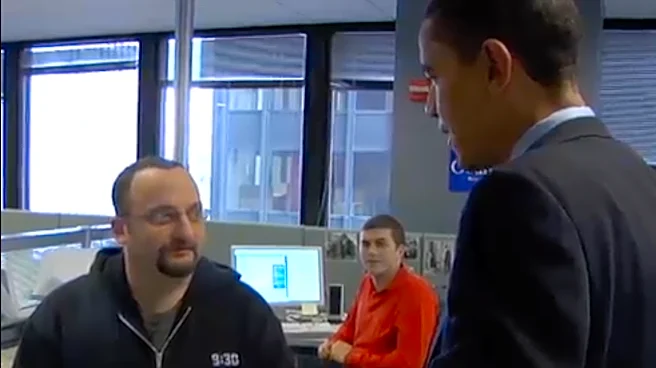

In 2008, I helped build Barack Obama’s groundbreaking mobile and social media campaign. We experimented with technologies still new to politics and found ways to reach and mobilize voters that campaigns had never attempted at that scale.
Nearly two decades later, I’m worried Democrats aren’t ready for what’s coming next.
The most dangerous political misinformation of the 2026 election may not go viral. You may never see it at all.

Political operatives can now launch what I call "social media missiles": short videos, targeted ads and text messages designed to reach small, precisely selected groups of voters, often before journalists, campaigns or fact-checkers know they exist. By the time we detect them, the damage is already done.
I’ve watched political
technology evolve for nearly two decades. We’ve gotten incredibly good at delivering political messages, but we’ve fallen behind on ways to detect and correct misinformation.
Deepfakes, AI aren't the only problems. Enter micro-viral misinformation.
For years, we’ve worried about sophisticated political deepfakes. Unfortunately, misinformation doesn’t have to be sophisticated to work.
Consider a recent attack on Texas Democratic Senate nominee James Talarico. According to the Daily Caller, a political group spent six figures on a 15-second AI-generated ad depicting depicting Talarico singing a parody song about transgender children.
Fifteen seconds can be enough to do real damage.
Political attacks used to be much easier for reporters, opposing campaigns and fact-checkers to see. Social media changed that. Artificial intelligence now makes it inexpensive to create countless variations and distribute them to different audiences.
And misinformation doesn’t need 10 million views. An attack reaching 25,000 persuadable voters in the right district could be more valuable than one reaching millions nationally.
I call this micro-viral misinformation: content that doesn’t need to go viral because it reaches exactly the voters it was designed to influence.
And these tactics aren't unique to one side.
Democratic campaigns are experimenting with their own influencer networks – and not always transparently. California's Fair Political Practices Commission is investigating whether Tom Steyer's gubernatorial campaign properly disclosed payments to influencers who posted on his behalf, a complaint that surfaced during his own party's primary.
Foreign actors, operating thousands of miles away, can use the same tactics to push misleading content straight to small groups of voters before campaigns or the news media have time to respond.
Disinformation is now going direct to voter

After the 2010 cycle, I petitioned the Federal Communications Commission to close loopholes allowing unsolicited political messages to reach voters’ cell phones. During Obama’s second term, the FCC strengthened protections against automated texts sent without prior consent.
The Trump-era FCC and a 2021 Supreme Court ruling rolled back those protections.
Now, political organizations can match cell phone numbers against voter files and commercial databases and send enormous quantities of messages. A misleading headline, image or link can reach millions of voters without passing through traditional media or independent scrutiny.
I saw the consequences firsthand in Ohio in 2023, working on Protect Choice Ohio, a campaign to enshrine abortion rights in the state's constitution. More than $5 million was spent on television ads claiming that the proposed amendment would affect transgender care and parental rights. The Ohio Capital Journal examined the amendment and found no mention of either.
Yet the ads kept running.
I contacted national fact-checking organizations looking for help. One told me it didn’t have an Ohio partner and pointed me toward research about America’s growing “fact-checking deserts.” That problem remains. PolitiFact rarely fact-checks Ohio politics, and while some excellent Ohio journalists scrutinize false claims, there isn't nearly enough consistent, visible fact-checking to match the volume of misinformation reaching voters.
Misinformation knows how to find you. We don't know how to find it.
We’re seeing it again in 2026 as Ohio voters are bombarded by a $25 million ad blitz featuring misleading personal attacks against Democratic gubernatorial candidate Amy Acton involving alcohol, prescription medication and her professional record.
After the Cambridge Analytica scandal – in which a political consulting firm harvested Facebook data on millions of users without consent – many Democratic and progressive organizations became understandably cautious about social media data and social intelligence. In some cases, caution became disengagement.
Meanwhile, campaigns spend heavily on social media influencers without always knowing whether their audiences include undecided voters in the battleground states that matter. Campaigns still spend millions pushing ads to matched voter lists on Meta platforms while the platforms ultimately decide how frequently political content appears.
Campaigns can buy the ads, build audiences and create the content. They don’t control the distribution system. The platforms do.

Democrats need to invest much more seriously in responsible social intelligence: understanding what voters are seeing, spotting emerging narratives before they spread, and knowing who political influencers reach instead of treating follower counts as strategy.
But intelligence matters only if we can act on it.
This means investing in independent fact-checking that can quickly establish what’s true, building the capacity to find targeted ads, texts and short-form content before they appear in a reporter’s feed, and figuring out how to get the facts back in front of the same voters who received the misinformation.
In 2008, we were building new ways to reach voters. In 2026, reaching them is no longer enough. We’ve spent billions building better political missiles. Now we need the intelligence and radar to see what’s coming, and better ways to deploy facts before the damage is done.
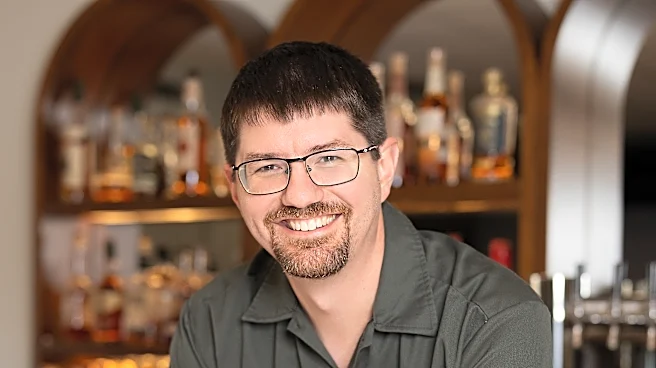
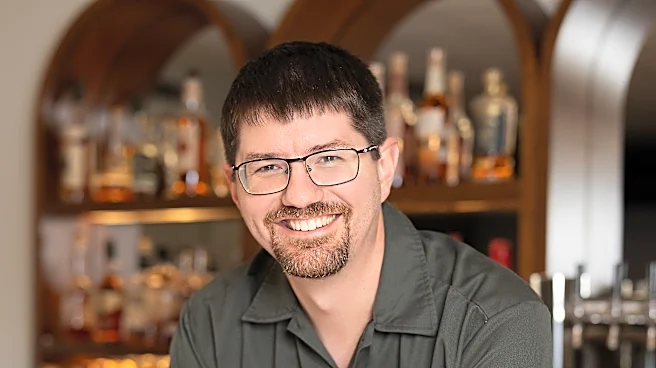
Scott Goodstein was external online director for Barack Obama's 2008 presidential campaign and a lead digital strategist for Bernie Sanders' 2016 campaign. He founded CatalystCampaigns.com, a digital strategy firm for Democratic campaigns and organizations.
This article originally appeared on USA TODAY: I helped build Obama's 2008 campaign. Democrats aren't ready for 2026.